
INTRODUCTION
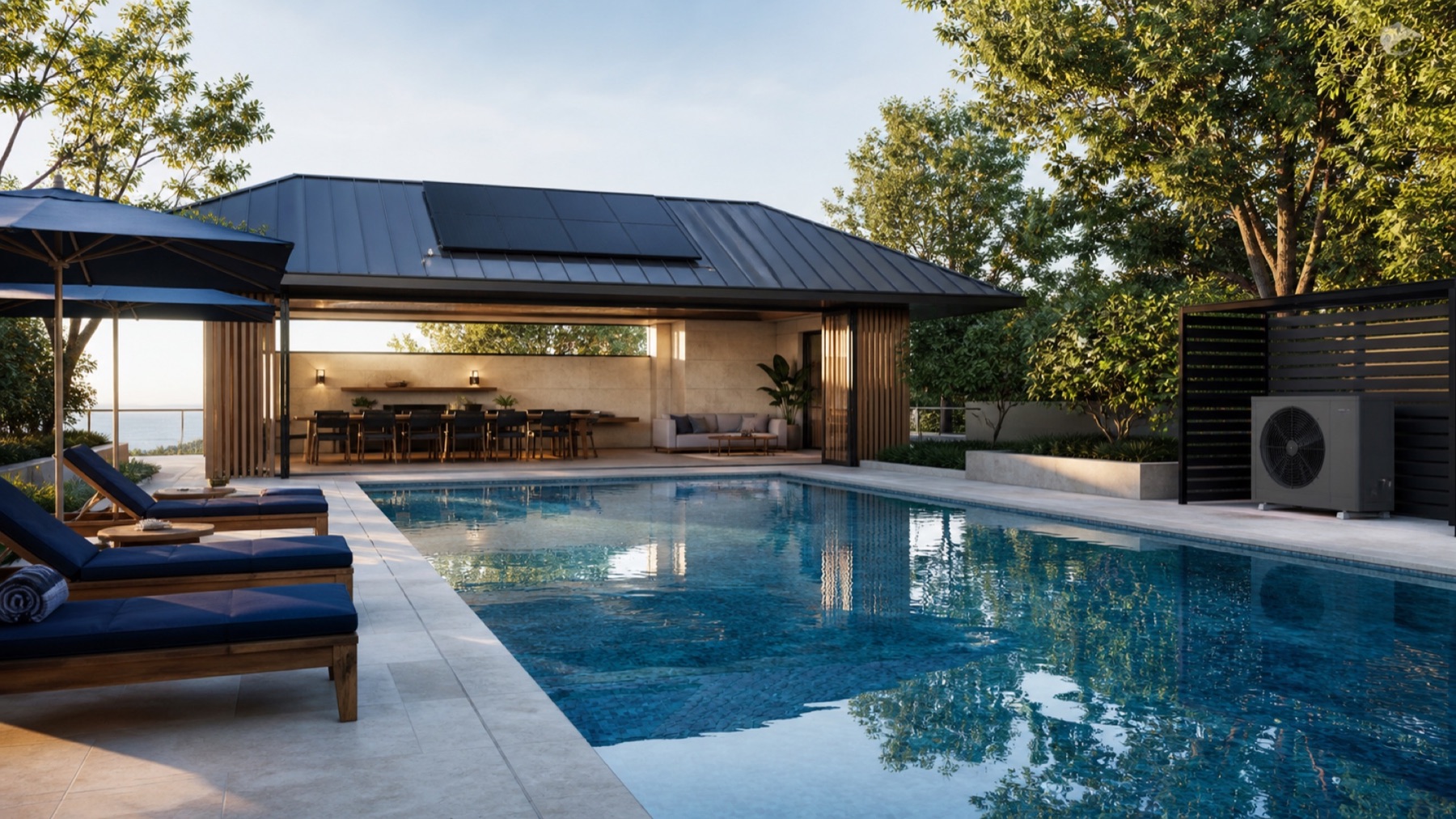
Treating solar and heat pumps as if one must always win produces an incomplete answer. Solar thermal uses available sunlight. A heat pump uses electricity to move energy from ambient air into the water.
Both can be efficient in the right context, but they respond differently to weather, schedules and expectations. The useful question is: What temperature do I want, in which months, at what times and with what predictability?
1. Solar: use the resource when it is available
Thermal collectors capture solar energy and transfer it to the water. Radiation, available area, orientation, ambient temperature, flow, season and cover use all affect performance.
When it can make strong sense
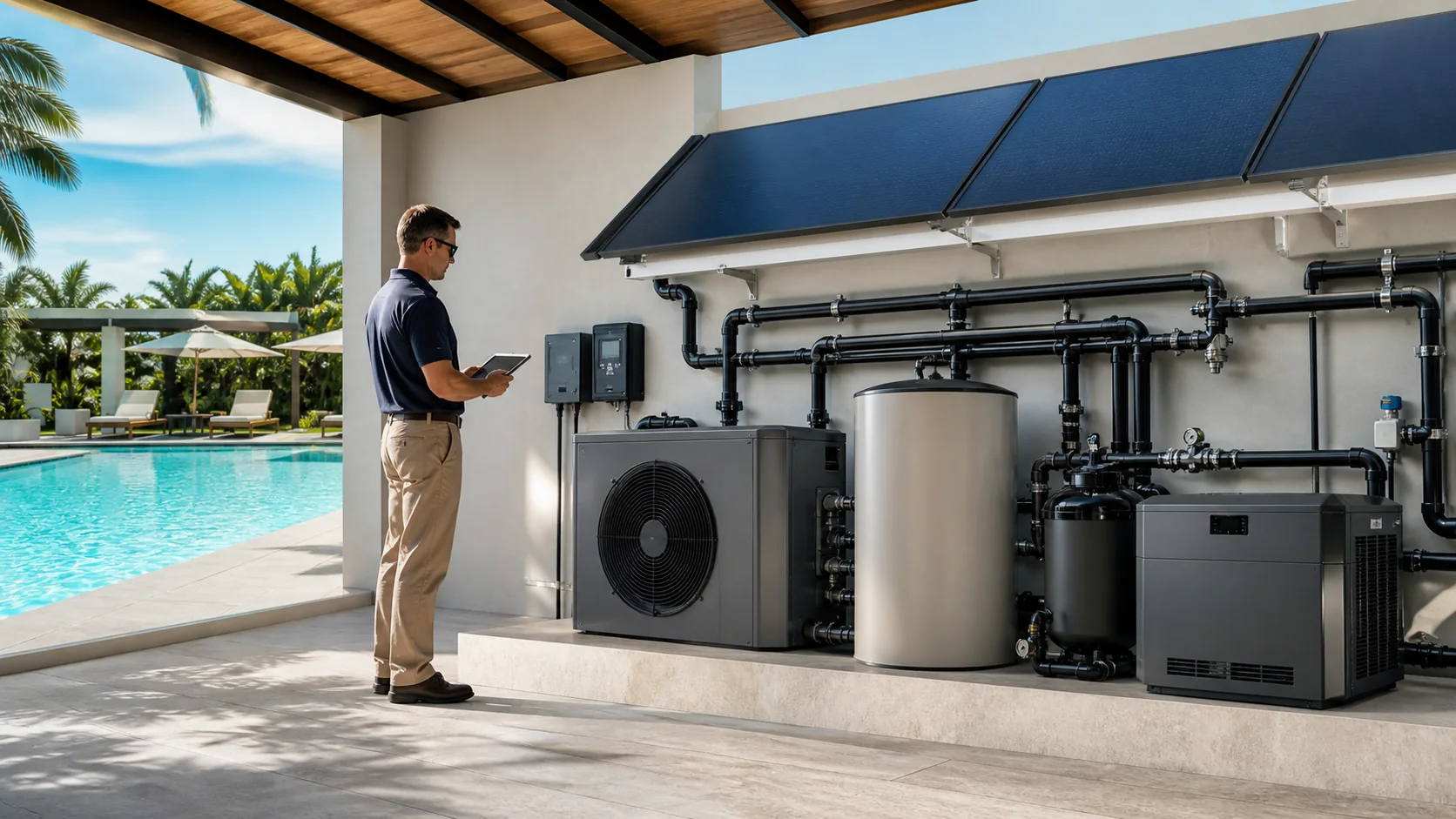
A residence uses the pool mostly in mild weather and on sunny afternoons, has room for collectors and does not require an exact temperature every day. Solar can align well with that pattern.
2. Heat pump: more control, with electrical demand
A heat pump transfers energy from the air. It can provide more predictable control, while capacity and efficiency still change with temperature and humidity. It also needs appropriate electrical and hydraulic infrastructure.
Hospitality example
A property hosts guests and wants a target temperature during specific hours. Predictability may matter more than relying on sunlight alone.
3. The cover can change the comparison
If evaporation removes significant heat overnight, both technologies must replace it. Reduce losses before deciding which heater wins.
Two sources, one pool
Deliver heat to the pool
Reduces losses
4. A simple comparison
| Factor | Solar thermal | Heat pump |
|---|---|---|
| Primary source | Sun | Electricity + air |
| Control | More resource-dependent | More programmable |
| Infrastructure | Collectors + hydraulics | Electrical + hydraulics |
| Space | Collector area | Equipment location |
| Season | Closely tied to radiation and climate | Tied to ambient temperature |
| Ideal complement | Cover | Cover |
5. Sometimes the answer can be hybrid
Some projects can use solar to reduce heating work and another source to provide control when the resource is insufficient. It is not universal; operation and installation must justify the integration.


From context to a decision.
Estimate the thermal requirement
Open the pool calculator↗Design the heating solution
Start the project↗Answers with the full context.
Can solar maintain an exact temperature?+
It depends on available resource and architecture. As a variable source, it should not be presented as absolute control without backup.
Does a heat pump work in cold weather?+
Capacity and efficiency change with ambient conditions; review the equipment data and local climate.
Does a cover help both technologies?+
Yes. It acts on pool losses rather than on the heat source.
Can the technologies be combined?+
In some projects, yes, when hydraulics, controls and the operating goal justify integration.
SOURCES AND REFERENCES2
References consulted for this editorial review.
- Consumer Pool HeatersU.S. Department of Energy
- Swimming Pool EfficiencyU.S. Department of Energy · Better Buildings