Consistent comfort
A temperature designed around use makes the pool experience more enjoyable.
TARGET TEMPERATURE
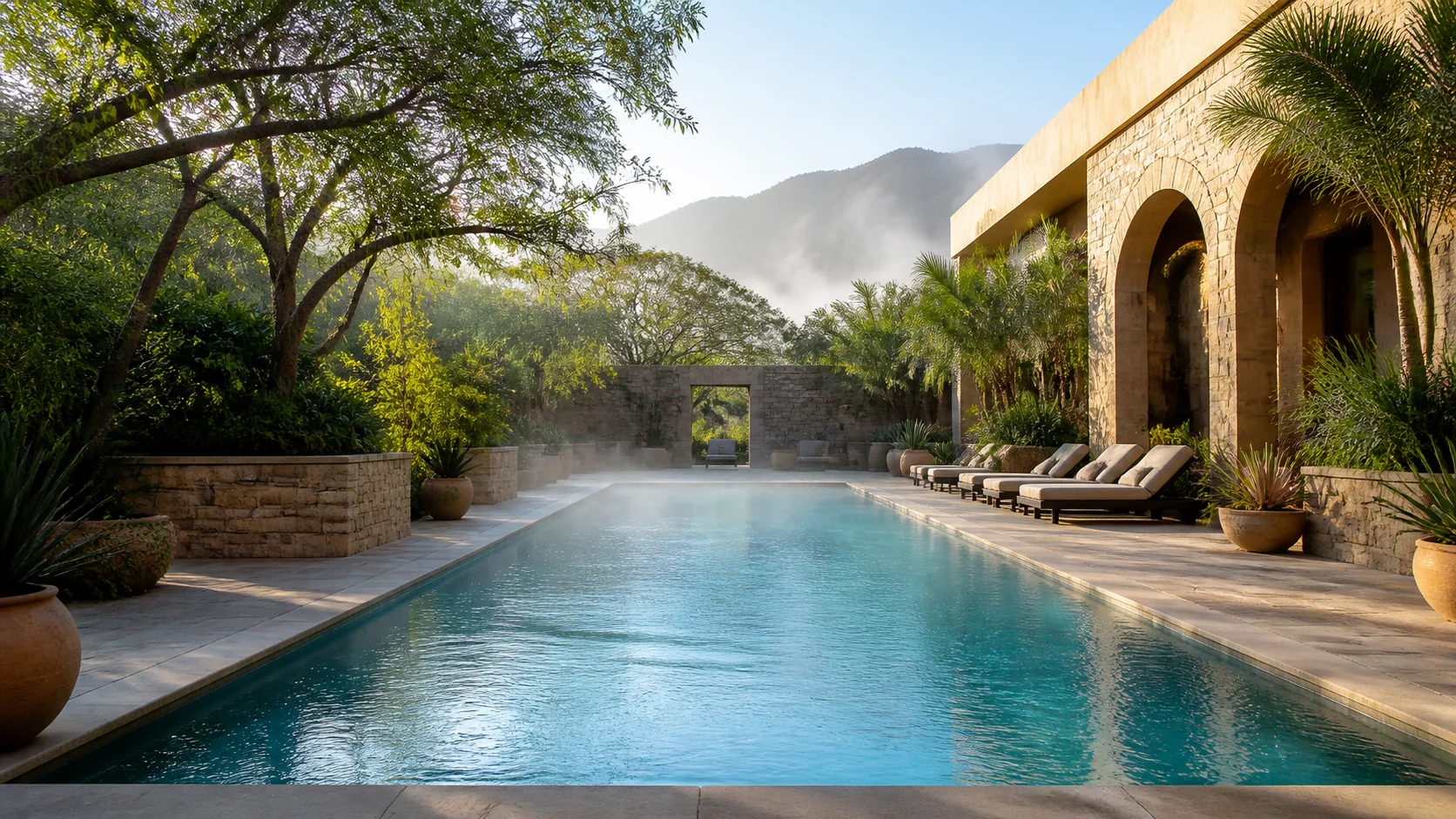
Heating, control and automation designed around the pool, its use and its infrastructure.
Volume, surface, climate, target temperature, cover, schedule and existing hydraulics change the thermal strategy.
The right climate strategy transforms how often, when and how the pool is enjoyed, without separating comfort from operations.
A temperature designed around use makes the pool experience more enjoyable.
TARGET TEMPERATURE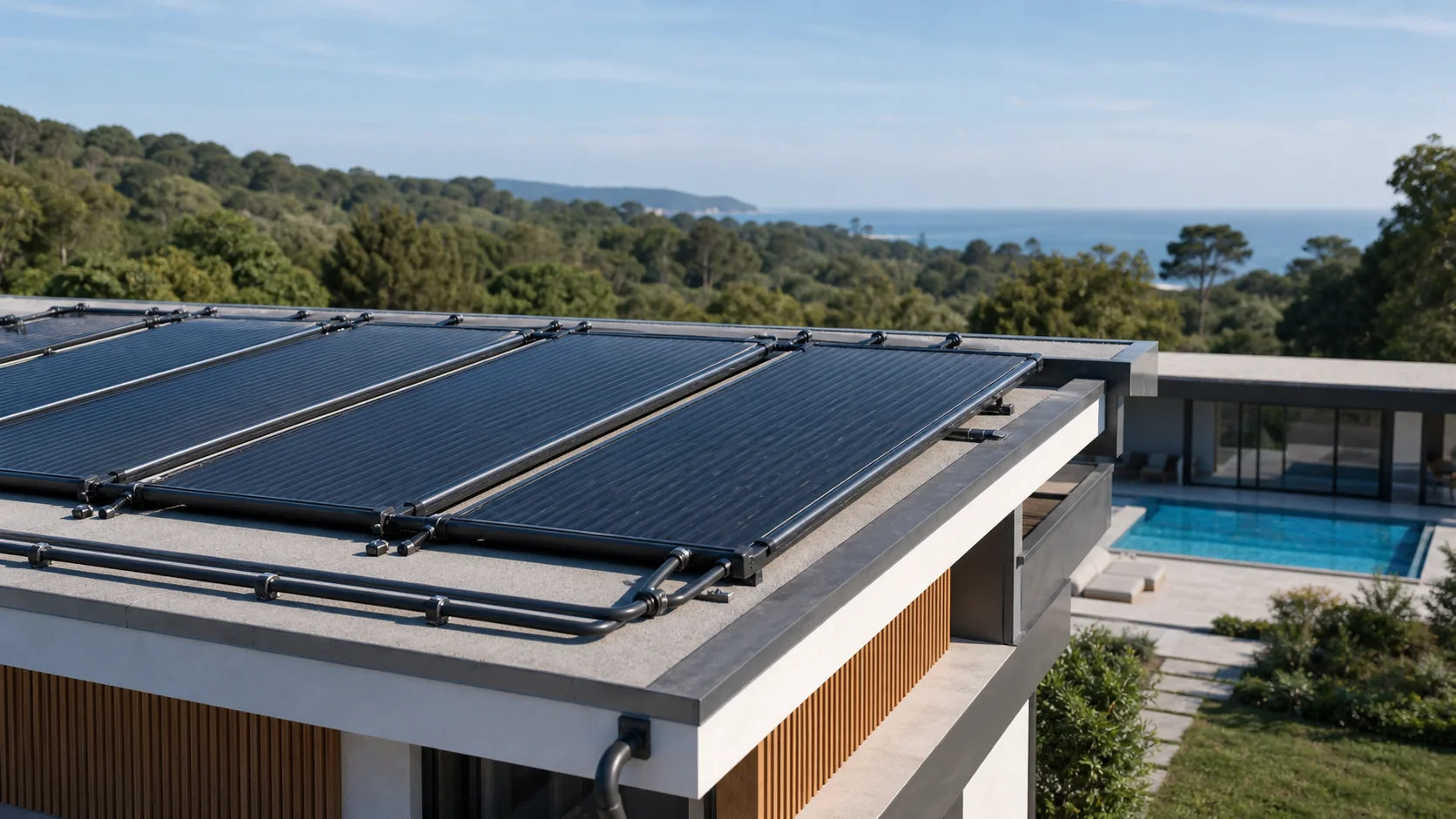 01
01Thermal collectors transfer solar energy to the water through a circuit designed for the pool.
Orientation, available area, exposure, volume and season change the outcome; there is no universal guaranteed temperature.
 02
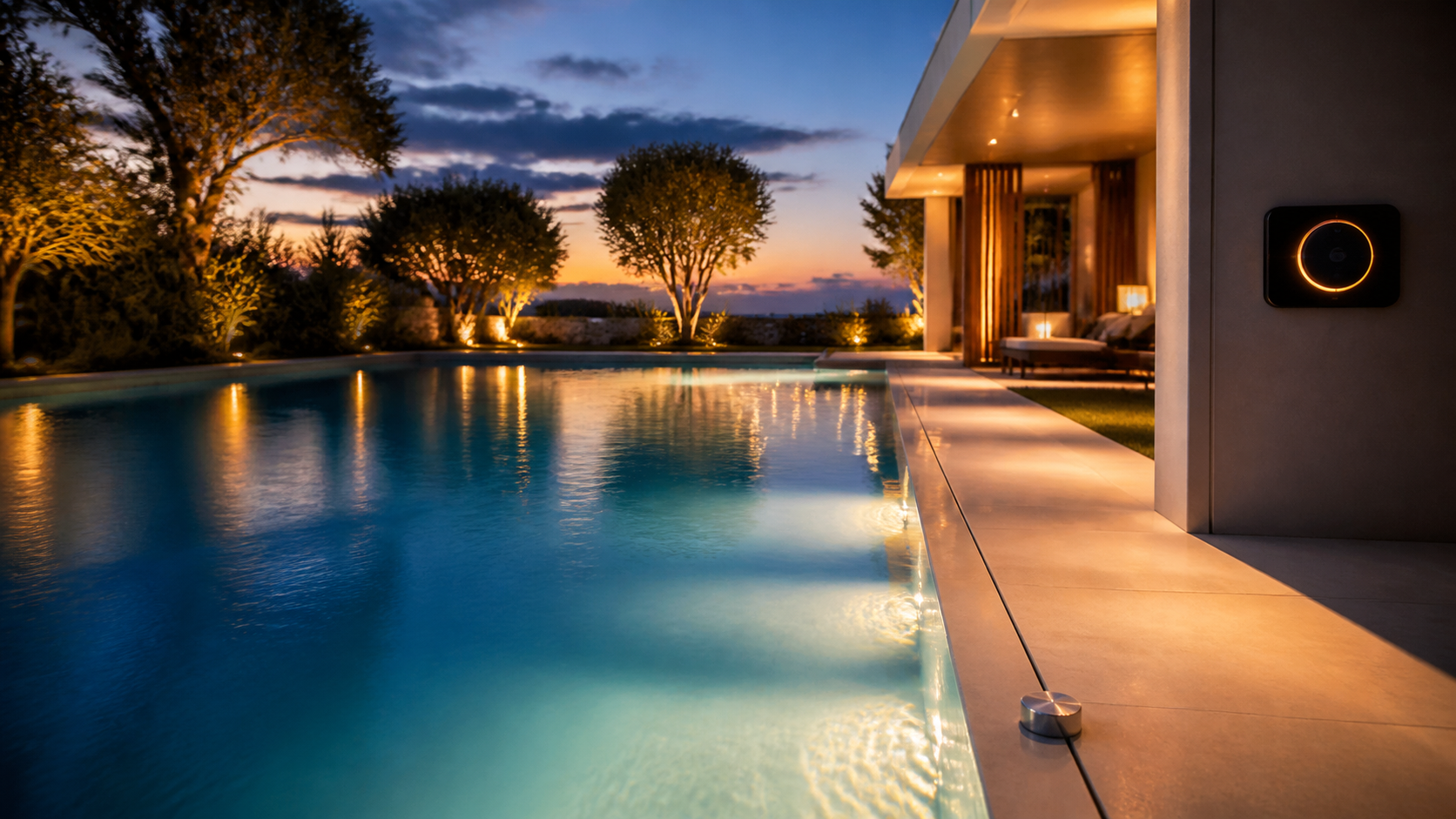
02Coordinate heat source, circulation and temperature sensing around expected use.
Capacity is defined by volume, climate, heat loss, schedule and target temperature; a cover may be part of the strategy.
 03
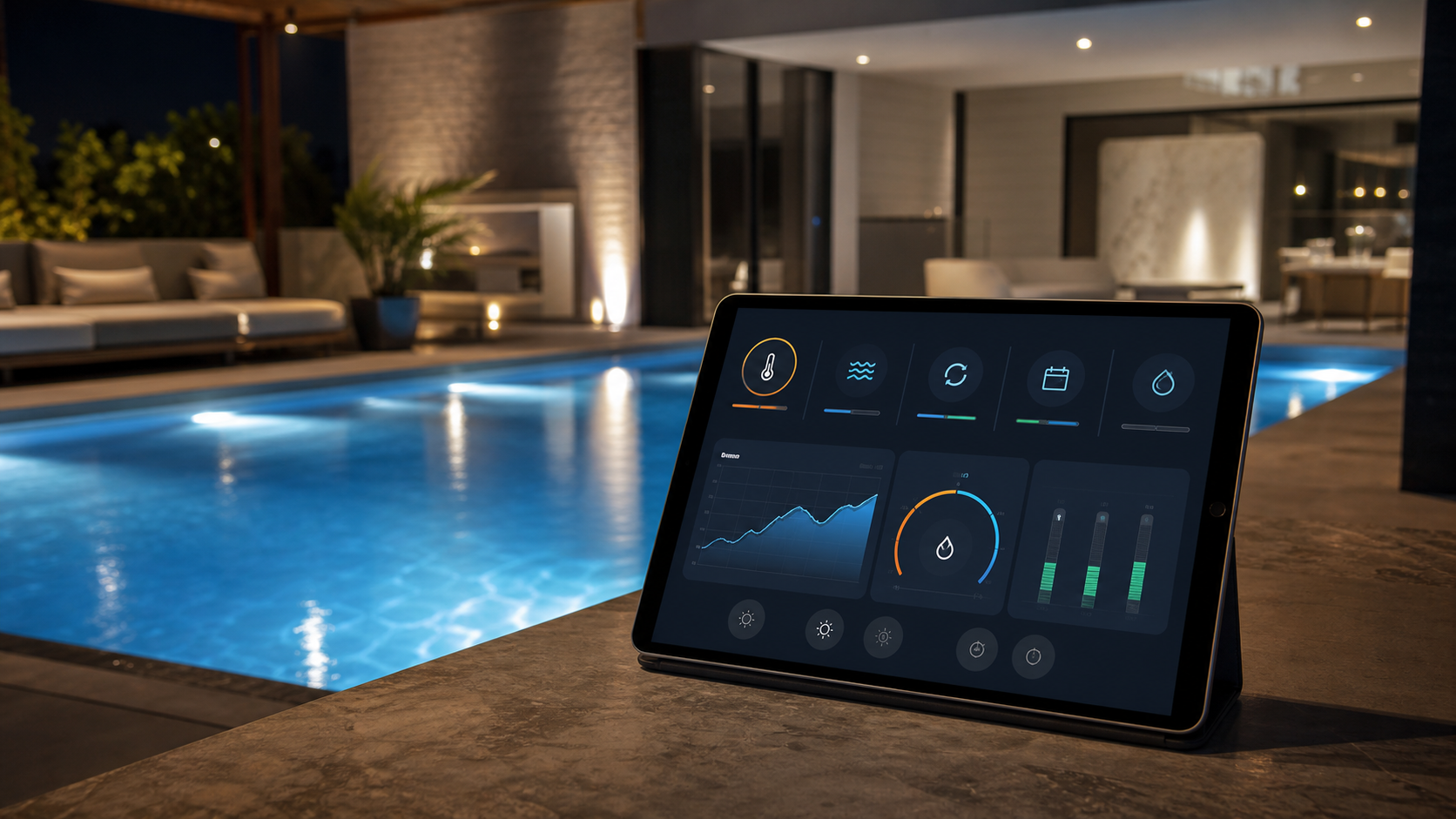
03Centralize schedules, temperature, circulation and compatible states.
Automation adds context and consistency, but depends on compatibility between controllers, equipment and communications.
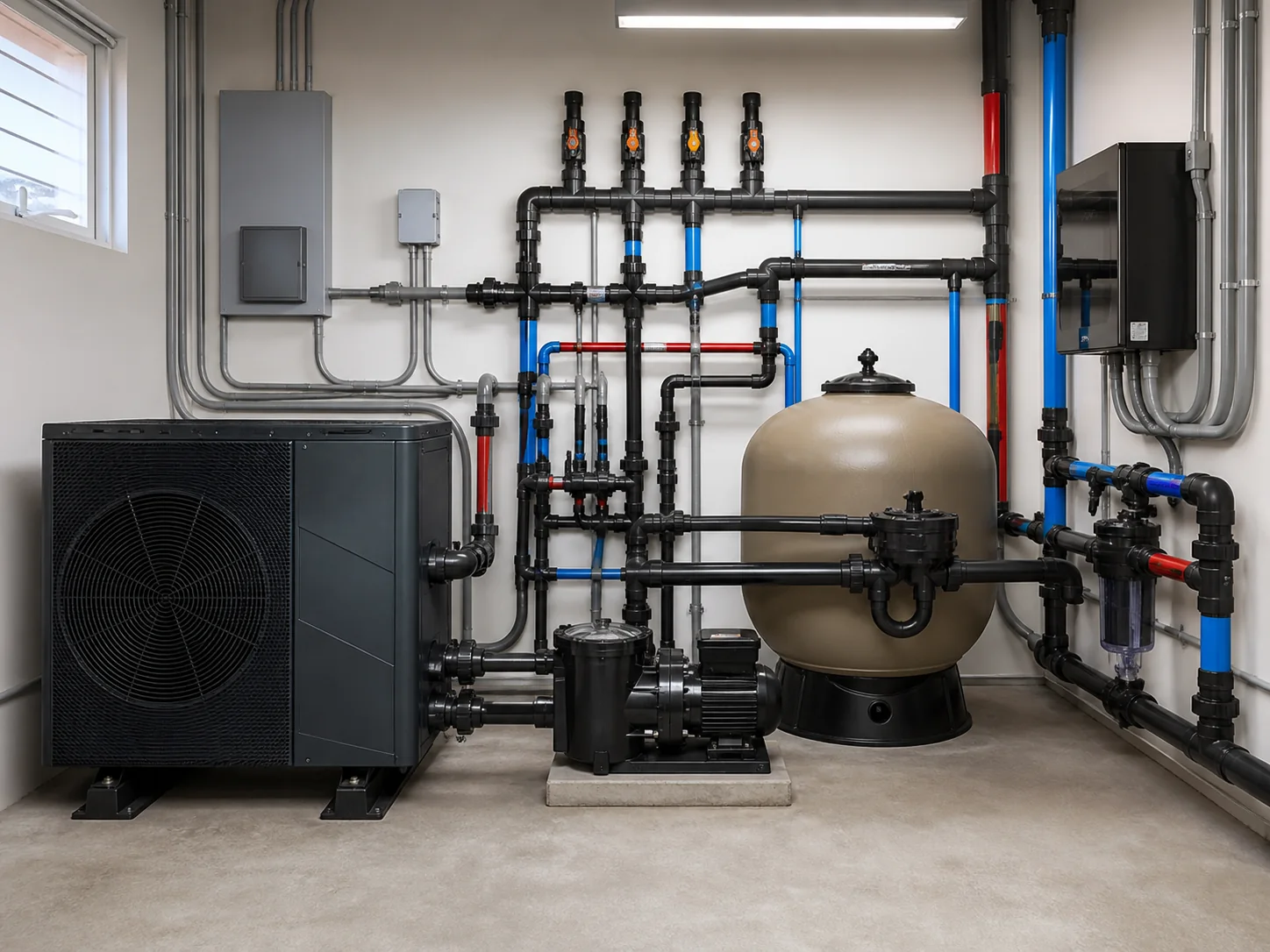 04
04Valves, pumps, filtration, heating and control must work as one architecture.
Adding heat without reviewing flow, losses, piping and control can limit performance. The review starts with the existing system.
A guided estimate helps prepare better questions without replacing final design.
There is no universal rise: climate, losses, capacity, cover, volume and schedule determine the range.
It is estimated from initial energy, system capacity and losses; maintaining temperature is another scenario.
It can, but lower solar resource and greater losses may require more area or a complementary source.
Solar uses available resource; a heat pump provides active control. A hybrid system may coordinate both.
Yes. It reduces evaporation and loss, materially changing required energy.
Volume, area, climate, target, exposure, cover, hydraulics and operating hours are considered.
Yes, by coordinating compatible circulation, valves, sources, sensors and setpoints.
Sometimes; flow, piping, pumps, filtration, space and existing controls are checked first.