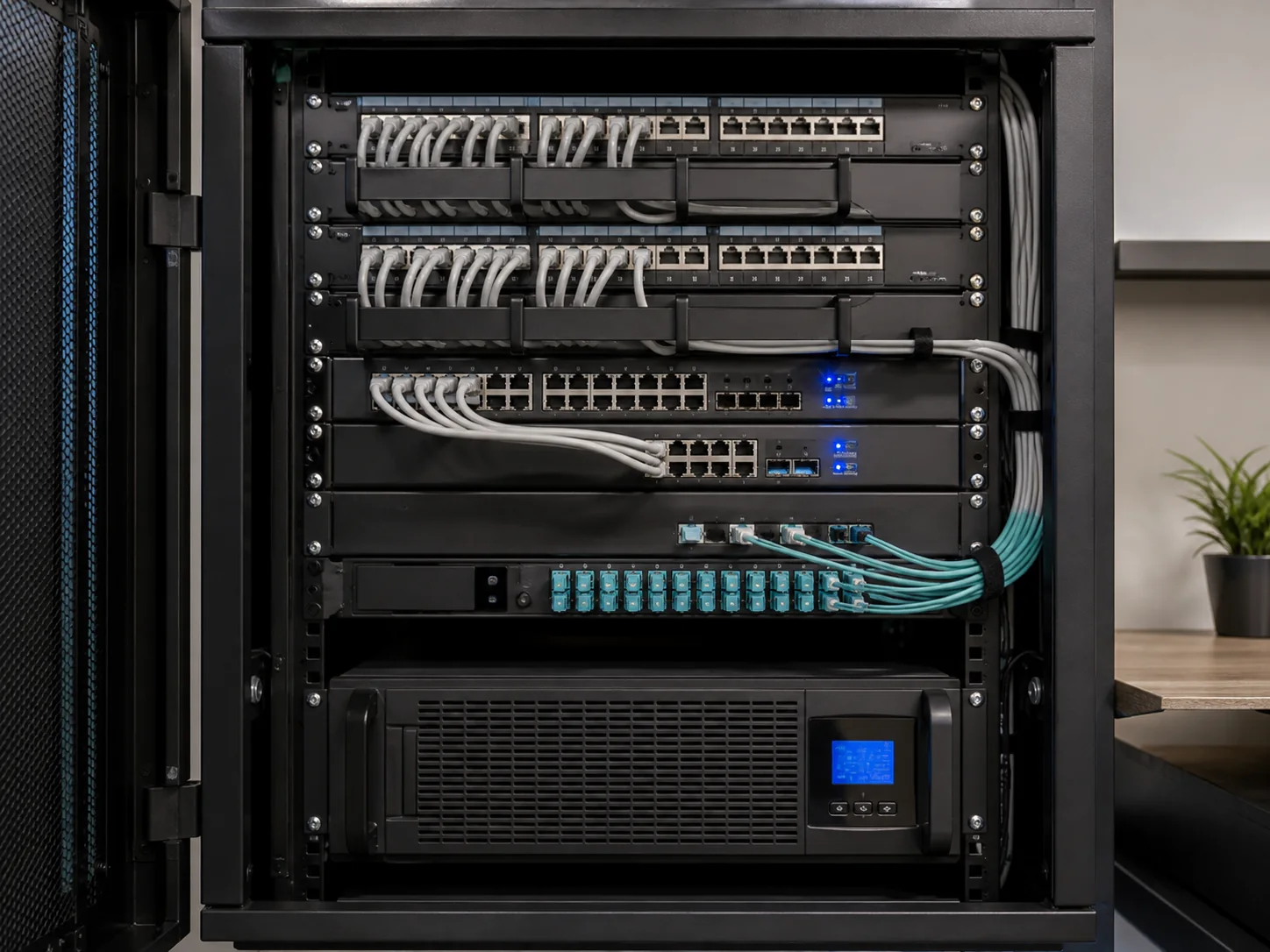
Professional rack with organized structured cabling
THE FOUNDATION OF EVERYTHING CONNECTED

Networks & Connectivity

Intelligent infrastructure starts with a solid network.

CONTEXT-LED DESIGN

We first understand what the system must solve.

Area, materials, density, roaming, cabling and critical applications determine coverage, capacity and management.

WHERE DO YOU NEED CONNECTIVITY?
COMMON NEEDS
  • Multi-level coverage
  • Devices and entertainment
  • Simple control
SUGGESTED SOLUTIONS
  • APs based on materials
  • Stable backhaul
  • Guest network
Explore in NextLum Store
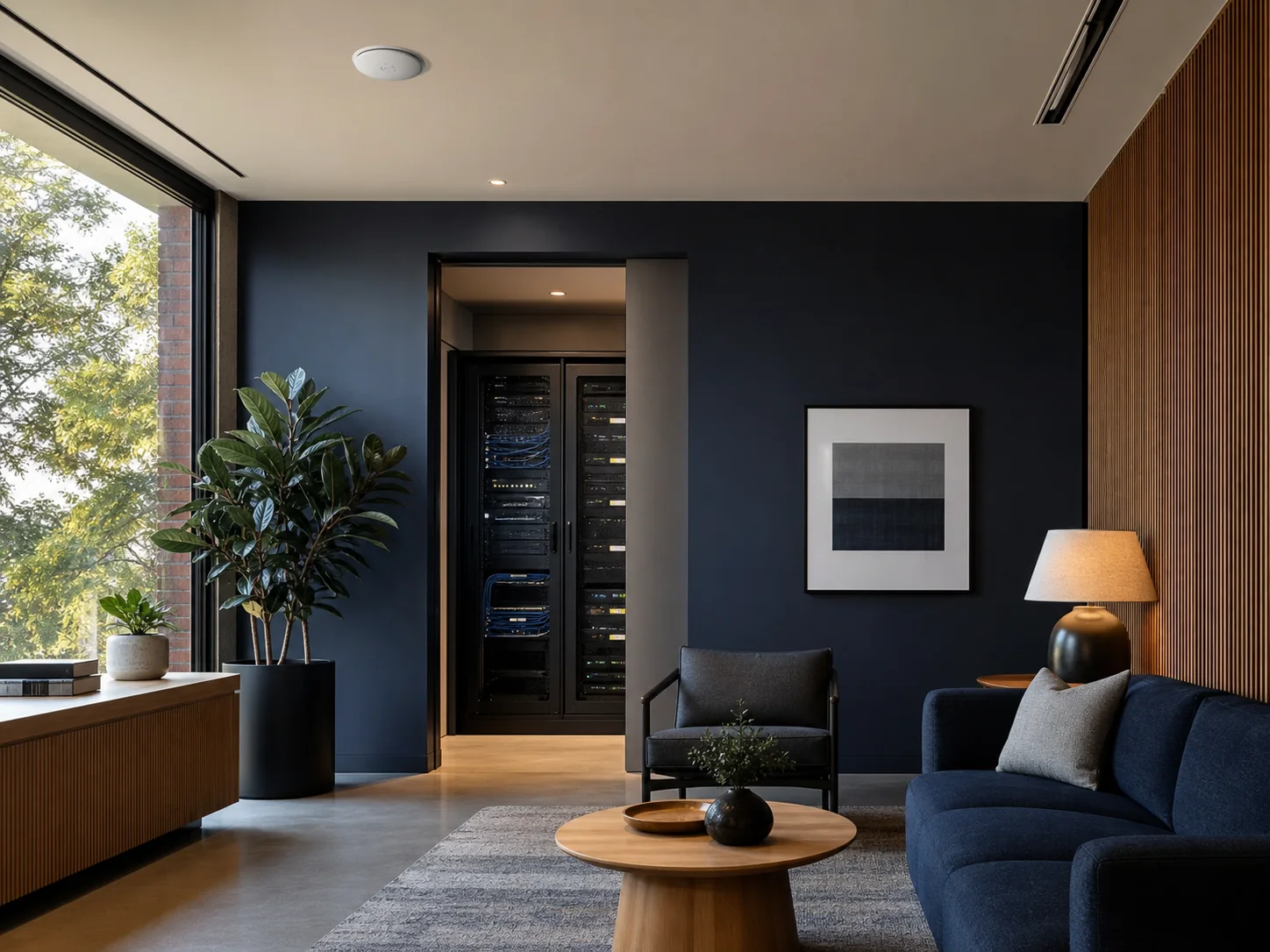
Hotel lobby with discreet WiFi infrastructure01
COVERAGE + CAPACITY

Professional WiFi

A wireless network designed for the space, users and applications.

More power does not always fix WiFi. Coverage, interference, capacity, roaming and cabling must be considered together.
  • Coordinated roaming
  • Guest networking
  • RF design where appropriate
Professional rack with organized structured cabling02
TRAFFIC UNDER CONTROL

Networking

Connect, segment and protect the flow of information in your operation.

Switches, routing, firewall and policies must respond to who uses the network and why.
  • Central management
  • Organized traffic
  • Redundancy where appropriate
Professional connectivity infrastructure03
INVISIBLE ORDER

Infrastructure

Cabling, fiber, racks and power prepared to operate and grow.

The physical layer determines stability, maintenance and future capacity; order is part of performance.
  • Clear maintenance
  • Future readiness
  • Less improvisation
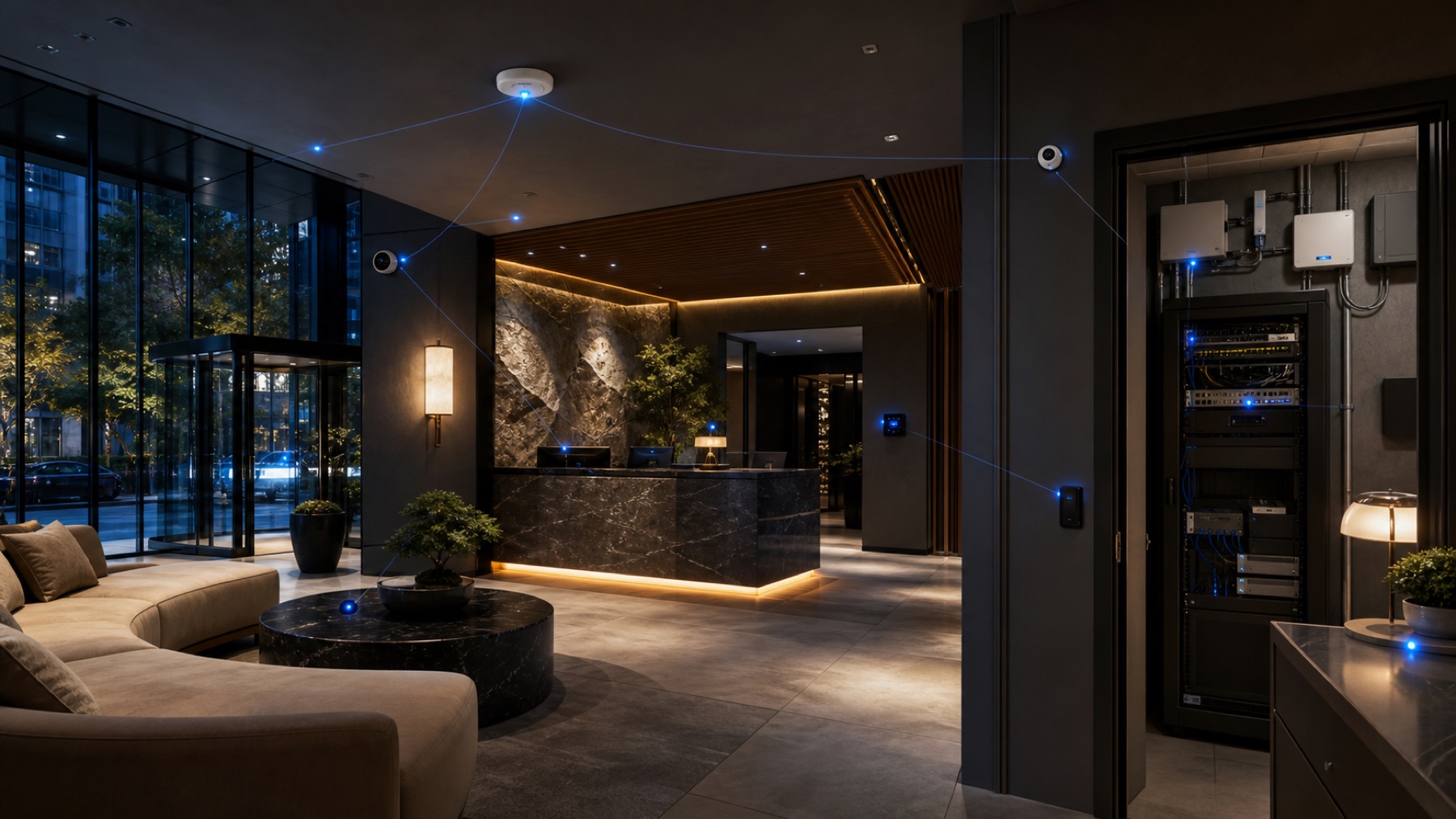
Premium lobby with integrated sensors, gateway, network and IoT automation04
SENSORS + DATA

IoT Connectivity

Connect sensors, gateways and applications to observe and automate.

Protocols and devices are not universally compatible. Architecture defines what data travels, how it integrates and which actions are possible.
  • Actionable data
  • Contextual alerts
  • Designed integration

Technologies and manufacturers we can work with according to project requirements.

CiscoHuaweiUbiquitiTP-LinkMikroTikNETGEARJuniper NetworksFortinetSynologyQNAPMotorolaPalo Alto NetworksBroadcomIntelLenovoRockwell AutomationCiscoHuaweiUbiquitiTP-LinkMikroTikNETGEARJuniper NetworksFortinetSynologyQNAPMotorolaPalo Alto NetworksBroadcomIntelLenovoRockwell Automation
NEXTLUM / TOOLS

Explore your scenario before deciding.

A guided estimate helps prepare better questions without replacing final design.

Open tool
FAQ

Questions before deciding.

Why is there signal but slow Internet?+

Signal does not guarantee capacity: interference, congestion, backhaul, ISP or the device can limit it.

Is Mesh always best?+

No. Mesh helps without cabling, while wired APs often provide more consistent backhaul.

How many access points do I need?+

It is estimated from area, levels, materials, density, channels, applications and feasible placement.

Can I separate guests?+

Yes, using compatible SSIDs, VLANs and policies to separate guests from operations.

What is roaming?+

It is the coordinated handoff of a device between access points with minimal interruption.

Should access points be wired?+

When feasible, yes: cabling provides predictable capacity and frees wireless spectrum.

Can I improve without changing ISP?+

Yes, when the bottleneck is coverage, local network or configuration rather than the ISP.

How do home and professional WiFi differ?+

Professional networking emphasizes capacity design, segmentation, monitoring and centralized management.

NextLumNEXT STEP

Let's turn a need into a coherent system.

Start a project
WhatsApp