INTRODUCTION
A pool can reach a comfortable temperature in the afternoon and be several degrees cooler by morning. Before adding a larger heater, ask where the heat you already produced is going.
At night solar gain disappears, air temperature often falls and the pool keeps losing energy through evaporation, convection and radiation. Wind can accelerate the process. In pool heating, retaining heat can matter as much as producing it.
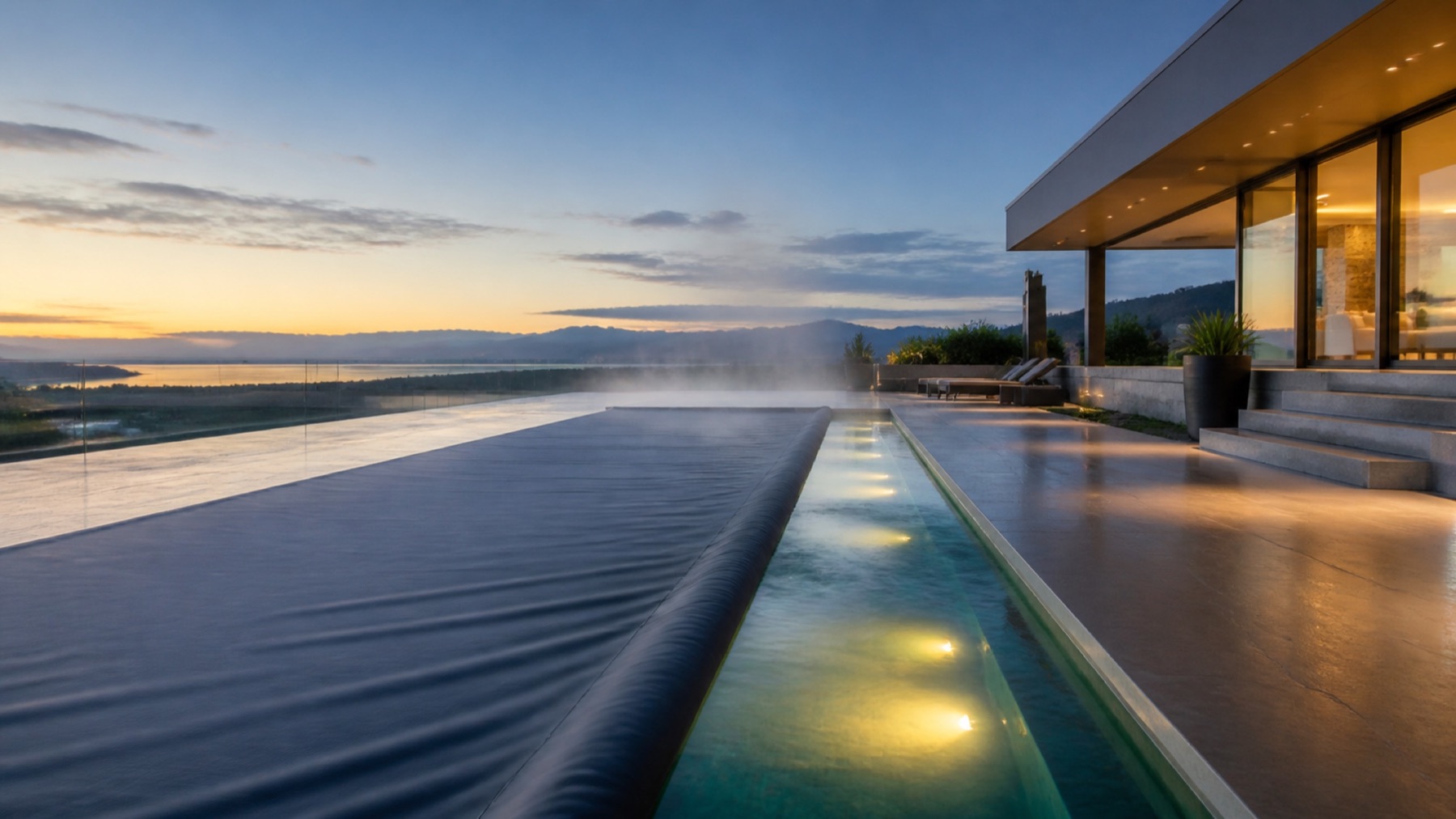
Evaporation removes heat even when the water looks still
Water needs energy to change from liquid to vapor, and that energy comes from the pool. You do not need to see steam; an exposed surface under suitable conditions is enough.
Where does pool heat go?
EVAPORATION ↑
RADIATION TO SURROUNDINGS ↑
SMALLER LOSSES THROUGH STRUCTURE/PIPING ↓
Wind renews the air above the surface
As the air immediately above the water becomes humid, evaporation tends to slow. Wind removes it and replaces it with drier air, allowing the process to continue. Two identical pools in the same city can behave differently when one is sheltered and the other is exposed.
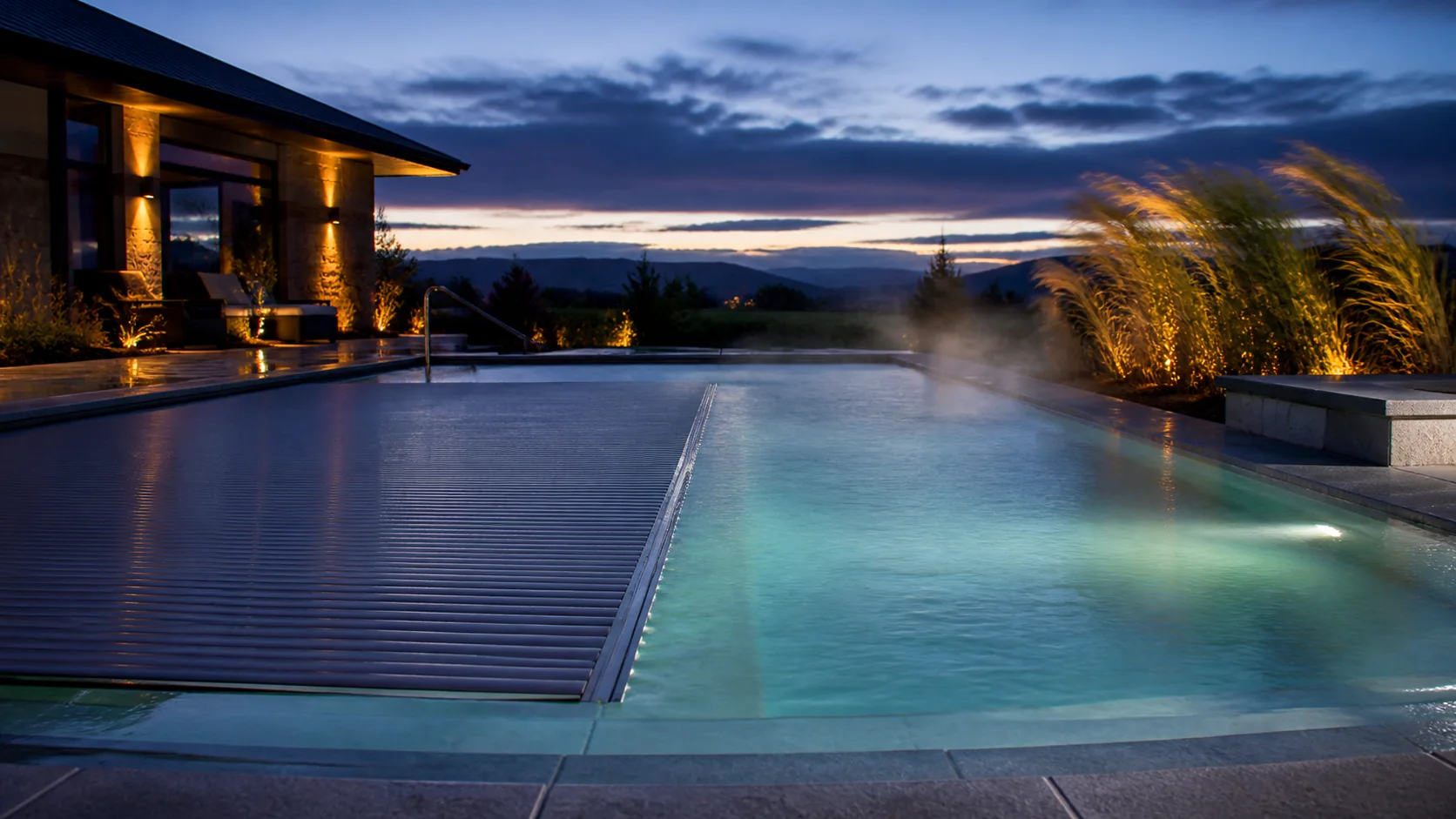
A cover can change the conversation before the heater changes
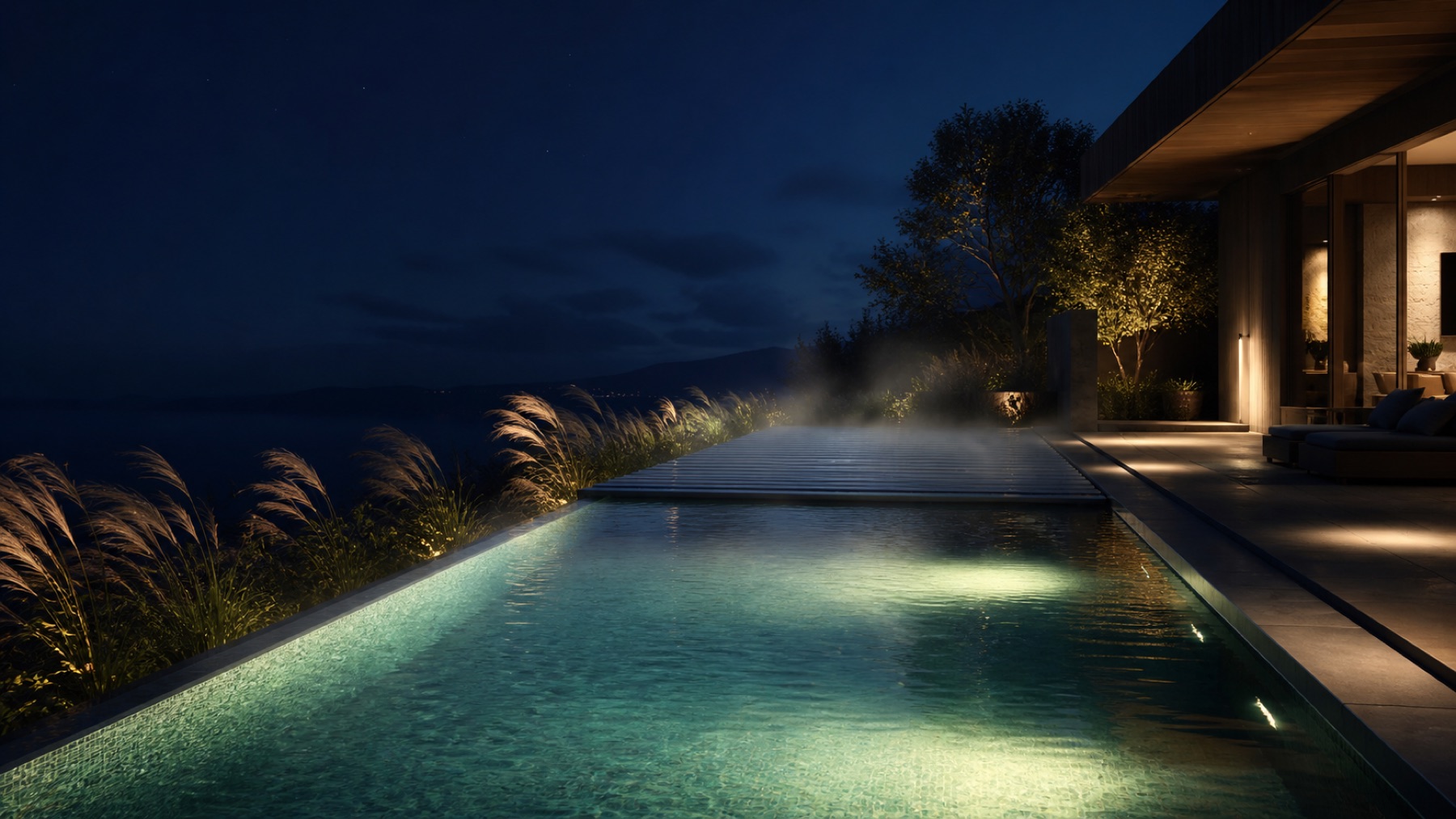
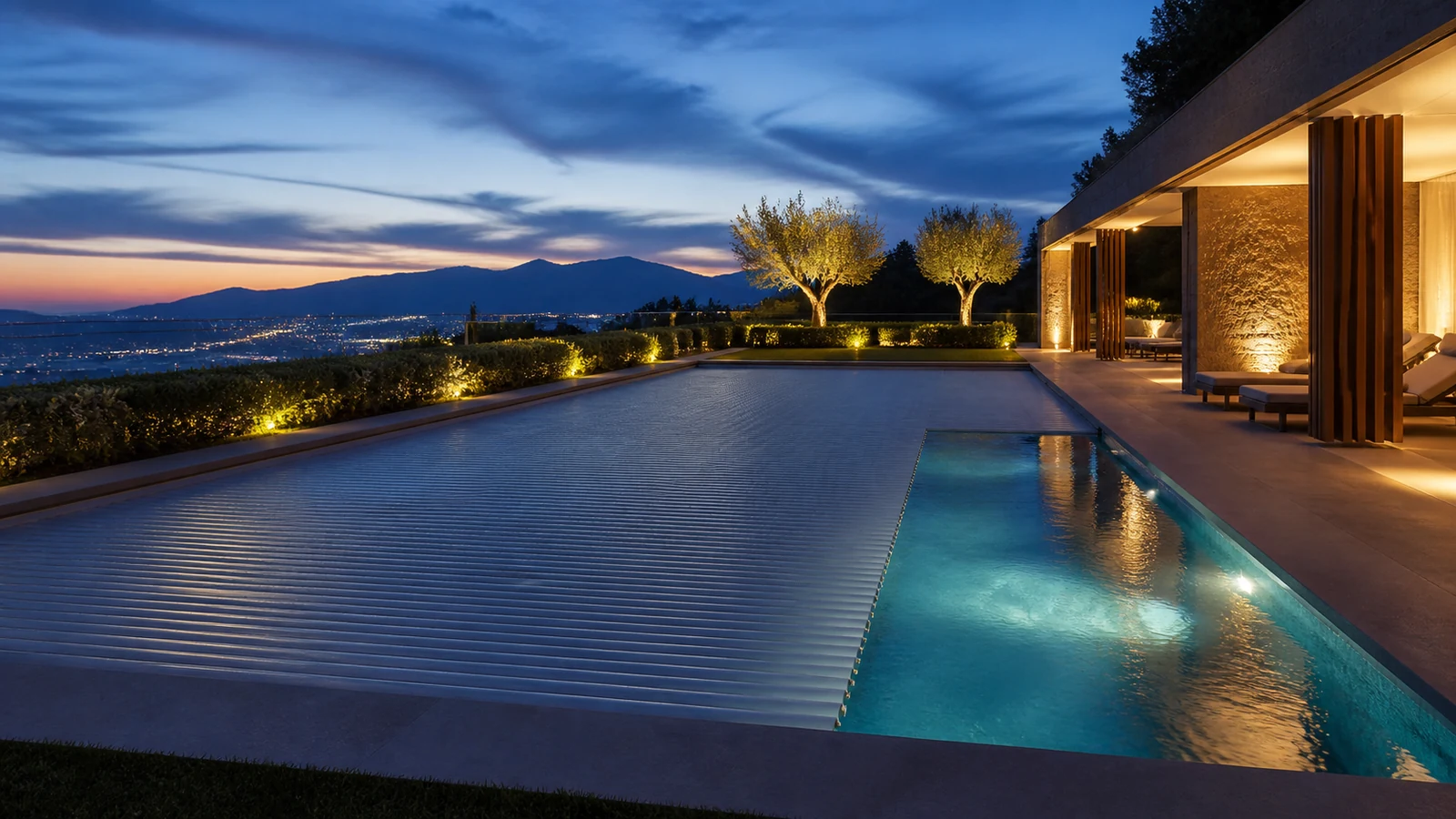
A cover reduces direct surface exposure and can meaningfully limit evaporation while in place. Its value depends on type, fit, safety and whether it is actually used.
EXAMPLE: the same pool, two routines
Two similar properties use comparable heaters. One leaves the pool open every night; the other covers it after use. The second does not necessarily heat more—it simply starts the morning having lost less.
Heating from cold and maintaining temperature are different problems
Raising a large volume of water several degrees requires substantial energy. Once target temperature is reached, the system only needs to replace ongoing losses. A serious estimate separates warm-up from maintenance.
| Factor | What it causes | What to review |
|---|---|---|
| Open surface | More evaporation | Cover and usage schedule |
| Wind | Renews humid air and increases exchange | Exposure and suitable barriers |
| Larger water-air difference | Increases losses | Target temperature and schedule |
| Piping/insulation | Losses outside the pool | Runs and insulation |
| Night use | Keeps the surface open during colder hours | Heating strategy |

Answers with the full context.
Why does my pool lose temperature even when the heater works?+
Because the heater can add energy correctly while the surface, wind and surroundings remove it. Large overnight losses must be recovered the next day.
Does a cover really help?+
It can reduce surface exposure and evaporation while in place. Its effect depends on material, fit, site conditions and consistent use.
Does wind matter much?+
It can. Wind removes humid air from the surface, sustaining evaporation and increasing convective exchange.
Do I need a larger heater if the pool cools significantly overnight?+
Not necessarily. Identify losses first and review covers, insulation and operating strategy before adding capacity.
SOURCES AND REFERENCES2
References consulted for this editorial review.
- Conservar:
- U.S. Department of Energy — Consumer Pool Heaters