INTRODUCTION
When a pool heats slowly or loses temperature overnight, the natural reaction is to ask for a more powerful heater. Producing more heat is not always the first step.
A pool exchanges energy continuously with air, wind and evaporation. If losses are high, a larger system may spend most of its effort replacing energy that could have been retained. That is where a cover changes the equation.
1. Evaporation removes heat as well as water
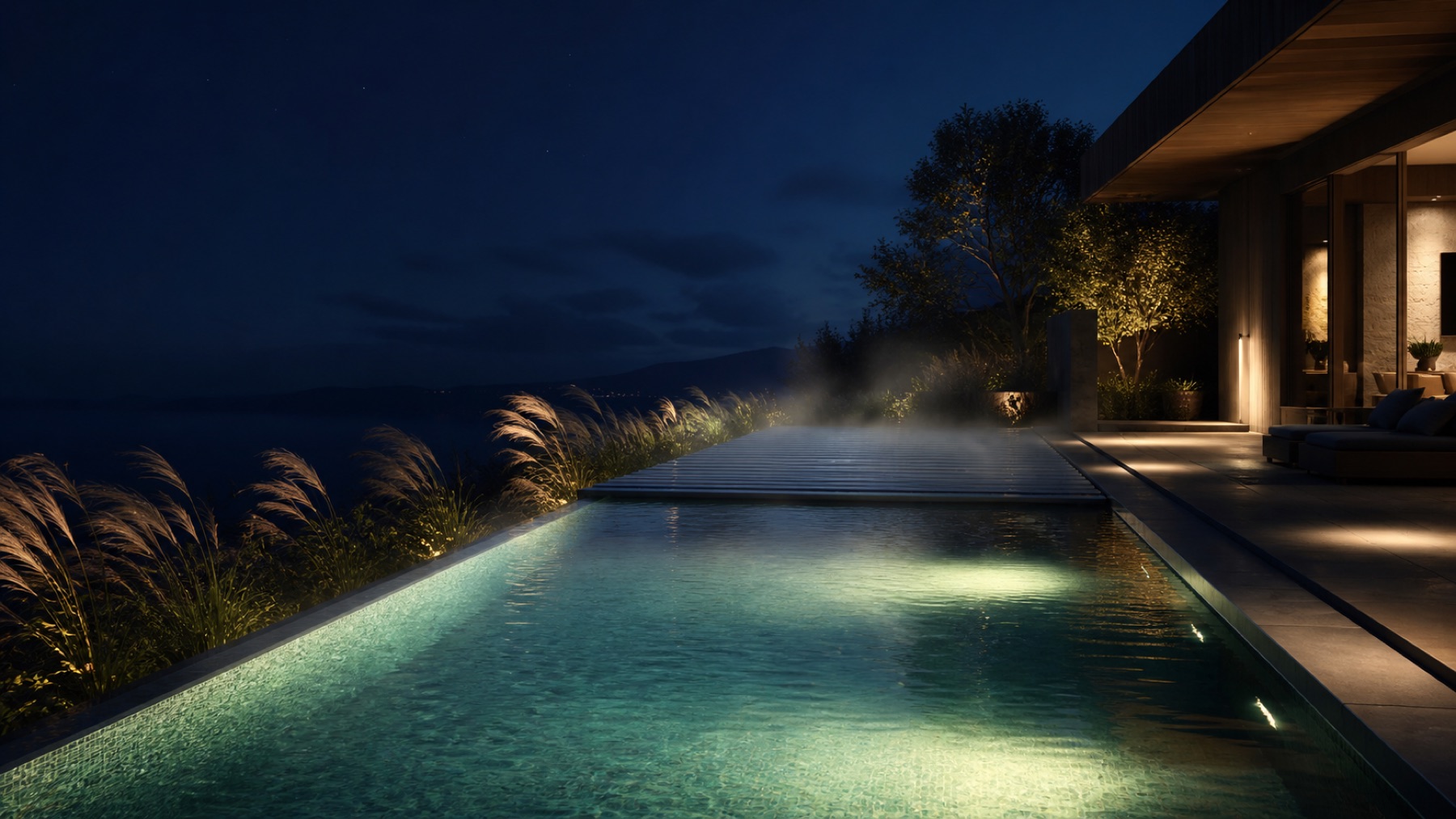
Water needs energy to become vapor, and that energy comes from the pool. Wind can accelerate the exchange by removing humid air above the surface, which is why a windy night can change thermal behavior substantially.
Where a pool loses heat
Evaporation (principal) / convection and wind / radiation
Replaces the energy that escapes
2. A cover changes the balance before the heater changes
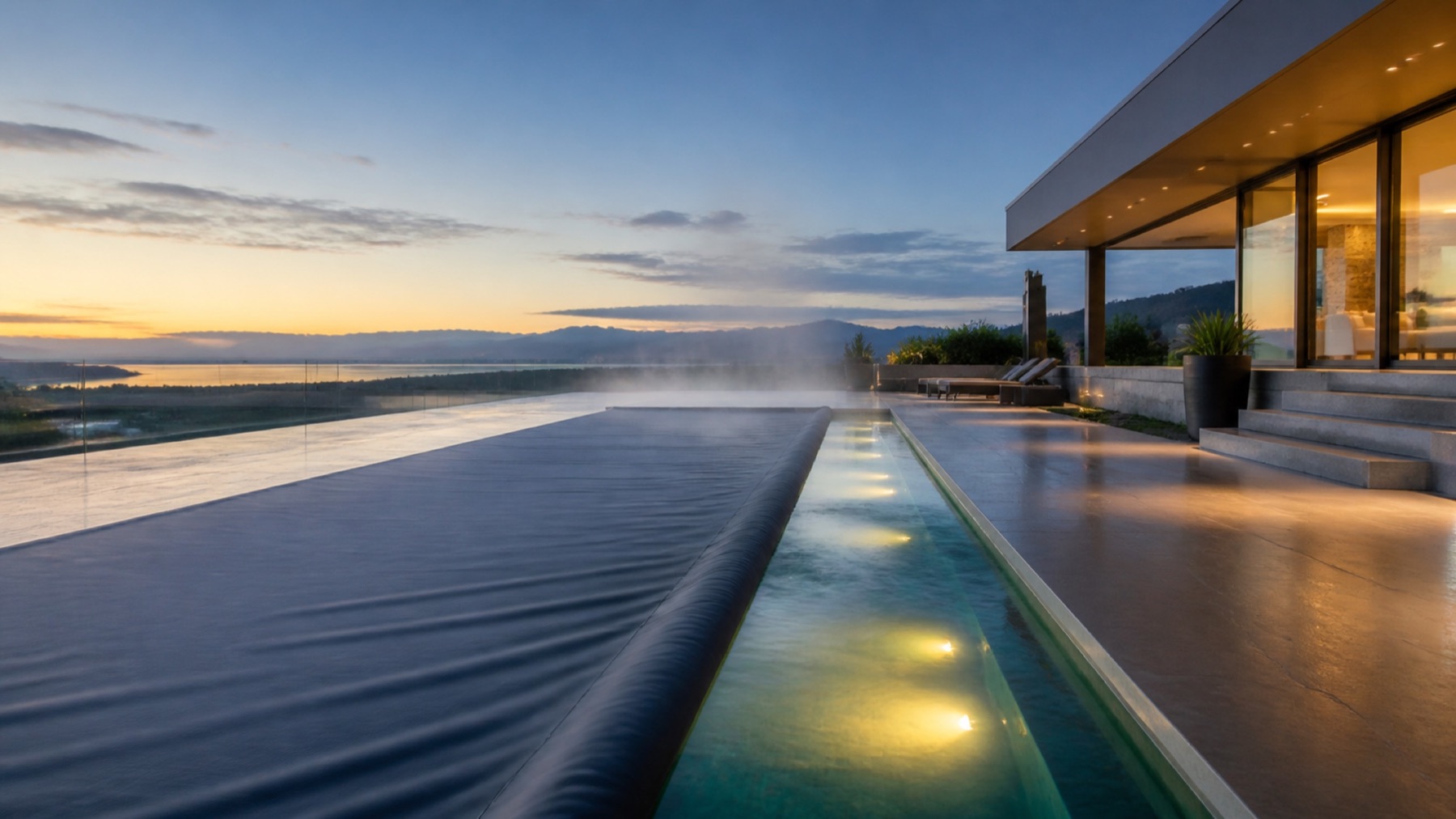
Covering the surface properly during unused periods reduces direct exposure to air and part of the evaporation. The heating system then has less energy to replace.
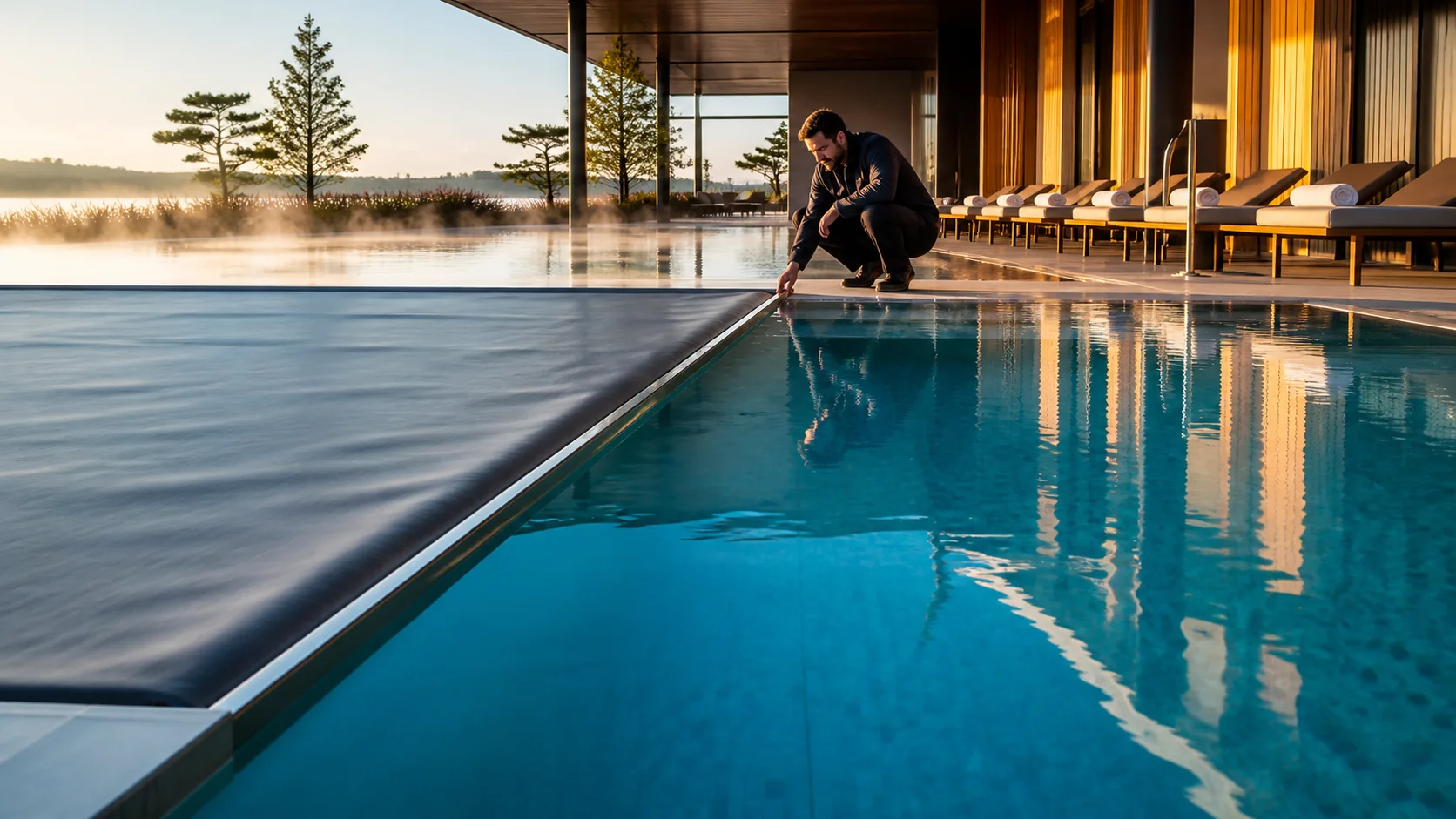
Example: recovering every morning what was lost overnight
A pool reaches target temperature in the afternoon, remains uncovered all night and needs hours of recovery every morning. With consistent cover use, the loss decreases and the equipment no longer starts so far behind. The heater did not change; the thermal load did.
3. Heating and maintaining are different problems
Heating raises a mass of water from one temperature to another. Maintaining compensates for continuing losses. A system can have enough power to heat and still consume excessively when losses remain uncontrolled.
| Factor | Typical effect |
|---|---|
| Large surface | More exchange |
| Wind | More evaporation and convection |
| Cold night | Greater temperature difference |
| No cover | Continuing losses |
| Well-used cover | Reduces part of the losses |
| Frequent use | More uncovered hours |
4. Does a cover replace a heating system?
Not necessarily. A cover retains heat; a heater supplies energy. Many projects work best by reducing losses first and then sizing the required heat input.

From context to a decision.
Estimate the thermal requirement
Open the pool calculator↗Design heating and heat-loss control
Design the solution↗Answers with the full context.
When should the cover be used?+
Primarily while the pool is not in use, especially overnight or during windy periods, while following the safety and handling guidance for the specific product.
Does a cover eliminate all losses?+
No. It can reduce a significant part of surface exchange, but other losses remain.
Can it help if I already have a heat pump?+
Yes. Lower losses can reduce the work required to maintain temperature.
What information is useful for estimating pool heating?+
Volume or dimensions, current and target temperature, climate, use, cover and exposure all provide useful context.
SOURCES AND REFERENCES1
References consulted for this editorial review.
- Swimming Pool EfficiencyU.S. Department of Energy · Better Buildings