INTRODUCTION
Three installations may use very similar panels and behave completely differently when the grid fails. One disconnects for safety, another keeps selected circuits running, and a third operates where utility service never existed.
The difference is not only the panels. It is the architecture.
1. Grid-tied: the utility grid is part of the architecture
A grid-tied system generates energy while working with the utility. Its usual goal is to offset grid consumption and manage exports where the applicable framework allows. A conventional system normally disconnects during an outage for safety.
Having panels does not automatically mean having backup.
Grid-tied architecture
2. Hybrid: solar, grid and battery are coordinated
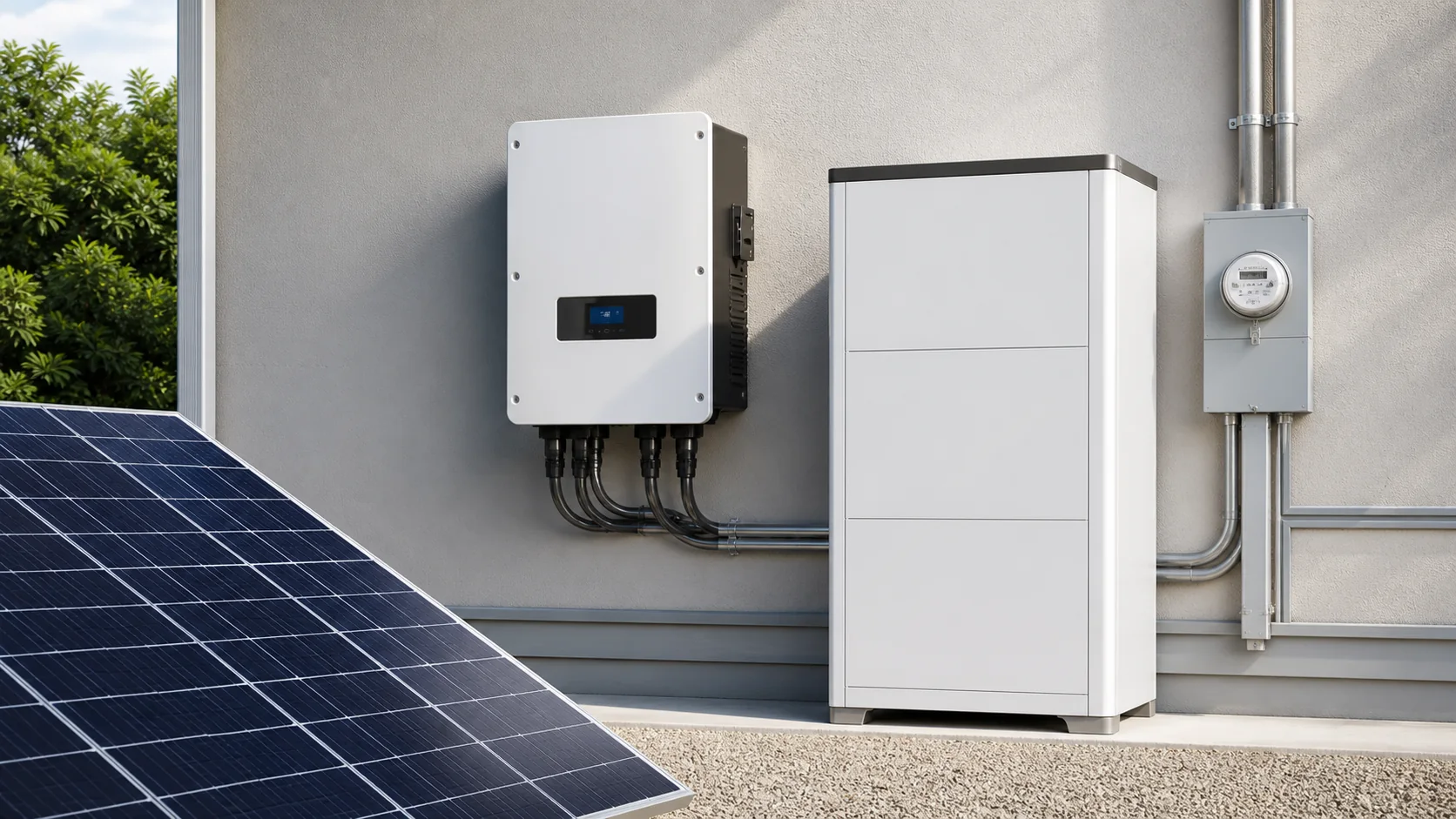
A hybrid system can add storage and control logic to reserve energy, shift consumption and keep selected loads running during an outage, depending on the design.
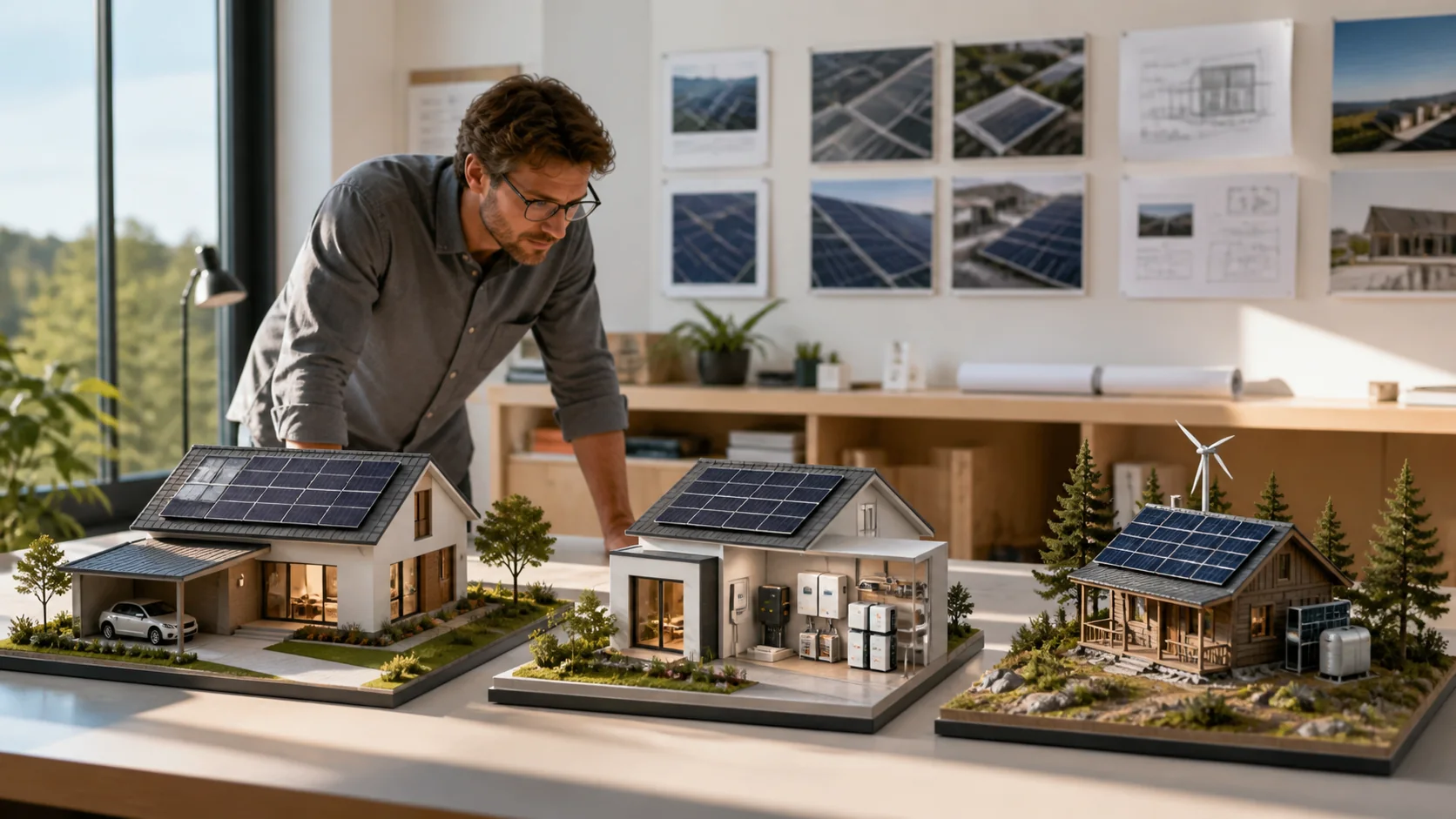
Example: a home with critical loads
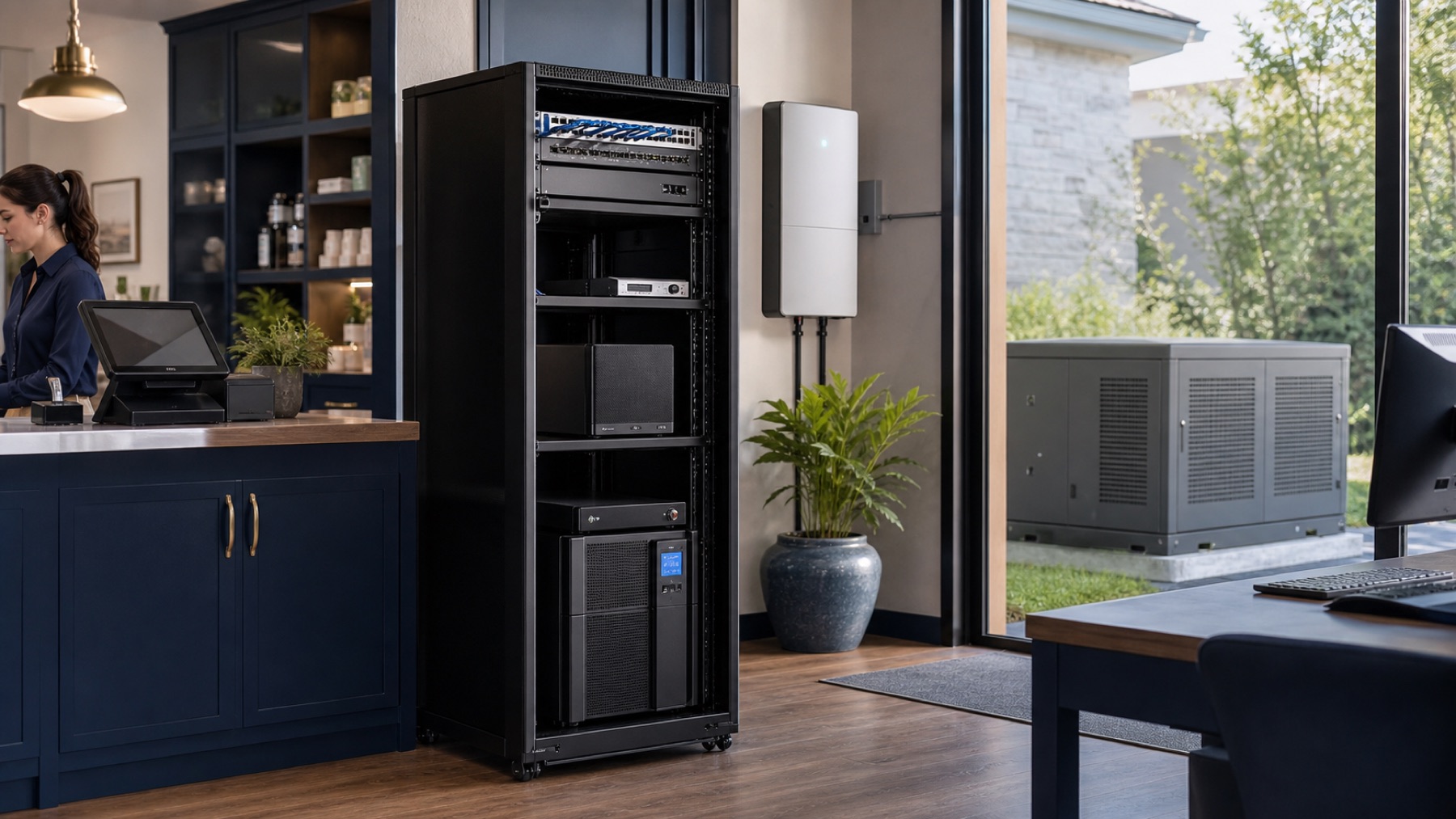
A home wants lower grid consumption and continued refrigeration, Internet, lighting and CCTV during outages. That requires defining loads, power, transfer and isolation, usable battery capacity and reserve strategy—not simply adding a battery.
3. Off-grid: the utility cannot rescue the calculation
An off-grid design cannot assume the grid will appear after several low-generation days. Consumption, seasonality, storage, auxiliary energy where appropriate, priorities and maintenance become central. Reducing demand can be as valuable as adding capacity.
4. Comparison
| Grid-tied | Hybrid | Off-grid | |
|---|---|---|---|
| Uses utility grid | Yes | Usually | No |
| Battery | Not required | Common or goal-dependent | Normally required |
| Outage behavior | Usually disconnects | Can back up if designed to do so | Operates without the grid |
| Complexity | Lower | Medium to high | High |
| Priority | Savings and self-consumption | Savings plus flexibility or backup | Autonomy |
| Sizing basis | Consumption and resource | Consumption, critical loads and battery | Consumption and a reasonable worst case |
5. Which one fits?
- Is a reliable grid available?
- Do you want to operate during outages?
- Which loads must remain on?
- For how long?
- Is the battery for backup, self-consumption or both?
- What growth do you expect?

From context to a decision.
Components for a defined architecture
Explore Store↗Estimate the solar scale
Open the calculator↗Design around grid, battery and backup
Design my solution↗Answers with the full context.
Does a grid-tied system work during an outage?+
A conventional grid-tied system normally disconnects for safety. Outage operation requires an architecture specifically designed for backup.
Does every hybrid system have a battery?+
The term is used differently in the market. Verify the actual architecture, ports, sources and operating modes of the equipment.
Can an off-grid system use a generator?+
Some designs include an auxiliary source. It must be sized and integrated around real operation.
Is battery capacity calculated from panel count?+
No. Capacity depends primarily on loads, required energy, power, runtime and the operating strategy.
SOURCES AND REFERENCES3
References consulted for this editorial review.
- Homeowner’s Guide to SolarU.S. Department of Energy
- Solar Integration: Solar Energy and Storage BasicsU.S. Department of Energy
- Solar and Resilience BasicsU.S. Department of Energy