INTRODUCTION
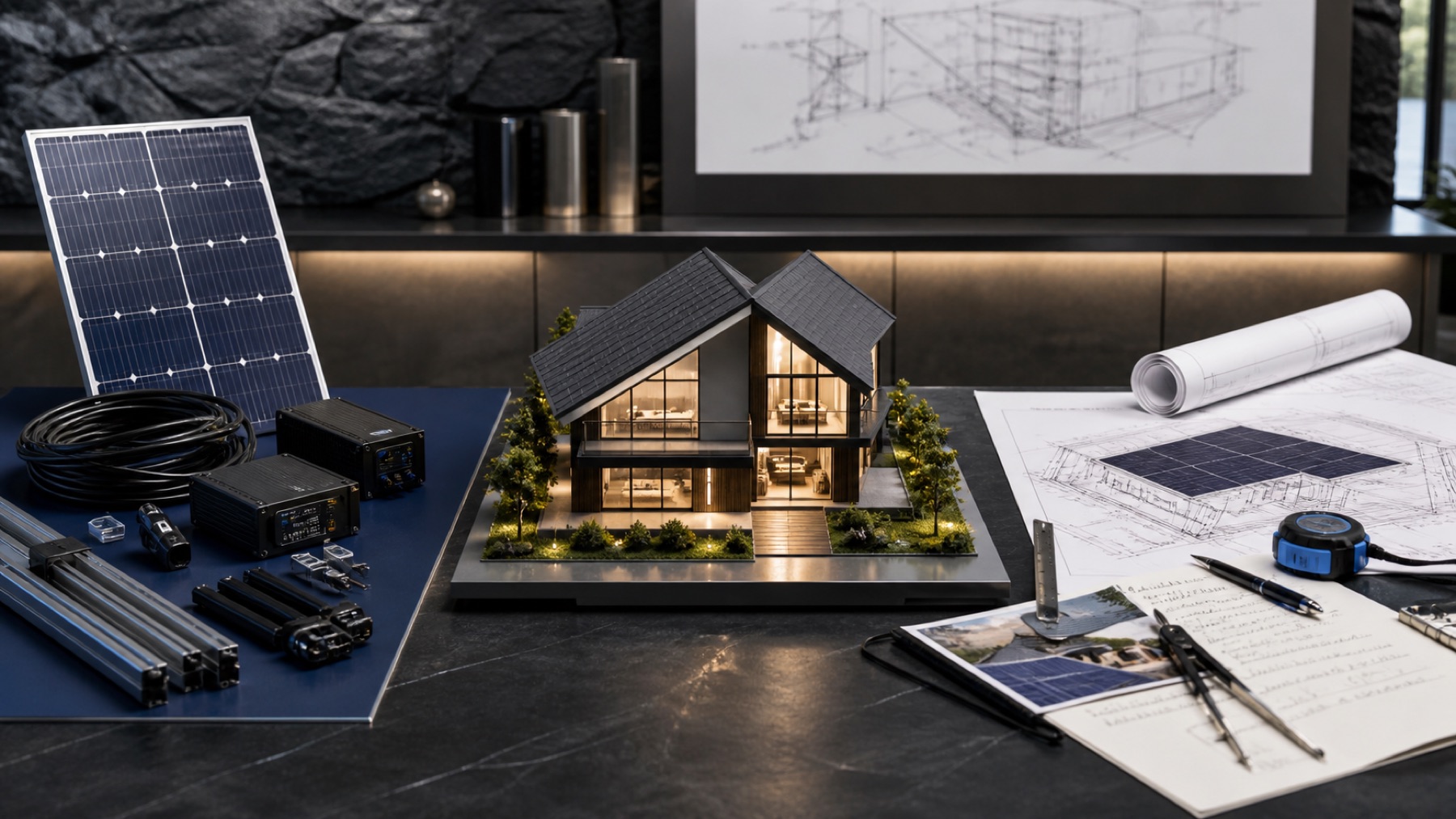
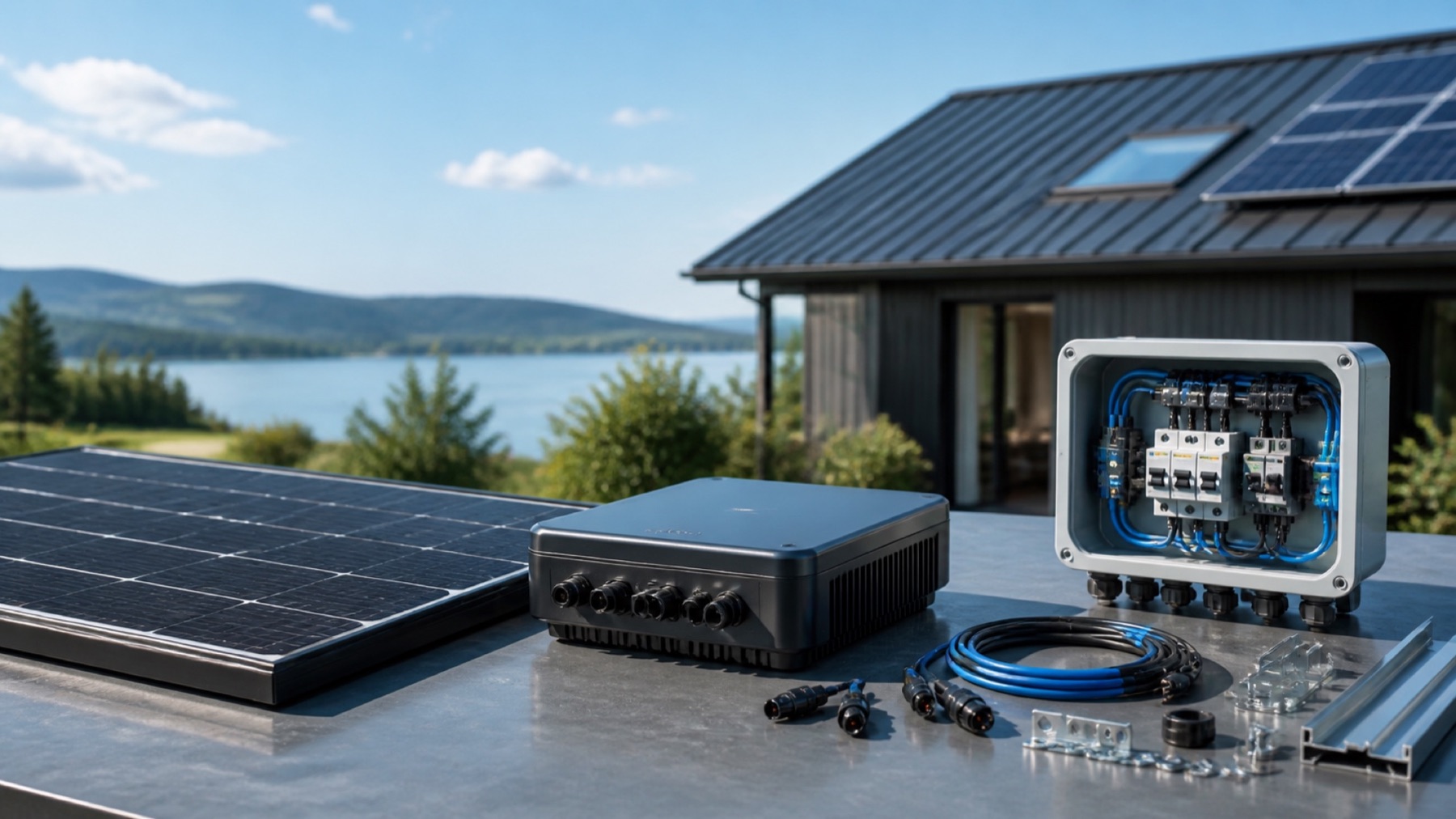
Solar kits do something useful: they group components and reduce separate purchasing decisions. But a photo of modules, inverter and accessories does not prove that the whole system fits your case.
Before buying, check two different things: whether the components work correctly together and whether the complete system does what you need.
1. Define what the system must do
Reducing grid consumption, supporting loads during an outage, operating off-grid and preparing for a future battery are different objectives. Define the primary one before comparing models.
2. Review consumption before counting panels
Module count should follow consumed energy, solar resource and coverage goal. Use several billing periods so seasonal air conditioning, pumps or heating do not distort the decision.
3. Confirm module and inverter operating ranges
Total wattage is not the only relevant number. PV strings must remain within the inverter's voltage and current limits under changing conditions. Clear documentation should justify the proposed combination.
4. Do not overlook protection and disconnection
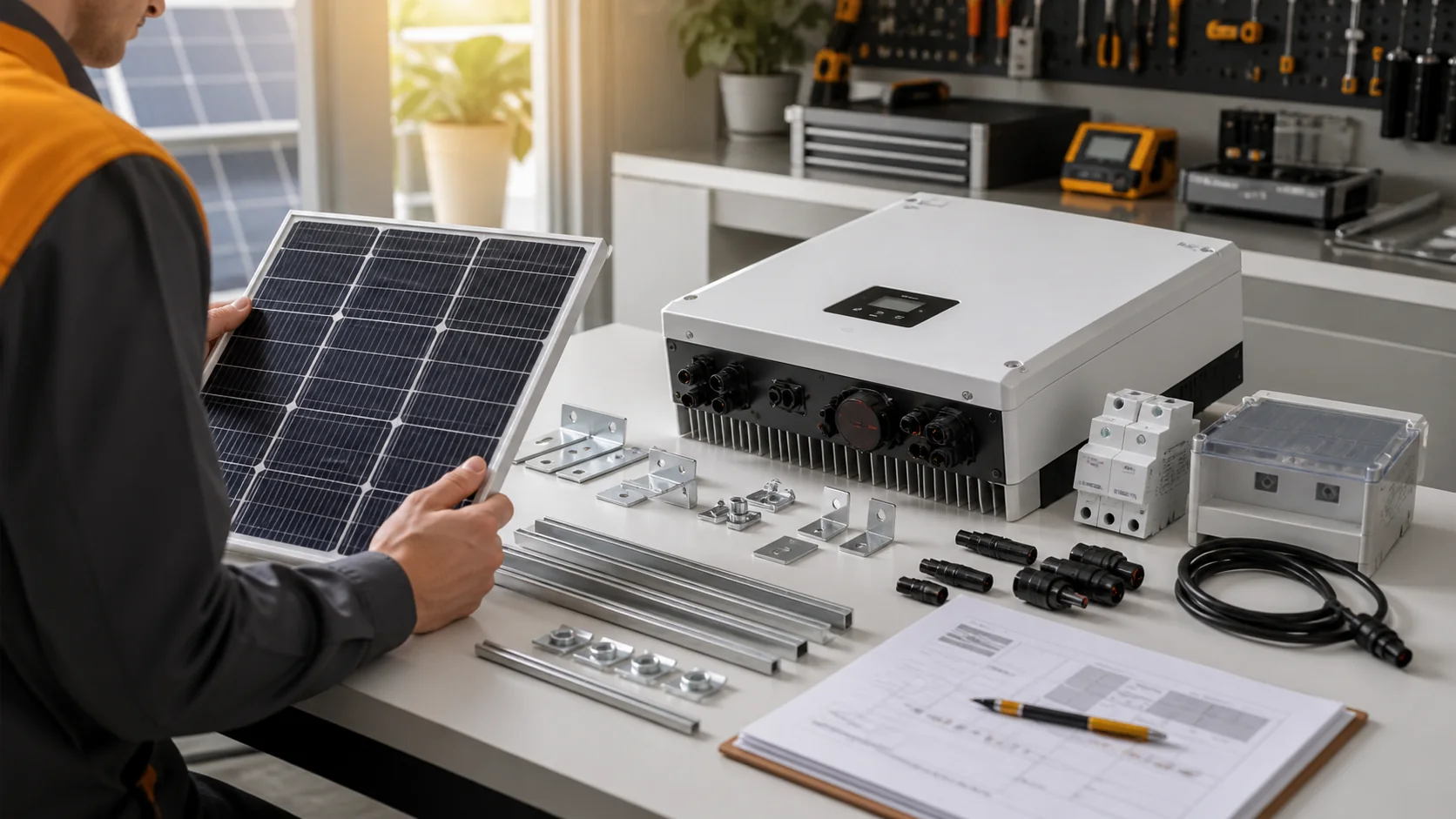
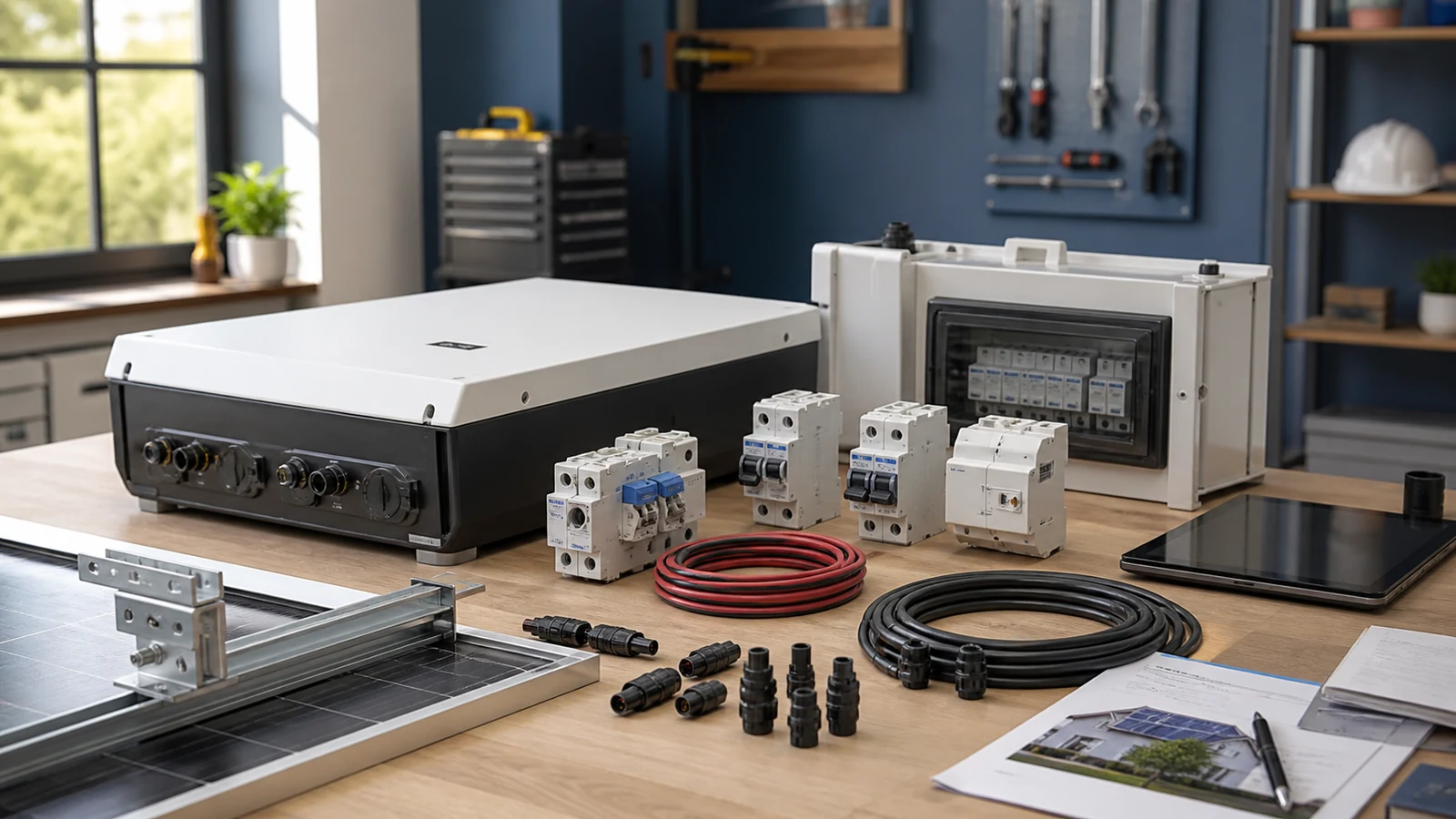
A safe DC and AC architecture may include isolation, overcurrent and surge protection, grounding and site-specific requirements. A kit showing only modules and inverter may not include everything needed.
5. Mounting is not universal
Tile, concrete and metal roofs need different fastening solutions. Loads, waterproofing, corrosion, wind, spacing and service access also matter. The structure must match the actual roof, not only the module size.
6. Clarify what installation includes
Ask whether the scope covers mounting, wiring, raceways, protection, survey/engineering, installation, inverter setup, commissioning, monitoring and required applications or filings.
7. Monitoring, warranty and support matter after day one
A PV system operates for years. Fault detection, production review and understandable alerts may matter more over time than a small upfront price difference.
8. Consider growth before closing the architecture
If batteries, an EV or more generation may realistically be added, account for them now without necessarily buying them today.
9. A kit does not replace professional installation
Grouped equipment still requires electrical, structural and commissioning work. Use the kit as the starting point for a technically sound implementation.
9 checks before buying
OBJECTIVE · CONSUMPTION · MODULES/INVERTER · PROTECTION · MOUNTING · INSTALLATION · MONITORING · GROWTH · SUPPORT
| What is visible | What else to check |
|---|---|
| Modules | Expected production, shade and usable area |
| Inverter | Architecture, strings, power and future batteries |
| Mounting | Roof type, fastening, corrosion and maintenance |
| Wiring | Gauge, route, raceway and connectors |
| Kit power | Annual consumption, coverage goal and losses |
| Warranty | Responsible party, monitoring and support |

Answers with the full context.
Should a solar kit include absolutely everything needed for installation?+
Not necessarily. Some kits focus on principal equipment; others include some protection or mounting. Review the exact bill of materials and separate equipment, engineering, installation and commissioning.
How do I know whether the inverter is compatible with the modules?+
The string configuration must remain within inverter voltage and current ranges. Do not assume compatibility from nominal wattage alone.
Can I buy a kit without knowing annual consumption?+
You can, but the risk of selecting the wrong size increases. Several billing periods and a solar calculator provide a better reference.
What should I check if I want to add batteries later?+
Review inverter architecture and compatibility, load power, backup strategy and future integration capacity from the beginning.
SOURCES AND REFERENCES3
References consulted for this editorial review.
- Conservar:
- U.S. Department of Energy — Homeowner’s Guide to Solar
- Walk Me Through It: A Step-By-Step Guide for Consumers Going Solar