INTRODUCTION
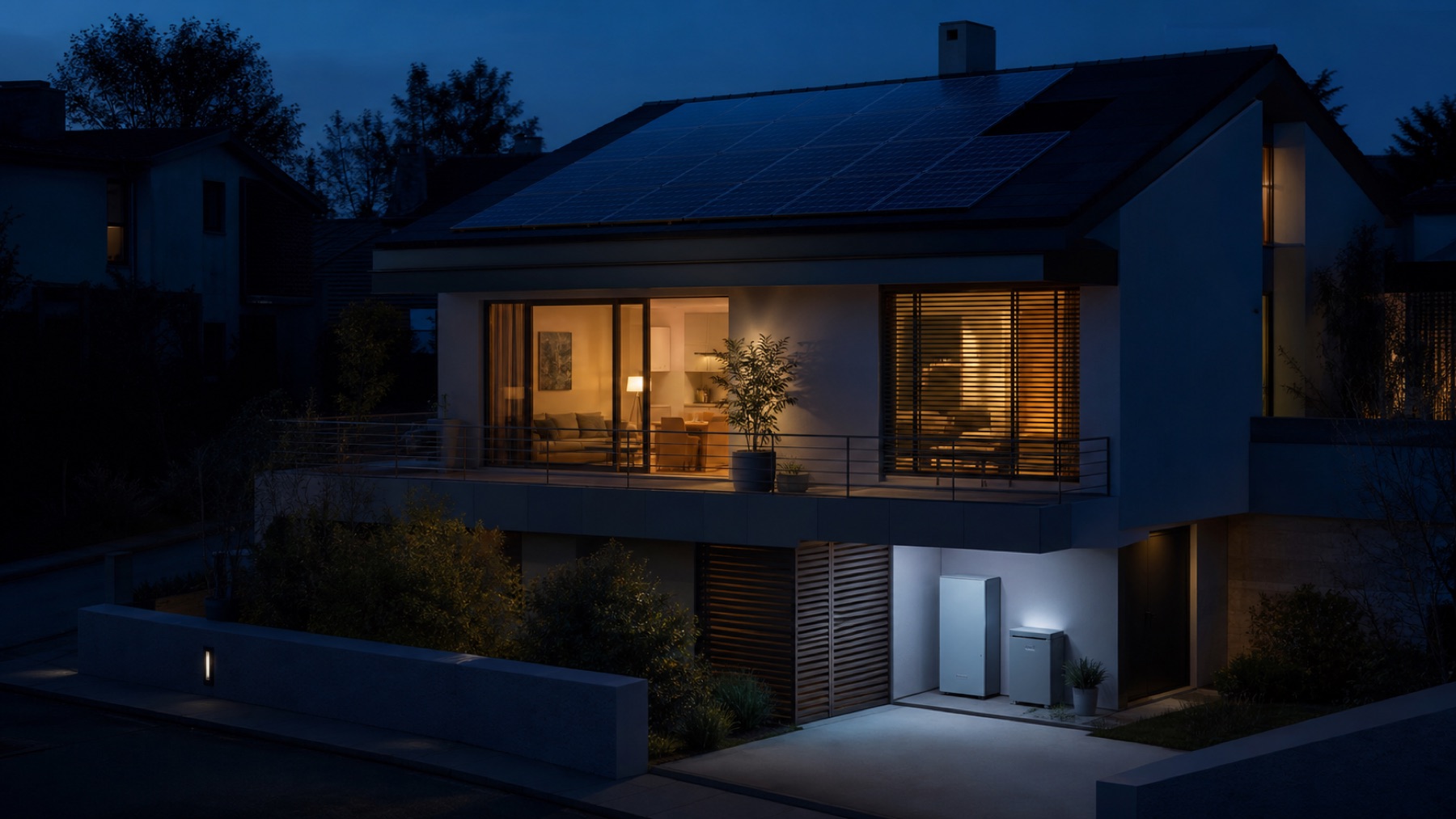
It is nine at night and the power goes out. That is easy to understand: there is no sunlight. But if the outage happens at noon under a clear sky, why can the house still lose power?
A conventional grid-tied PV system is designed to work with the grid, not to create an independent electrical network during a failure. This is why energy savings and backup are related but different objectives.
What happens when the grid disappears
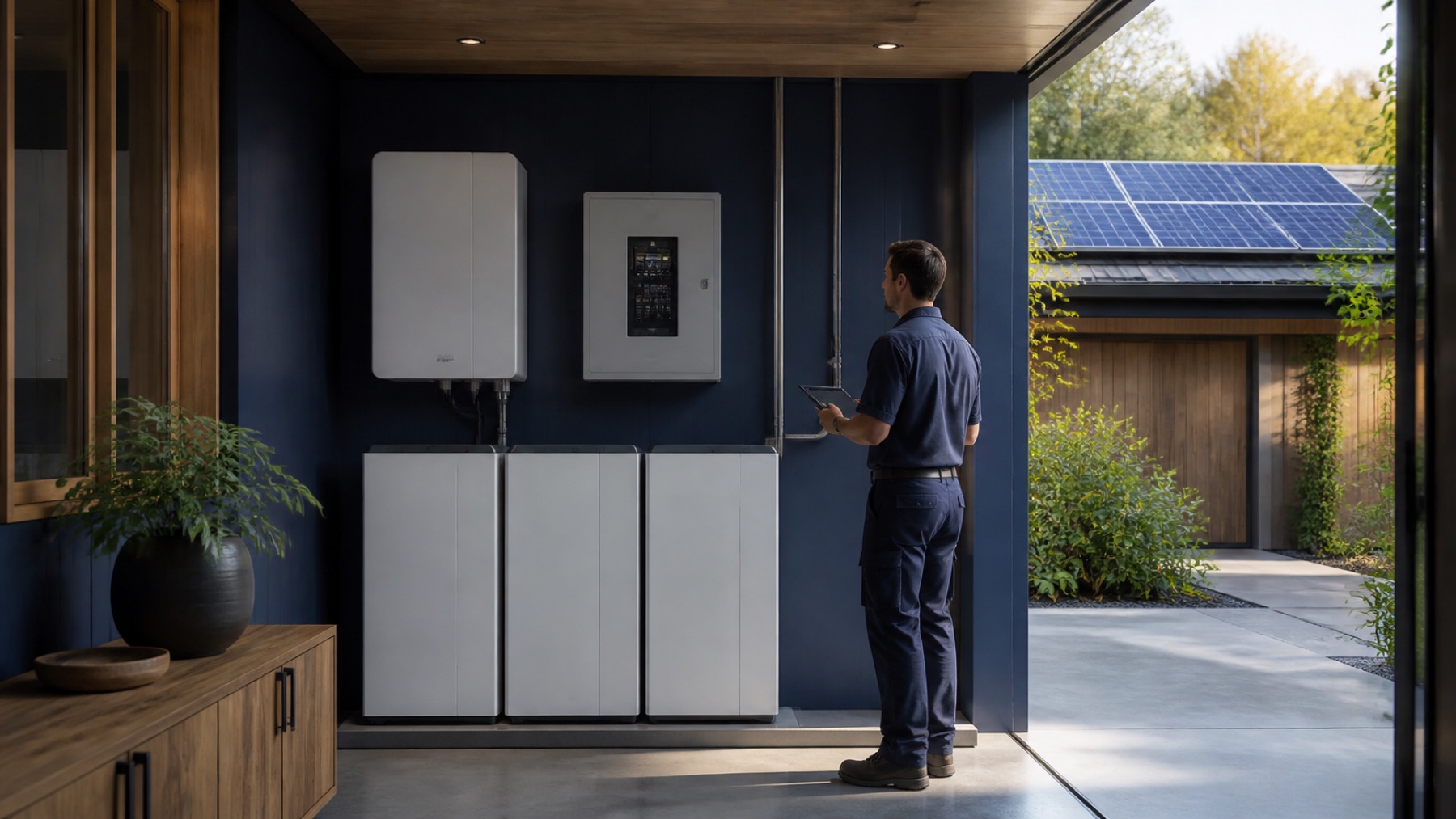
A grid-tied inverter continuously monitors utility power. When its reference disappears or moves outside permitted conditions, the inverter stops energizing it. This anti-islanding behavior helps prevent an installation from feeding a line that should be de-energized.
Same sun, three different behaviors
Generating energy is not the same as forming a local grid
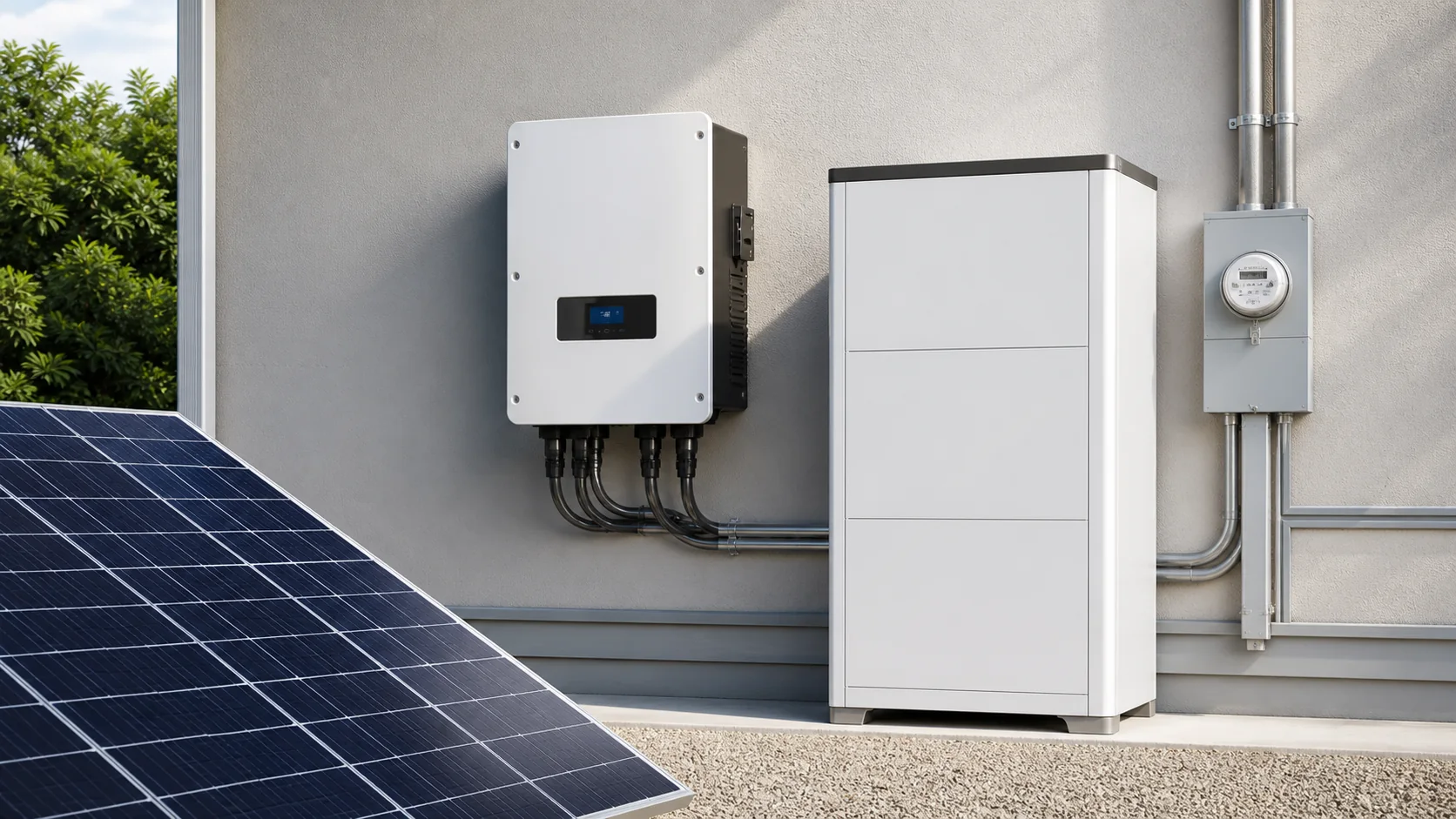
Modules produce DC power. During an outage, a backup-capable system must isolate part of the installation, maintain a stable electrical reference, coordinate supply and demand and manage storage. Simply attaching a battery to any installation does not create that architecture.
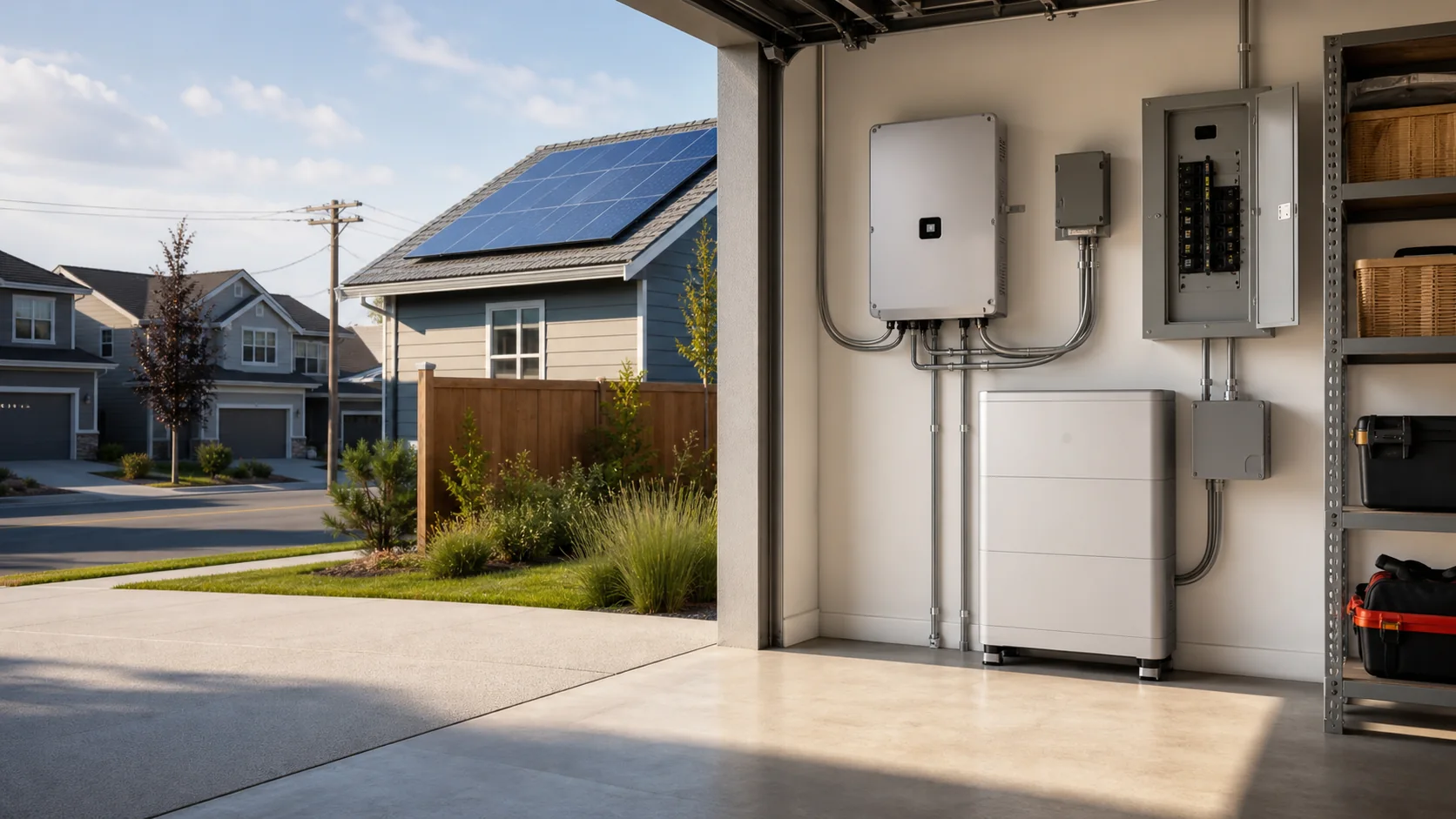
What does the battery do?
A battery stores energy and releases it when generation and demand do not coincide. In a backup system it can help maintain the local grid, but the better first question is: what must remain on?
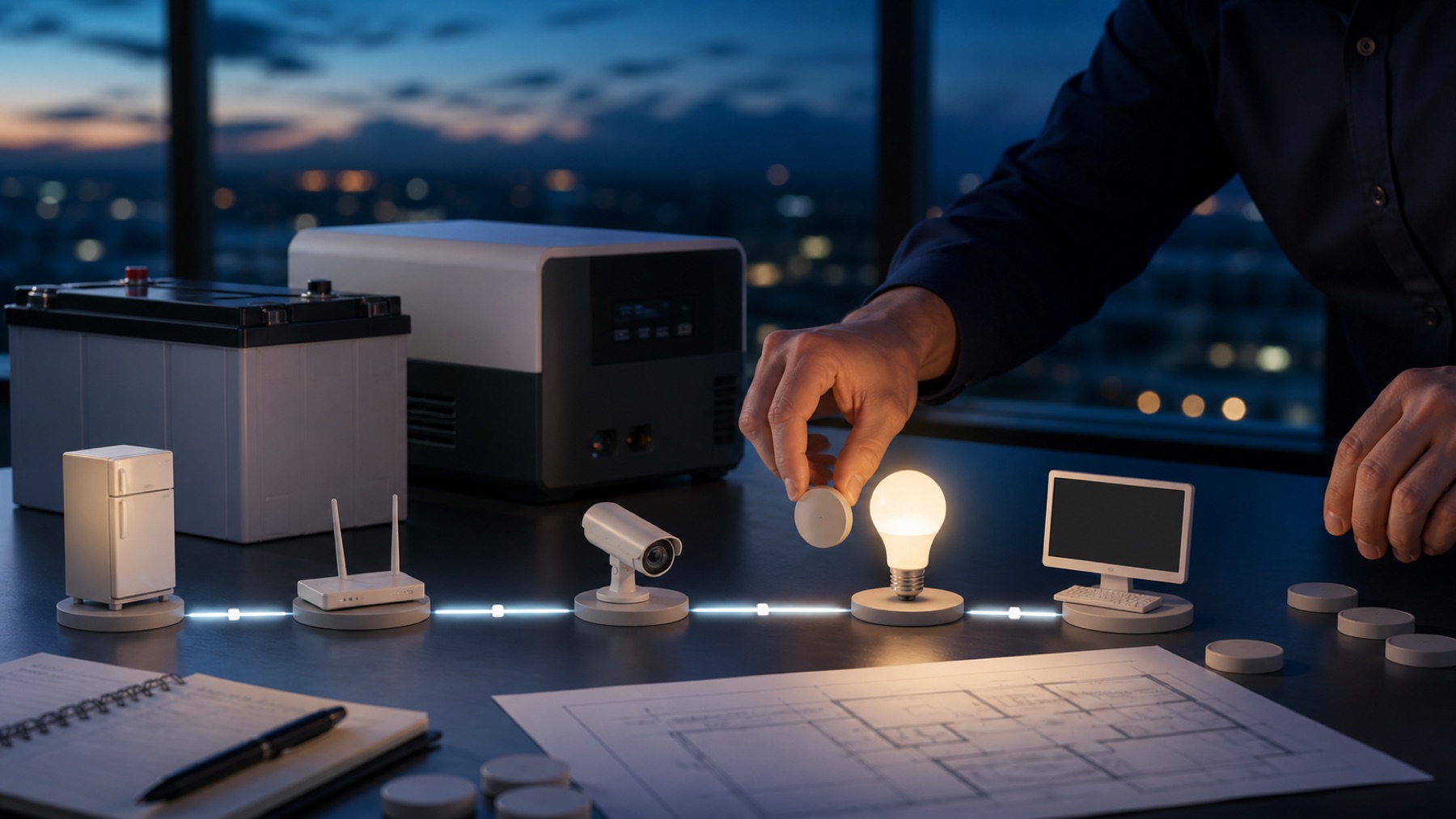
A refrigerator, modem, essential lighting and CCTV are very different from air conditioning, pumps and all household loads.
EXAMPLE: critical-load backup
A family chooses refrigeration, internet, five lighting circuits, cameras and the gate. Separating those loads makes the system more reasonable and sizes storage around a specific need instead of attempting to reproduce the utility indefinitely.
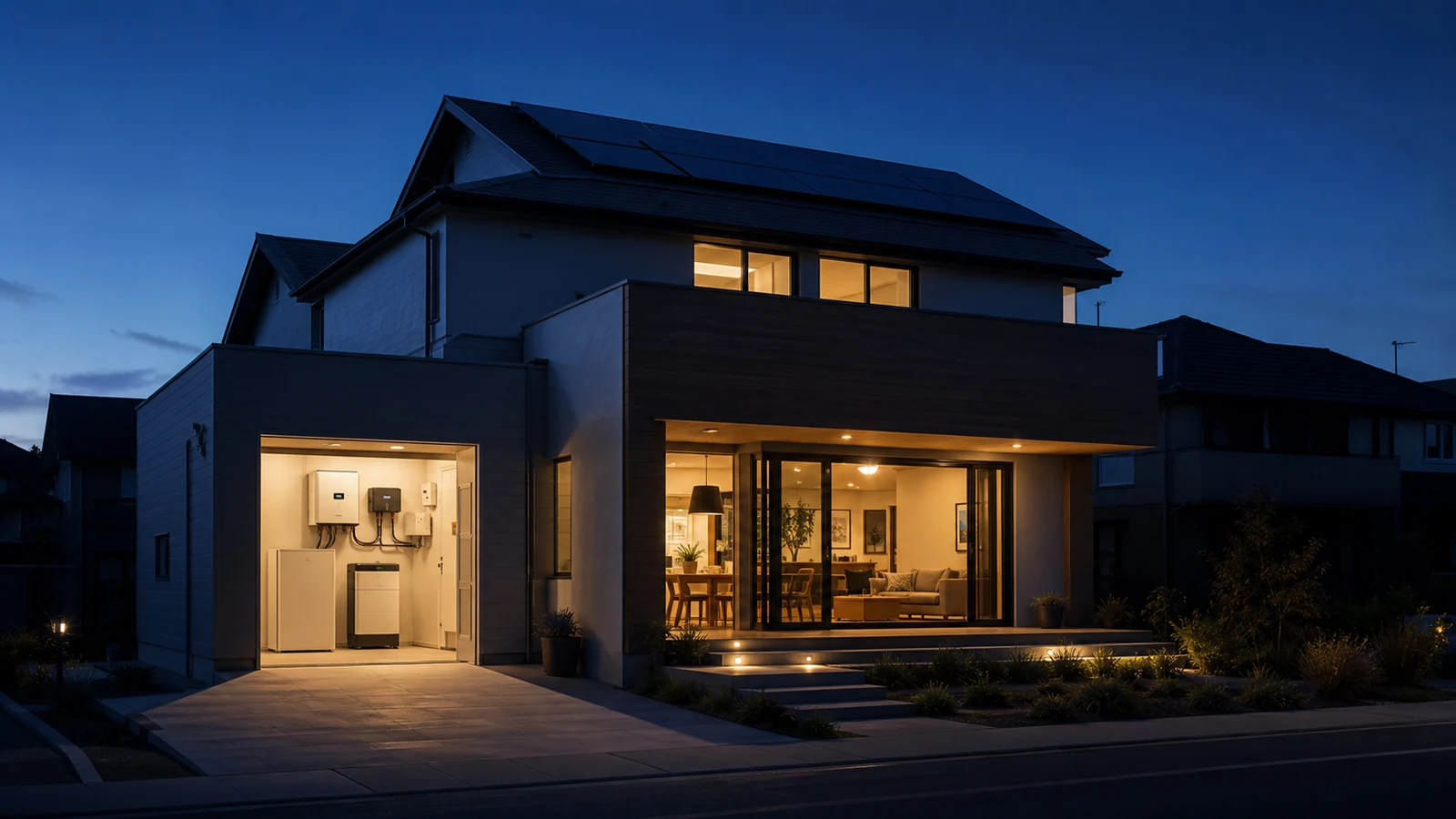
Grid-tied, hybrid and off-grid during a failure
| Architecture | With grid available | During an outage | Battery |
|---|---|---|---|
| Conventional grid-tied | Generates and works with the grid | Normally disconnects for safety | Not required for its primary goal |
| Hybrid with backup | Coordinates solar, grid and storage | Can maintain configured loads when designed to do so | Yes, sized by objective/runtime |
| Off-grid | Normally independent of the utility | Continues according to generation, storage and load management | Essential to the architecture |

Answers with the full context.
Do solar panels produce energy during an outage?+
Modules can physically produce DC power in sunlight, but a conventional grid-tied system normally stops feeding the installation when the grid disappears. The reason is safety and architecture.
What is anti-islanding?+
It is the function that stops a connected system from energizing a grid that is no longer within expected conditions, helping protect utility workers and equipment.
Does adding a battery automatically give me backup?+
No. The battery must be part of an architecture that can isolate loads, manage energy and maintain a local electrical reference, with suitable transfer and protection.
Can I keep the whole house running?+
A high-capacity solution can be designed, but backing up everything increases power, storage and cost. Critical-load selection is often more practical.
SOURCES AND REFERENCES1
References consulted for this editorial review.
- Conservar las tres actuales del U.S. Department of Energy.