INTRODUCTION
Buying a four-, eight- or sixteen-camera kit can look like the simplest way to begin: choose a package, install it and move on. The problem appears when you discover that having cameras does not necessarily mean having the images you needed.
A camera may cover a doorway without producing enough detail to identify the person entering. Another may show an entire parking lot while making the event you need to review too small. A recorder with many channels may still fall short if storage, networking or required functions were never considered.
Before choosing between a CCTV kit and a professional system, change the question. Instead of asking how many cameras are included, ask what must I be able to verify when something happens? That shift prevents both overbuying and coming up short where evidence matters.
A CCTV kit can be an excellent option when the problem is already clear
Kits offer a real advantage: they group cameras, recorder and sometimes storage, power or accessories intended to work together. For a small home, a straightforward shop or a site with a few known scenes, that can reduce decisions and speed up implementation.
A compatible kit can be practical when the entrance, garage, patio and corridor are already understood. Even then, confirm:
- the scenes that genuinely need coverage
- the detail expected from each scene
- night and backlight conditions
- the required retention period
- recorder capacity for future growth
- camera power and cabling
- access for authorized users
EXAMPLE: eight cameras do not guarantee eight useful scenes
Two stores can each have eight cameras. One places them according to room geometry. The other first defines what it must document: entrance, checkout, receiving, stockroom access and parking. Only the second system knows why each view exists.
Useful coverage is measured by the questions the video can answer, not by the number of installed cameras.
When does a professional system begin to make sense?
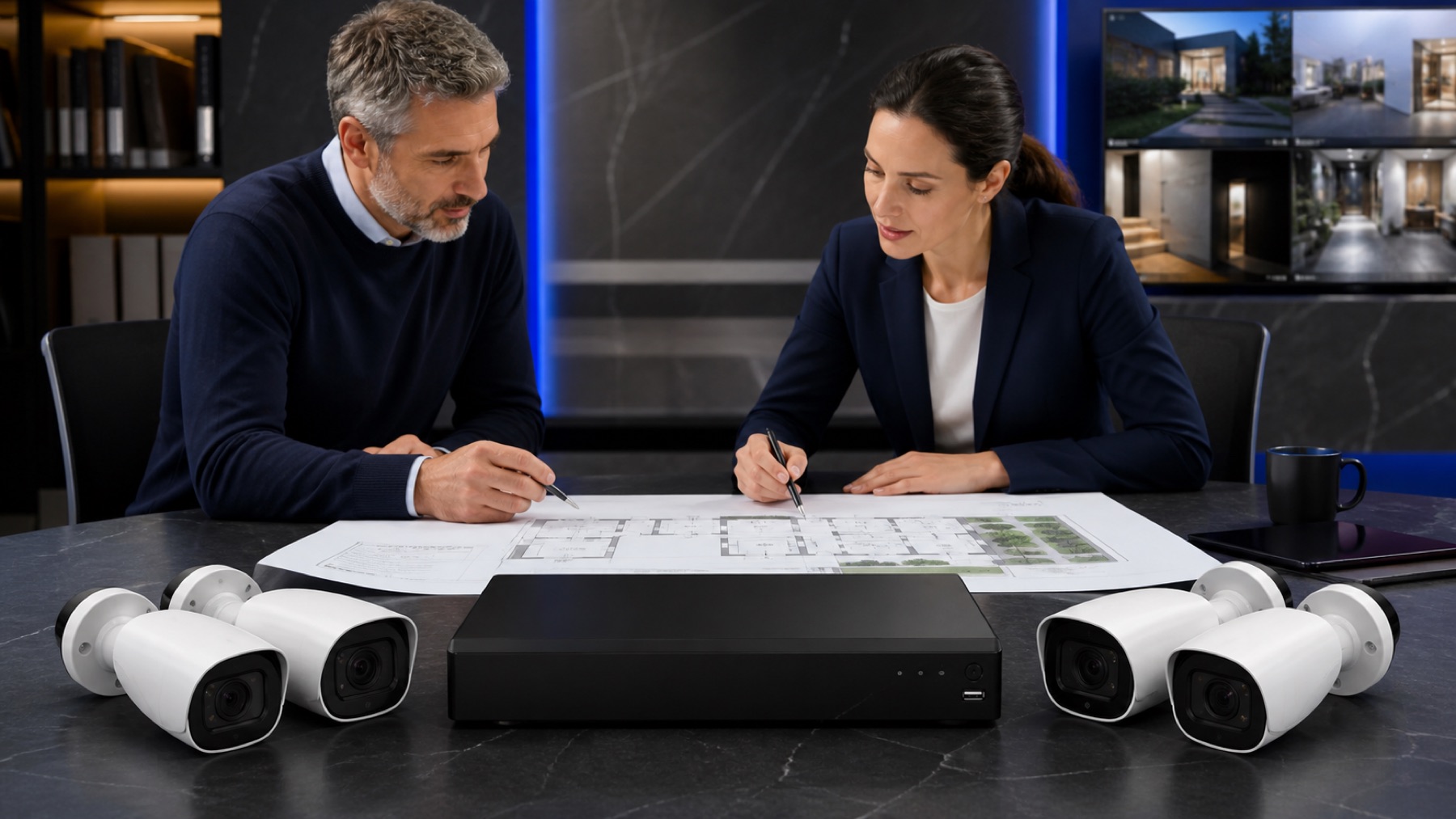
When a camera stops being an isolated device and becomes dependent on many coordinated decisions: multiple zones, different levels of detail, analytics, long retention, user roles, links between buildings, access-control integration or future expansion.
Those scenarios connect camera, lens, lighting, network, PoE, recording, storage, account security and maintenance. Professional design is not about using more expensive cameras; it is about making every decision serve the same objective.

Recording changes more than it seems
Two eight-camera systems can need very different disks. Resolution matters, but so do bitrate, compression, frame rate, scene activity and whether recording is continuous or event-based.
From scene to evidence
The equipment comes after the evidence requirement.
Kit vs. professional system
| Question | CCTV kit | Designed system |
|---|---|---|
| Scope | A few known scenes | Multiple zones or different requirements |
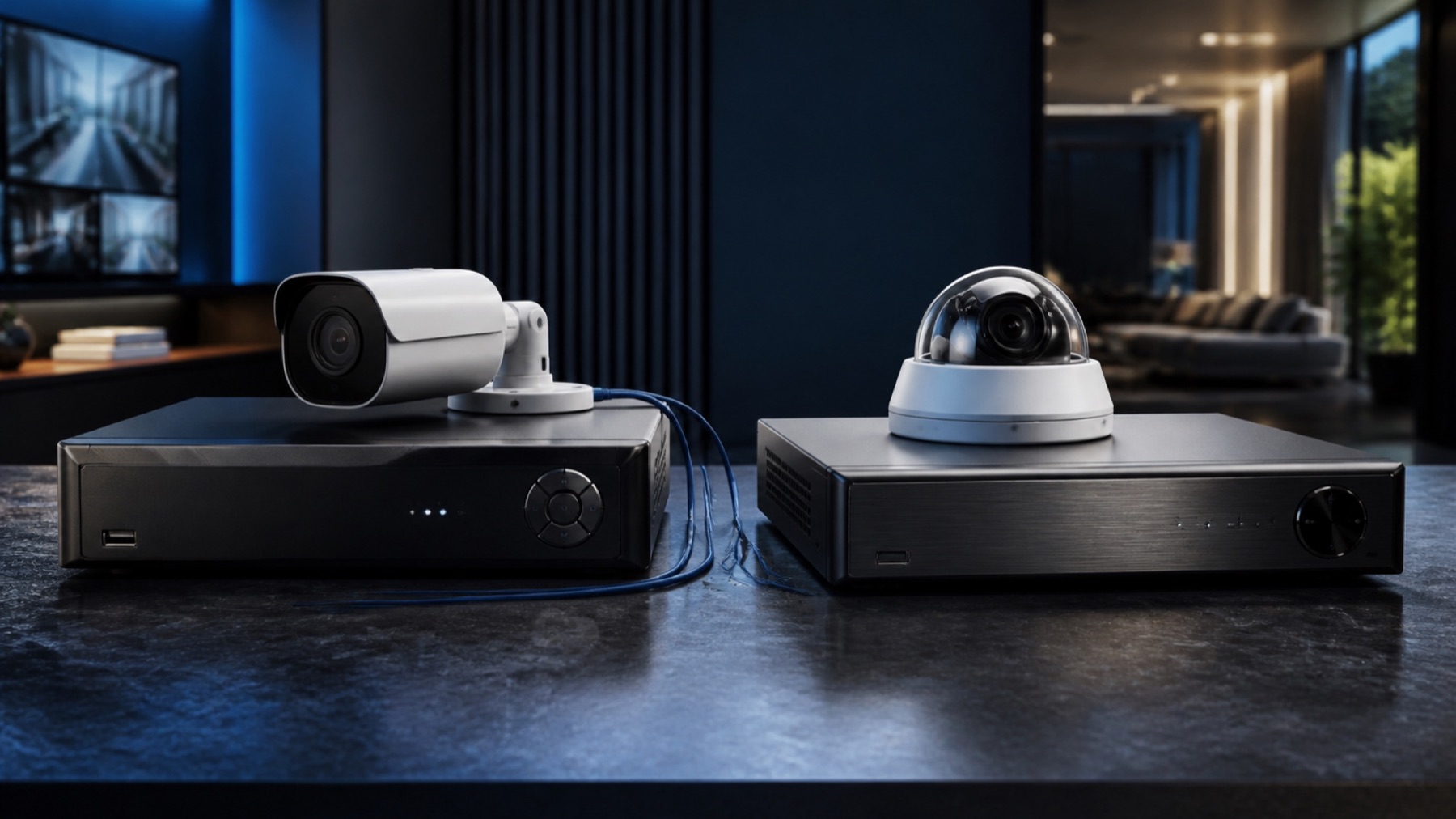
| Compatibility | Simplified when the kit is integrated | Validated component by component |
| Lighting and optics | Usually a standard configuration | Adapted to distance, angle and light |
| Recording | Typical configuration | Retention, redundancy and quality by scene |
| Network | Simple or recorder-integrated | May require switches, VLANs, links and sized PoE |
| Permissions | Few users | Different roles, sites and policies |
| Growth | Limited by channels and platform | Planned from the architecture |
| Best for | Simple, known scope | Operations that must grow or integrate layers |
A short exercise before you buy
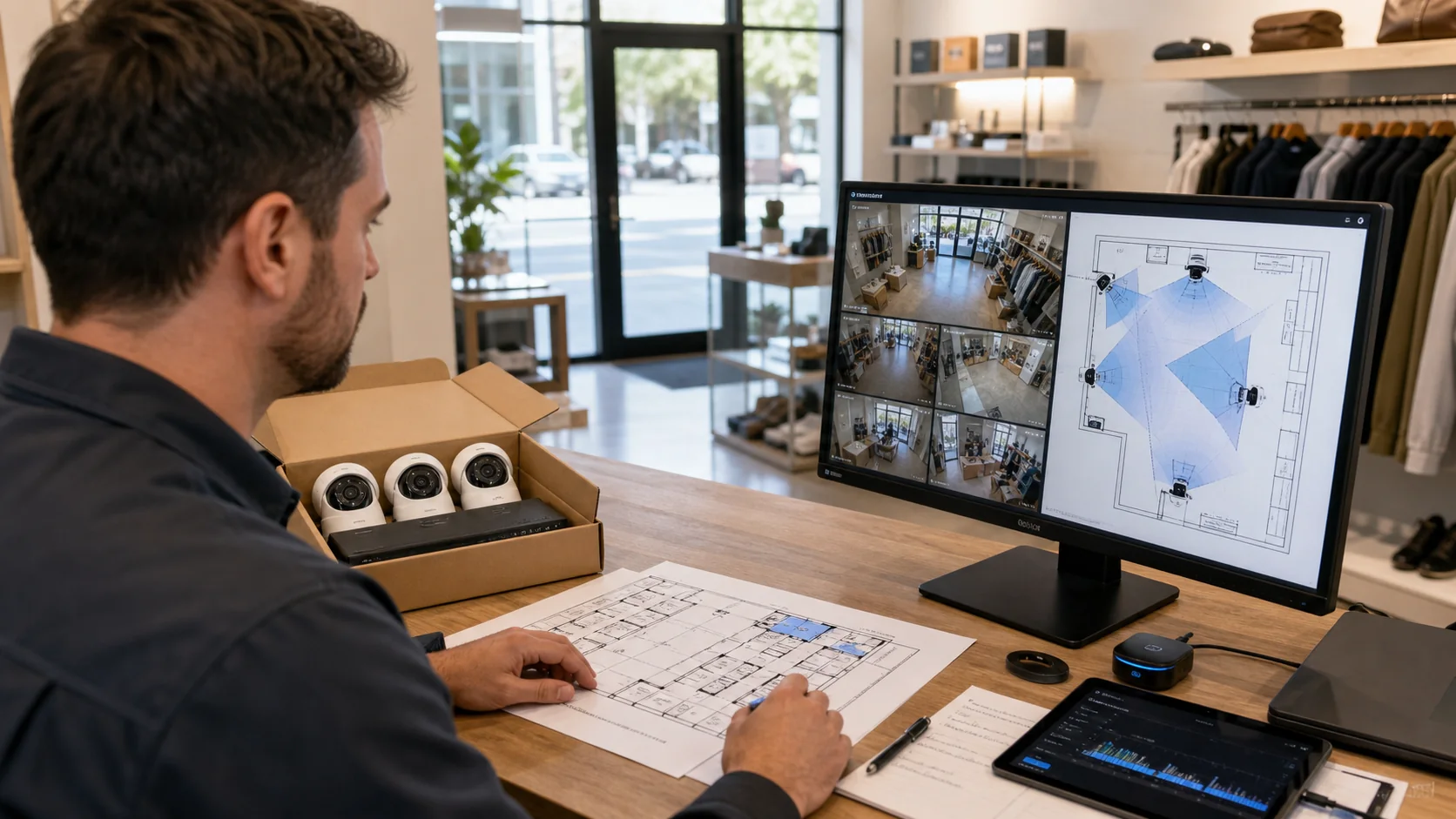
- List the events that concern you: entrance, checkout, parking, perimeter, stockroom and so on.
- For each event, decide whether you need general context or enough detail to recognize a person or action.
- Define approximately how many days of video you want to retain.
- Consider future expansion.
- Only then compare kits and components.

Answers with the full context.
When can a CCTV kit be enough?+
When the scope is straightforward and the required scenes are already known. A small home or shop can benefit from a compatible kit after lighting, cabling, storage and recorder capacity are checked.
What turns a CCTV installation into a professional system?+
Not the camera brand or price. Design becomes necessary when observation goals, recording, network, permissions, analytics, integrations or growth must be coordinated.
Is the highest possible resolution always better?+
No. High resolution cannot fix a camera that is too far away, poorly aimed or facing severe backlight. Lens, distance, lighting, compression and scene purpose matter too.
How do I estimate storage?+
Consider camera count, bitrate, resolution, compression, frame rate, scene activity, recording mode and retention days. Special retention or redundancy requirements should be designed as a system.
SOURCES AND REFERENCES2
References consulted for this editorial review.
- Conservar:
- ONVIF Profile T — https://www.onvif.org/profiles/profile-t/