INTRODUCTION
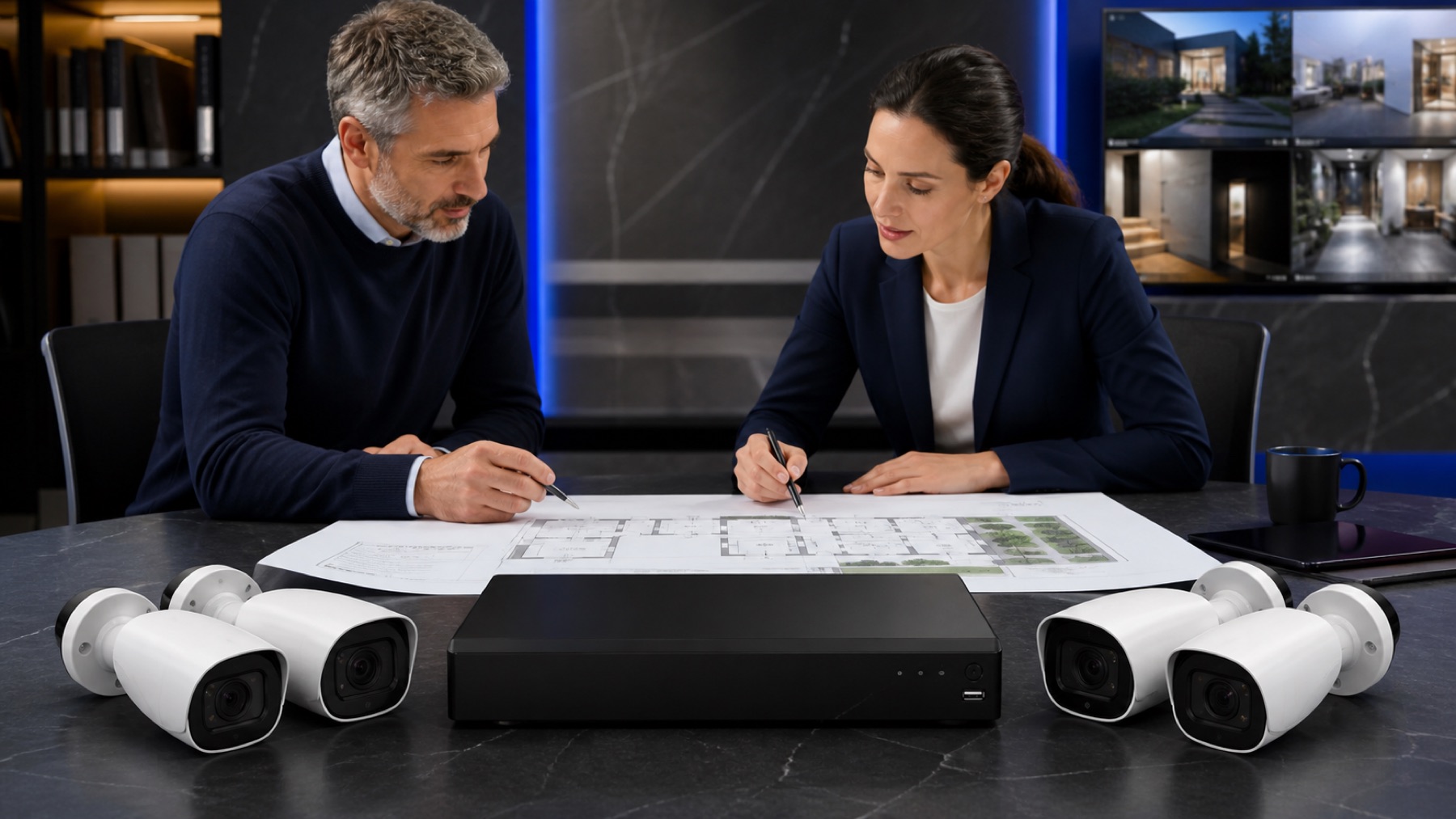
Six poorly placed cameras can leave more questions than three scenes designed with intent.
Two properties of the same size can need different systems. One may have a single controlled entrance; another may have several blind transitions, public-facing areas or operating zones that require distinct evidence.
List critical scenes before estimating camera count
Main entrance, vehicle access, yard and side paths often add more value than covering every room. Privacy for residents, neighbors and public space must shape the angle.
- Entrances, exits and circulation paths
- Assets or transactions that require detail
- Indoor and outdoor lighting changes
- Mounting height, lens and viewing angle
- Privacy boundaries and areas that should not be recorded
- Network, power, storage and maintenance access
Count objectives before counting cameras
Entrance, checkout, reception, storage and parking have different goals. Define whether you need context, recognition or interaction detail before choosing lens and height.
| Property context | Typical priority | Planning question |
|---|---|---|
| Home | Perimeter transitions and main access | Can people and events be understood without invading private areas? |
| Shop or office | Entrances, transactions and operational zones | What evidence is needed at each critical point? |
| Short-term rental | Arrival, exterior and shared access | How is safety balanced with guest privacy? |
| Any site | Retention and review | Who can access recordings, and for how long? |
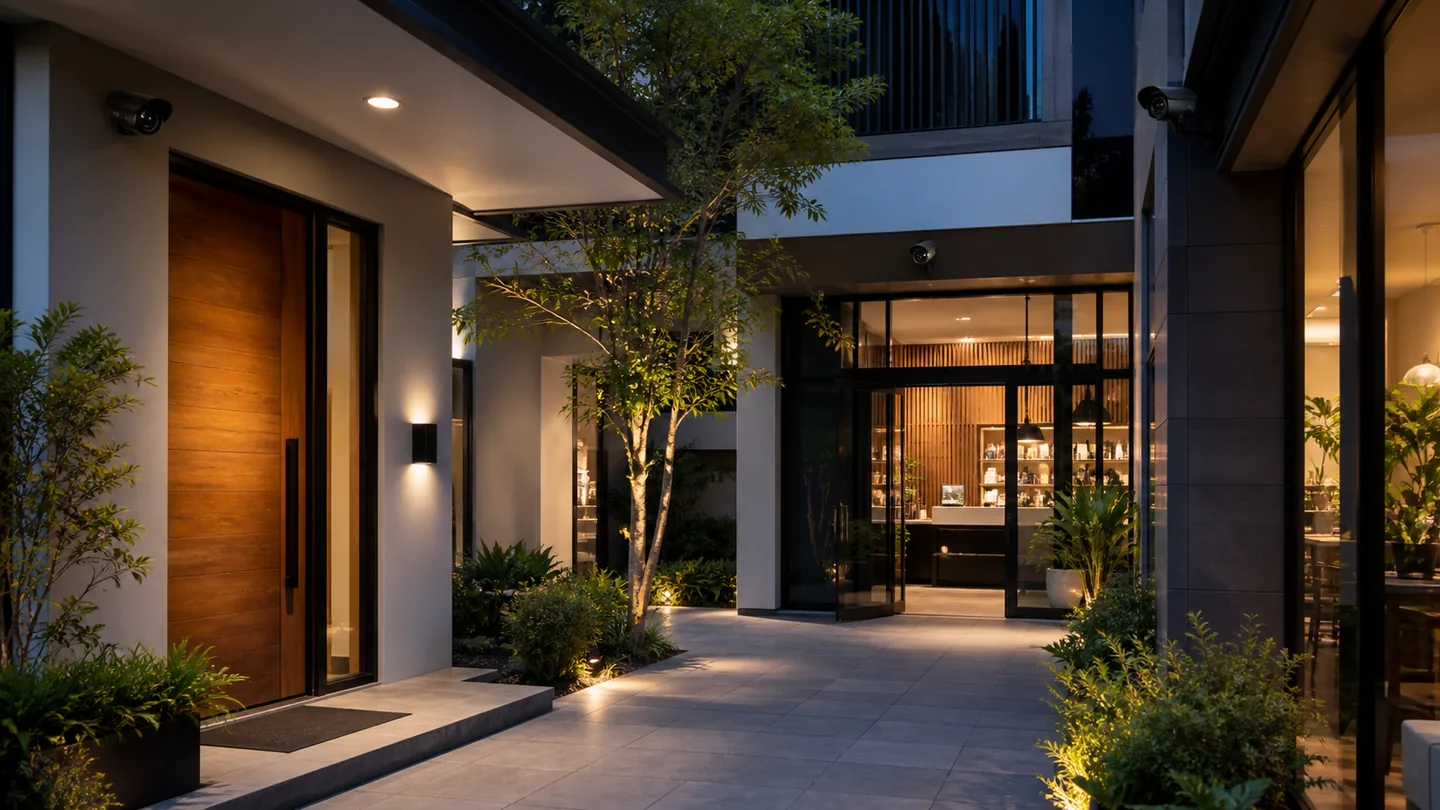
Coverage, detail, night performance and privacy shape the system
A single wide view can show activity while missing identification detail. Overlapping cameras can improve continuity, but more devices also add storage, maintenance, privacy and network requirements.
Build coverage from scenes
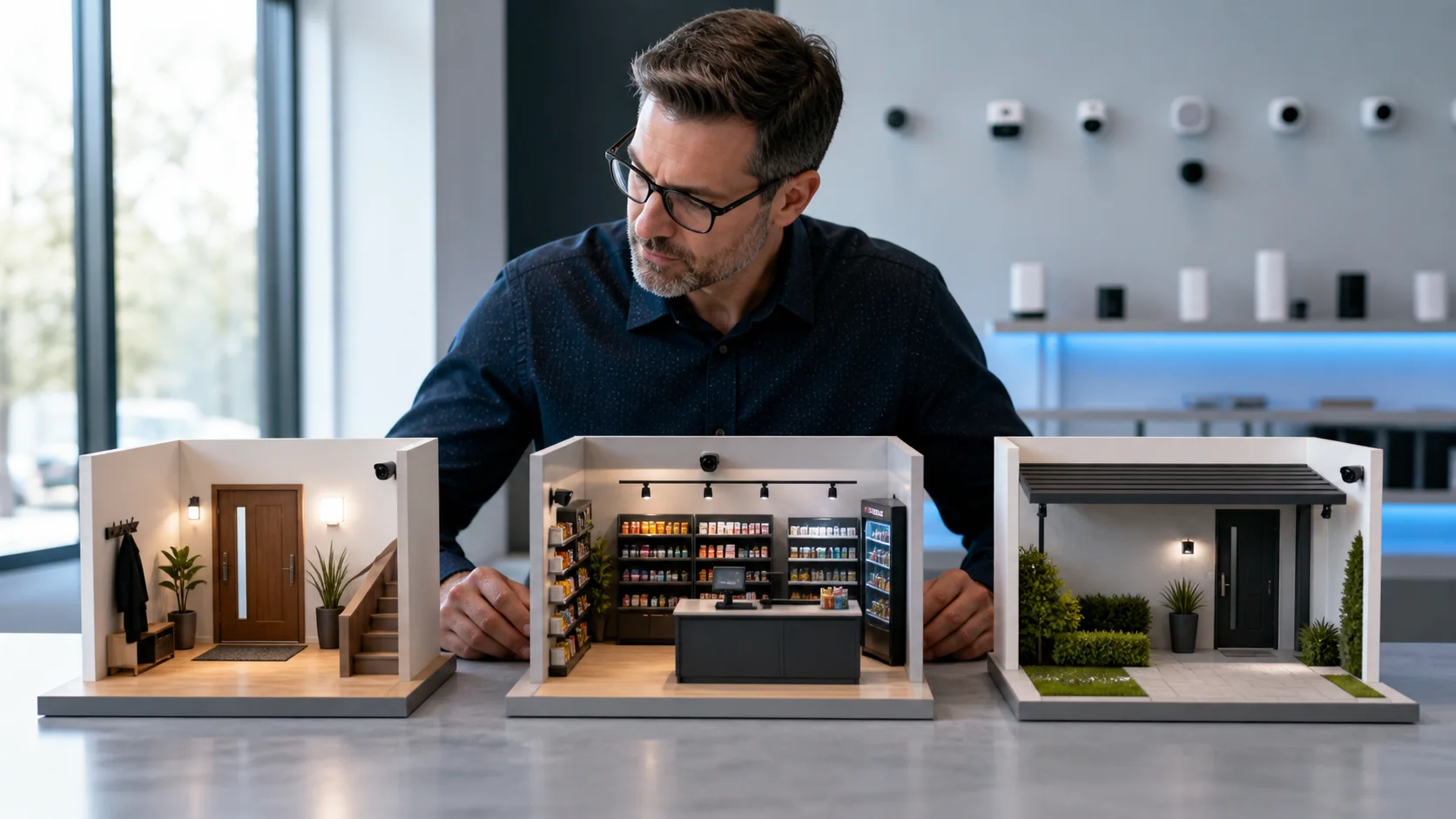
Three properties of the same size can need different coverage
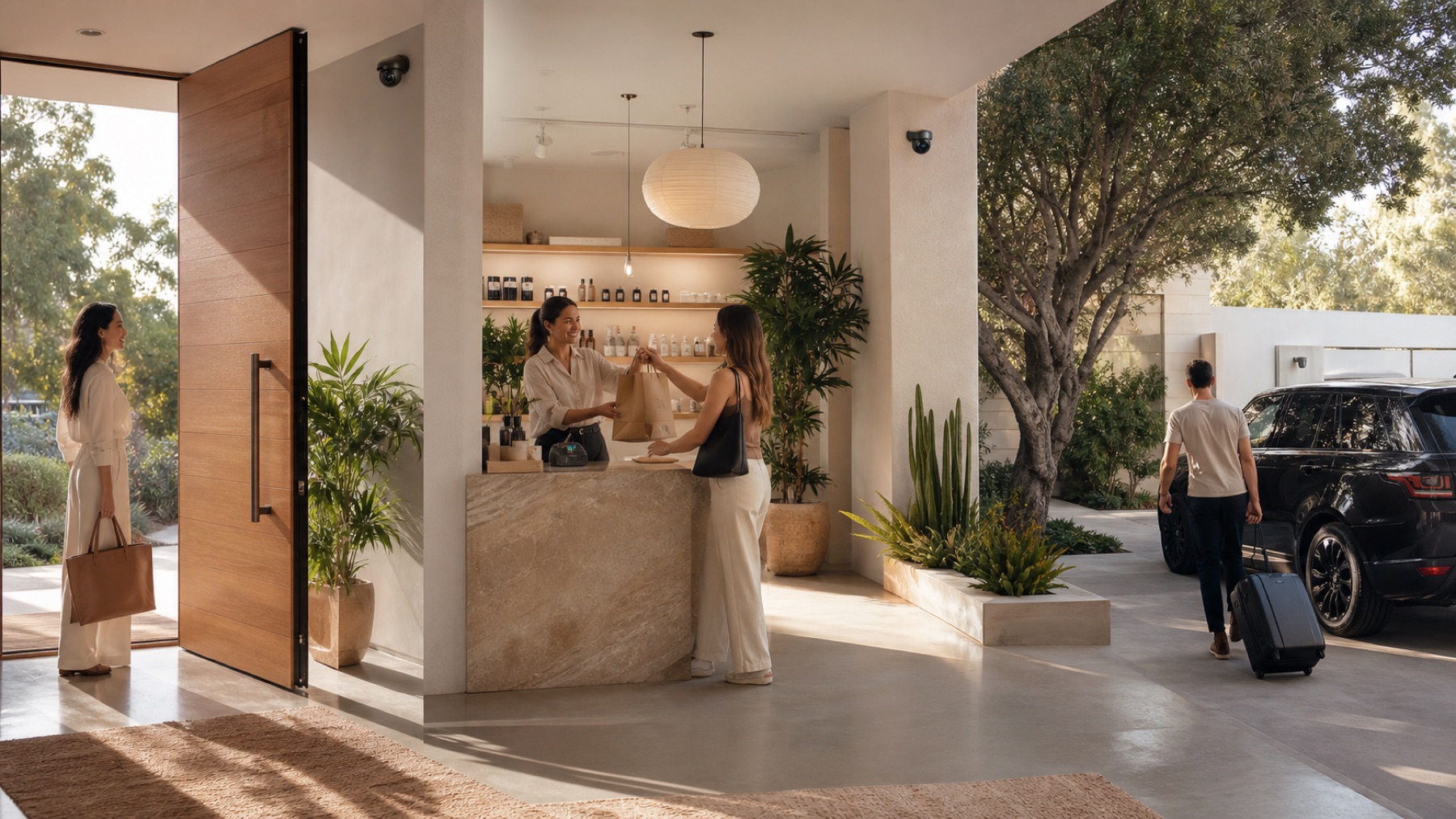
A residence may prioritize the front door, vehicle approach and an exterior passage. A shop may add point-of-sale context, stock movement and opening or closing routines. A short-term rental must cover permitted exterior access while respecting guest privacy. Similar floor area does not create similar evidence requirements, so a camera count based only on square metres can be both excessive and incomplete.
A wide view can record activity without identifying what matters
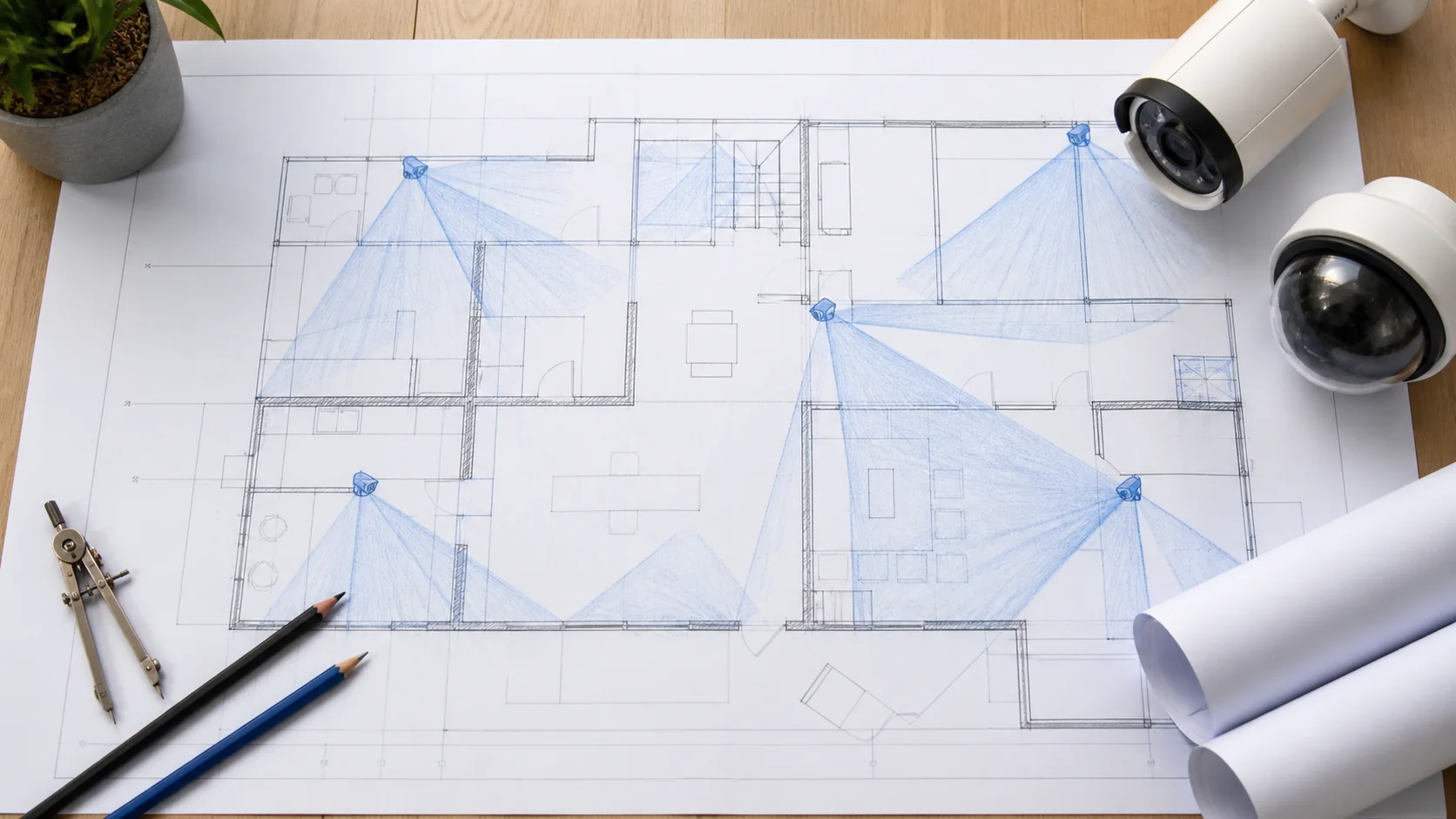
Turn every proposed camera into a testable scene
Outdoor areas and entrances can support operations; private spaces require clear boundaries. Document what is observed, who has access and how long it is retained, respecting applicable platform and jurisdiction rules.
For each position, write the question the recording must answer, then test distance, lens, angle, lighting and night conditions. Add recorder throughput, network capacity and retention only after the scenes are defined. This sequence links camera count to evidence and makes it easier to explain why two nearby locations may require different equipment.
- 01List critical events and locations
- 02Walk the routes a person can take
- 03Separate overview from identification scenes
- 04Check light, obstacles and privacy
- 05Estimate retention and authorized access

From context to a decision.
Estimate scenes and priorities
A structured starting point using the actual property.
Open planner↗Design coverage and infrastructure together
For several zones, difficult lighting or operational requirements.
Evaluate my project↗Answers with the full context.
How many cameras does a house need?+
There is no responsible universal number. Count the scenes required to understand entrances, transitions and priority exterior areas after checking privacy and site conditions.
Can one high-resolution camera replace several cameras?+
Not necessarily. Resolution cannot overcome the wrong angle, excessive distance, backlight, obstacles or a scene that tries to cover conflicting objectives.
Should an Airbnb have interior cameras?+
Privacy, platform rules and applicable law require careful review. Exterior and shared-access safety should be planned without assuming that more recording is better.
What affects storage after camera count?+
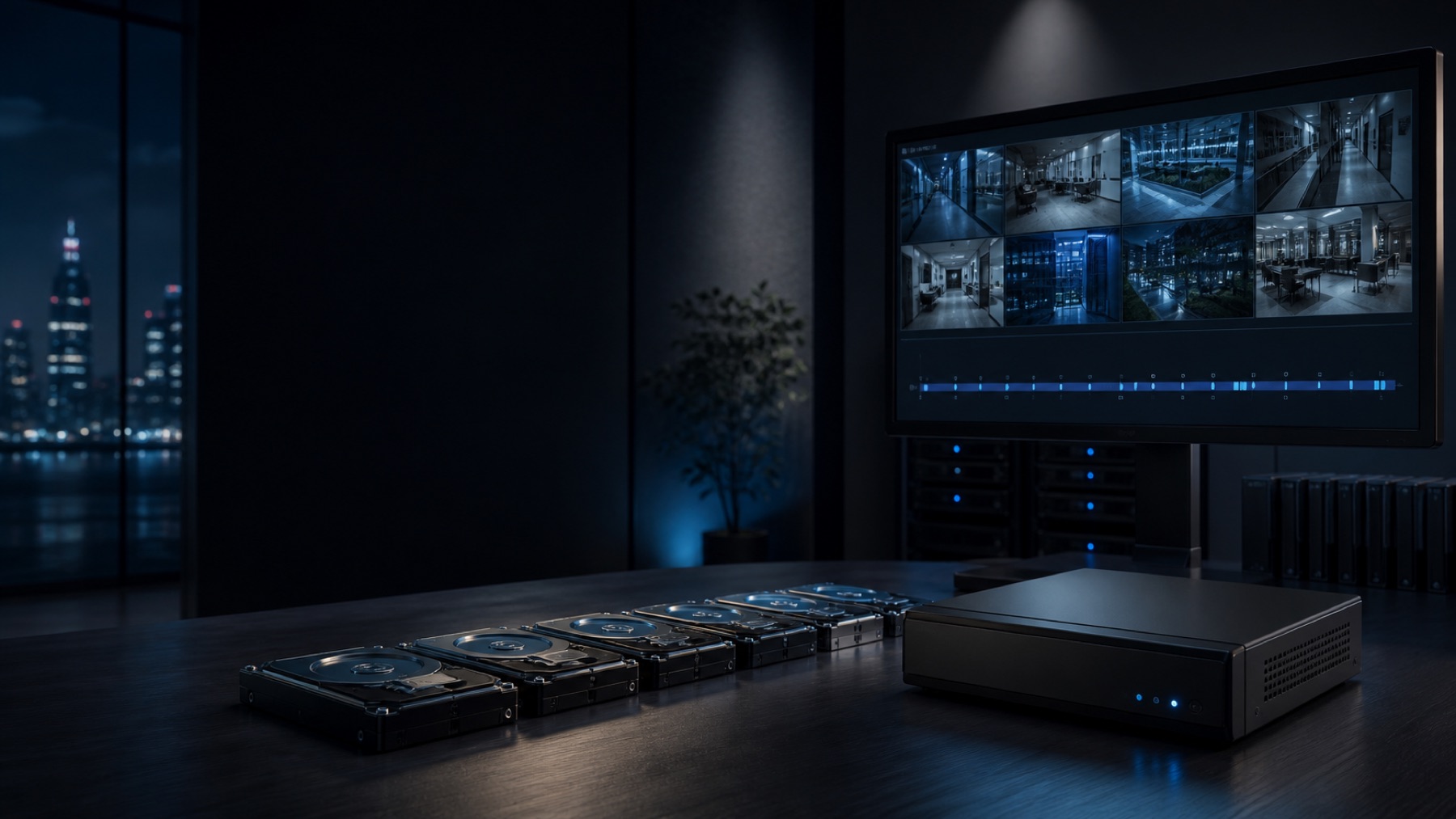
Resolution, frame rate, compression, bitrate, scene activity, recording schedule and retention target all change storage demand.
SOURCES AND REFERENCES3
References consulted for this editorial review.
- ONVIF — Profile T y documentación de interoperabilidad para sistemas IP.
- CISA — guías generales de seguridad física como referencia de análisis de accesos y áreas.
- Nota editorial: cualquier mención a reglas de plataformas de hospedaje debe validarse con la política oficial vigente antes de publicación.