
INTRODUCTION
The electricity bill is one of the best starting points for discussing solar, and one of the most oversimplified. Dividing the amount paid by a generic ‘panel production’ number mixes price, tariff, consumption and generation.
A stronger path is to understand annual kWh and seasonality, define the coverage target, review the site's solar resource and usable roof, and only then calculate an approximate module count.
1. Look for kWh, not only currency
The amount paid can change with tariff structure, tax and other factors. Energy sizing starts with kWh across several billing periods. One bill may coincide with a holiday, intensive cooling, an unusual season or a newly added load.
From the bill to a solar system
2. Decide what you want to cover
- Reduce part of consumption
- Approach annual consumption
- Prepare for growth
- Add an EV
- Add storage later
The objective changes both size and architecture.

Example: the EV that is not on the bill yet
A family plans to buy an electric vehicle next year. Designing only from historic use may omit an important future load. Oversizing without evidence can also build too much. Comparing scenarios makes the assumption visible.
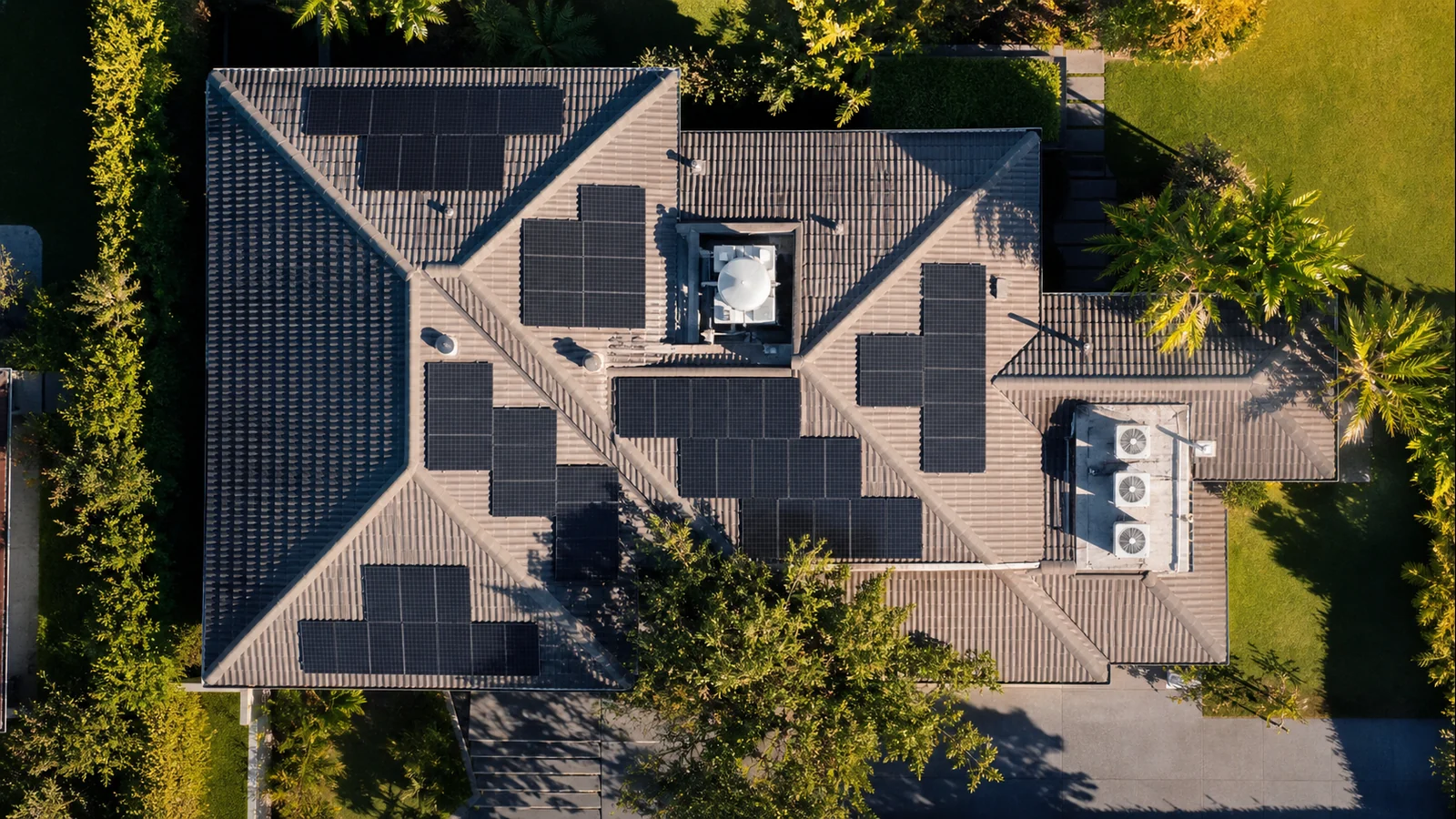
3. The roof decides how much theory fits reality
- Shade
- Orientation
- Structure
- Existing equipment
- Setbacks and walkways
- Electrical routes
Not every square metre is usable.
4. Nameplate power is not annual production
An array of the same nominal power does not produce the same energy everywhere. Solar resource, temperature, orientation, tilt and losses all affect annual output.
| Input | What it supports |
|---|---|
| kWh from several bills | Estimate demand |
| Location | Solar resource |
| Orientation / tilt | Yield |
| Shade | Losses |
| Usable area | Physical limit |
| Future loads | Growth scenario |
5. So how many panels?
Module count comes from dividing the target array power by the chosen module rating after required system power has been estimated. Two proposals with different counts may still be comparable if they use different modules or assumptions. Review estimated production, assumptions and architecture.

From context to a decision.
Create an initial estimate
Open the solar calculator↗Explore equipment for a defined size
Explore solar equipment↗Validate the site and system architecture
Design the project↗Answers with the full context.
How many bills should I review?+
Several periods, ideally enough to reveal seasonality. Fewer can support an initial reference, but more history gives better context.
Should I use currency or kWh?+
kWh is central for energy sizing. The amount paid offers financial context but does not replace consumption.
What if I plan to buy an electric vehicle?+
Include a future-consumption scenario instead of using history alone.
Does the calculator replace a site visit?+
No. It creates an initial range; final design must confirm roof, shade, structure, installation and components.
SOURCES AND REFERENCES2
References consulted for this editorial review.
- Homeowner’s Guide to SolarU.S. Department of Energy
- Solar Integration: Solar Energy and Storage BasicsU.S. Department of Energy