INTRODUCTION
‘How many hours will this battery last?’ sounds simple, but half the information is missing. A battery has no fixed duration. It may power a modem for many hours and discharge much sooner when refrigeration, computers, cameras, lighting and a pump are added.
A responsible estimate starts with the loads, not the battery.
1. List what truly needs to stay on
Do not use the property's entire consumption if everything will not be backed up. A home may prioritize refrigeration, Internet, essential lighting, CCTV and a gate. A business may add POS, selected computers, networking, a server or other critical equipment.
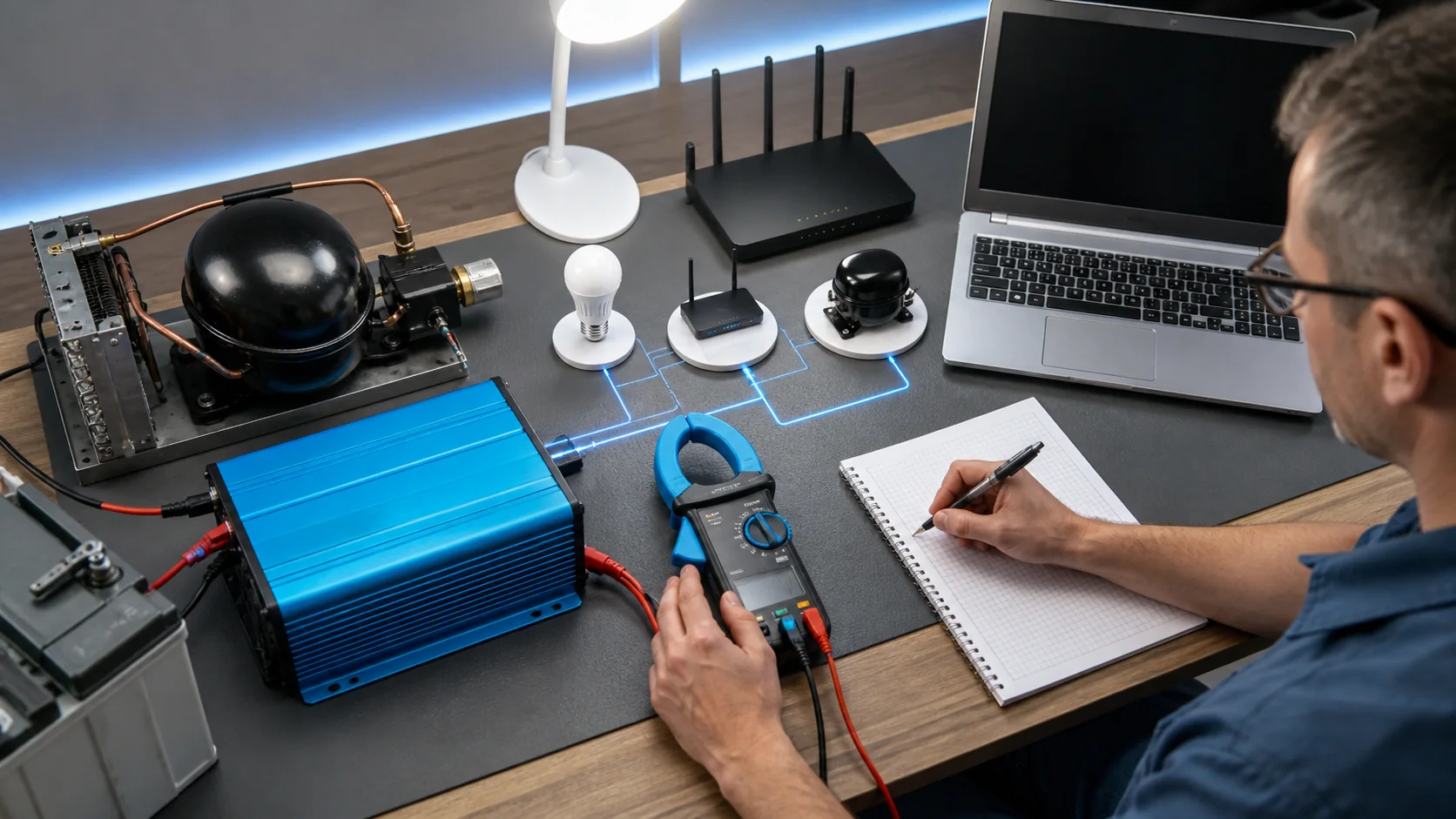
Example: one business, two strategies
A shop uses substantial energy for comfort and general lighting, yet during an outage only POS, Internet, CCTV and a few luminaires must continue. Sizing from total consumption would build a much larger system without improving the continuity objective.
2. Power and energy answer different questions
Power (W / kW) determines how much equipment can run at the same time. Energy (Wh / kWh) determines for how long. A battery can contain enough energy while an inverter still trips on a pump or refrigerator startup peak.
From loads to usable capacity
Defines required operating power.
Define power margin.
Define required energy.
Define usable battery capacity.
3. Nominal capacity is not all available capacity
Inverter efficiency, operating reserve, temperature, aging and system limits stand between the battery label and delivered energy. A nameplate should never be converted directly into guaranteed hours.
| Variable | What it changes |
|---|---|
| Continuous load | Energy used each hour |
| Startup peak | Power the inverter must withstand |
| Target hours | Energy size |
| Efficiency | Energy delivered to loads |
| Reserve | Margin against operating at the limit |
| Simultaneity | How many devices operate together |
4. Define more than one scenario
Scenario A — basic continuity: Internet, lights and CCTV.
Scenario B — essential home: The same loads plus refrigeration.
Scenario C — essential business: Network, POS, CCTV and selected computers.
Scenarios reveal how runtime changes with real operating choices.
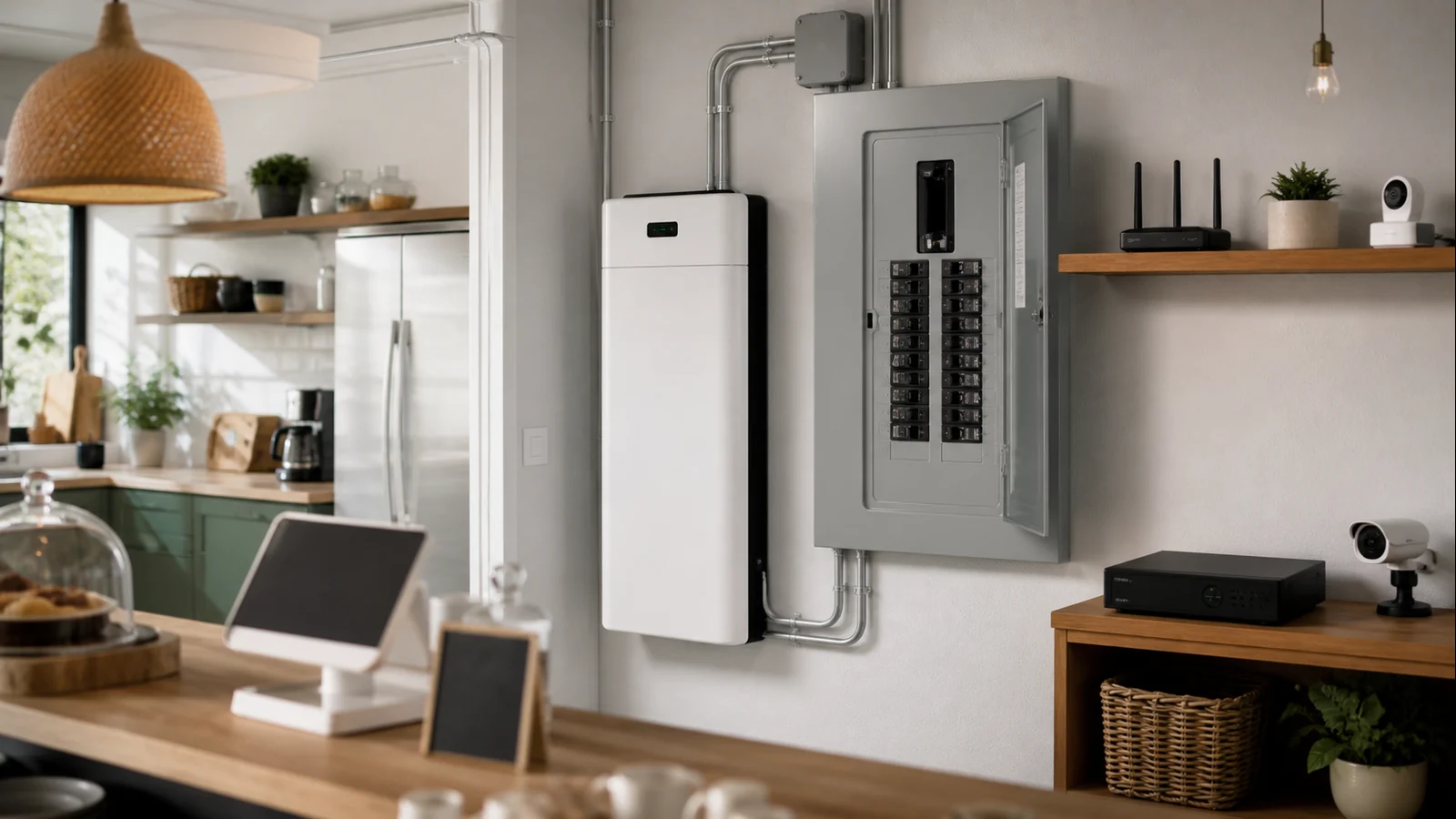
5. What does ‘four hours of backup’ actually mean?
It means approximately four hours under the declared loads and assumptions. Change the loads and the answer changes.

From context to a decision.
I know the capacity and equipment I need
Explore backup equipment↗I need to estimate loads and hours
Calculate my backup↗I need transfer, critical circuits or a complete architecture
Design the system↗Answers with the full context.
Can I size backup from my electricity bill?+
The bill gives general consumption context, but not the critical-load list that determines outage runtime.
Why does startup current matter?+
Motors and compressors can briefly demand more power than during normal operation. The inverter must handle that behavior.
What is usable energy?+
It is the capacity the system can deliver after operating limits, reserve and losses are considered.
Should I back up an entire home?+
It is possible, but prioritizing critical loads often reduces the capacity and cost required substantially.
SOURCES AND REFERENCES2
References consulted for this editorial review.
- Solar Integration: Solar Energy and Storage BasicsU.S. Department of Energy
- Solar and Resilience BasicsU.S. Department of Energy