INTRODUCTION
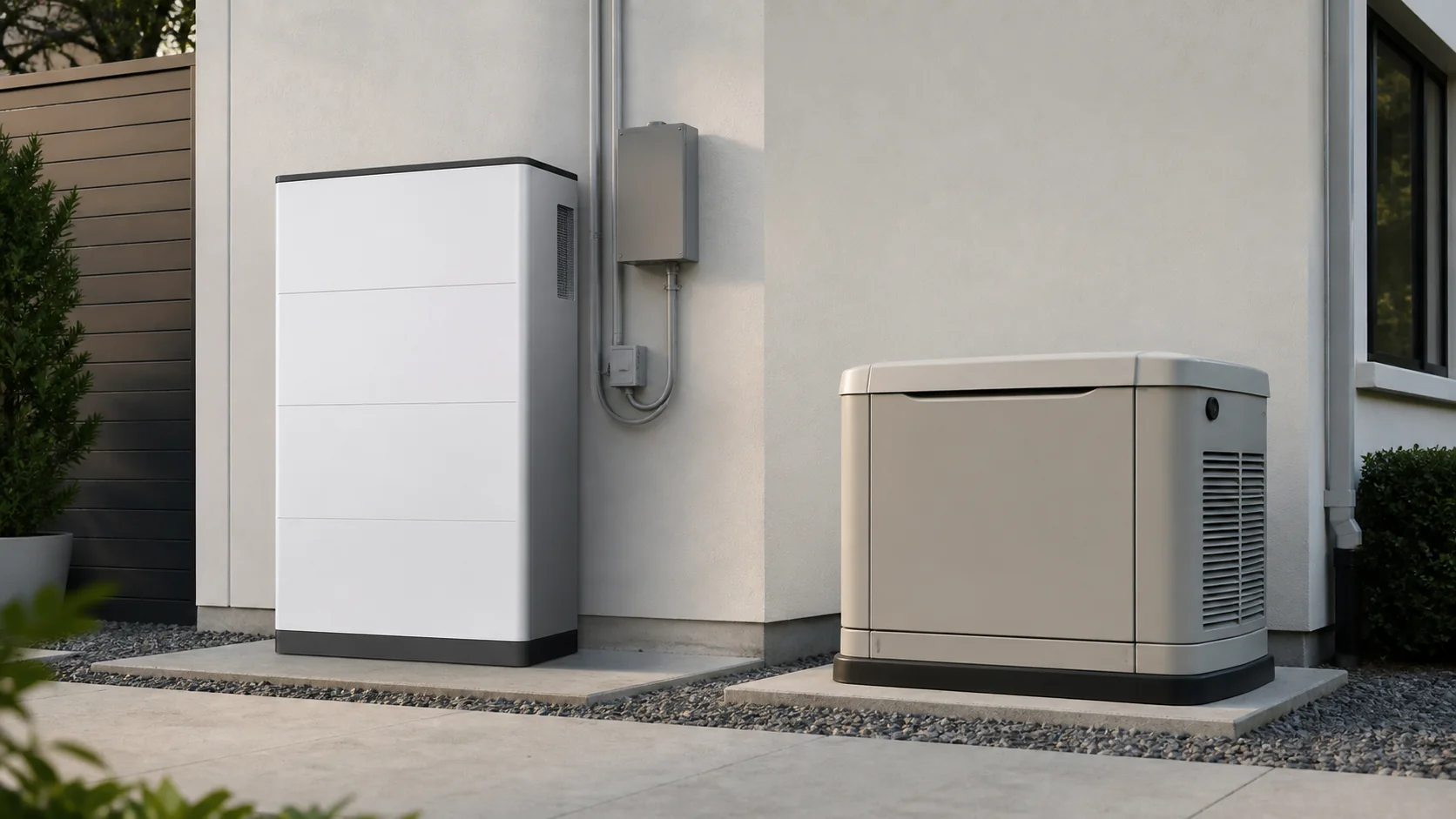
A battery and a generator can both keep equipment running, but the operating experience differs. A battery delivers stored energy. A generator produces energy while it has fuel and operates correctly.
- noise
- maintenance
- response time
- runtime
- location
- fuel
- solar integration
- available power
Describe the outage before choosing the technology.
1. Start with outage duration and frequency
- frequent momentary interruptions
- one-to-three-hour outages
- a full night
- a contingency lasting one or more days
A battery may be convenient for short events or selected loads. A generator can support longer periods while fuel remains available, but requires a different operating and maintenance model.
Contingency timeline
Strategy changes with time and loads.
2. Battery: quiet, fast response and finite energy
A battery can power compatible loads without starting an engine or storing fuel onsite. Runtime depends on usable energy, loads, peaks, efficiency, reserve and possible solar replenishment.
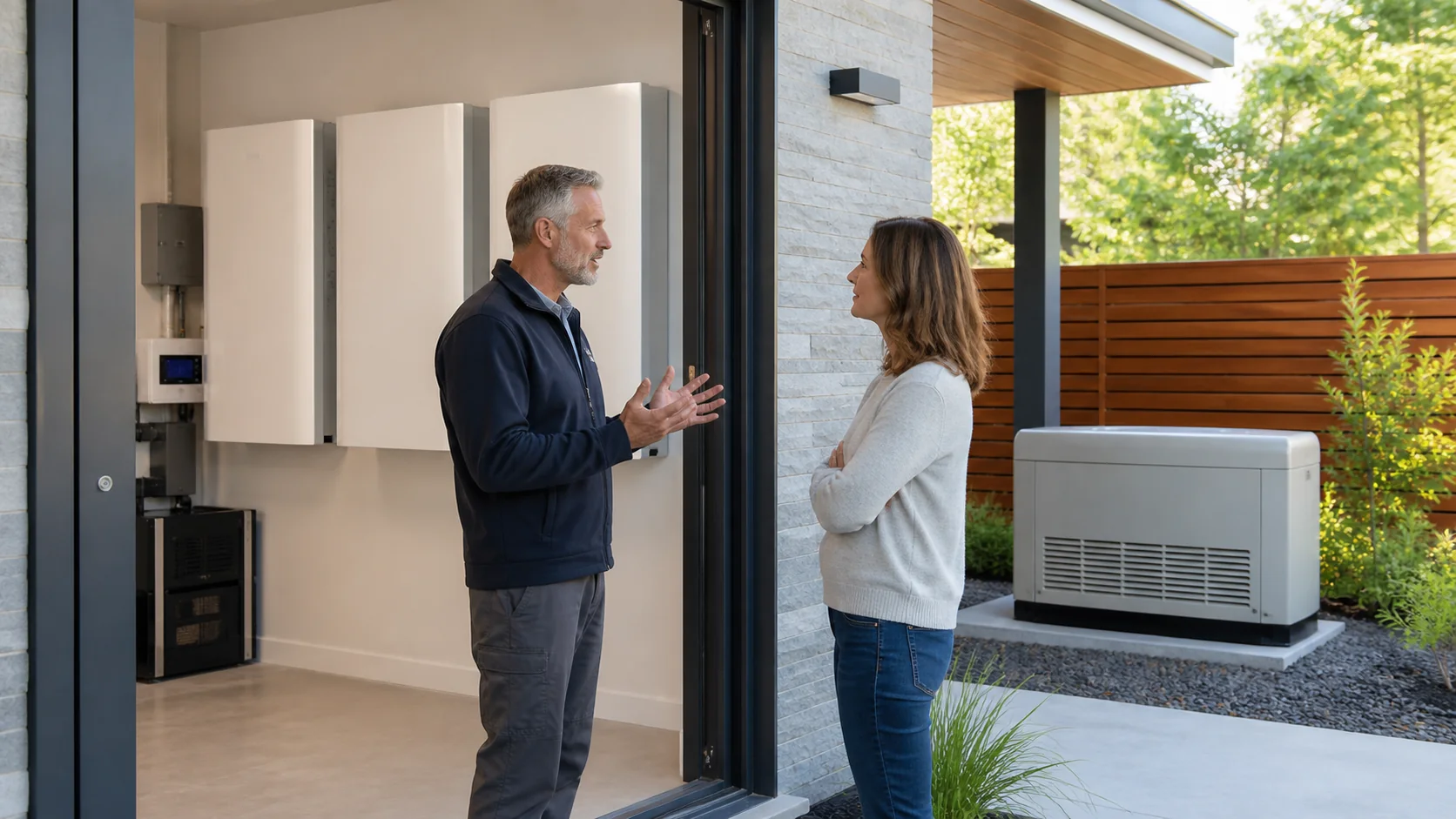
Example: short outages several times a month
A home wants refrigeration, Internet, lights and security during one- or two-hour interruptions. A battery sized around those loads can feel almost seamless. The same system may be inadequate if the target changes to the whole home for 24 hours.
3. Generator: longer operation with active logistics
A generator can sustain loads for long periods if it has fuel, operates safely, receives maintenance, has suitable ventilation and location, and uses a properly managed transfer system. It is not ‘infinite power.’
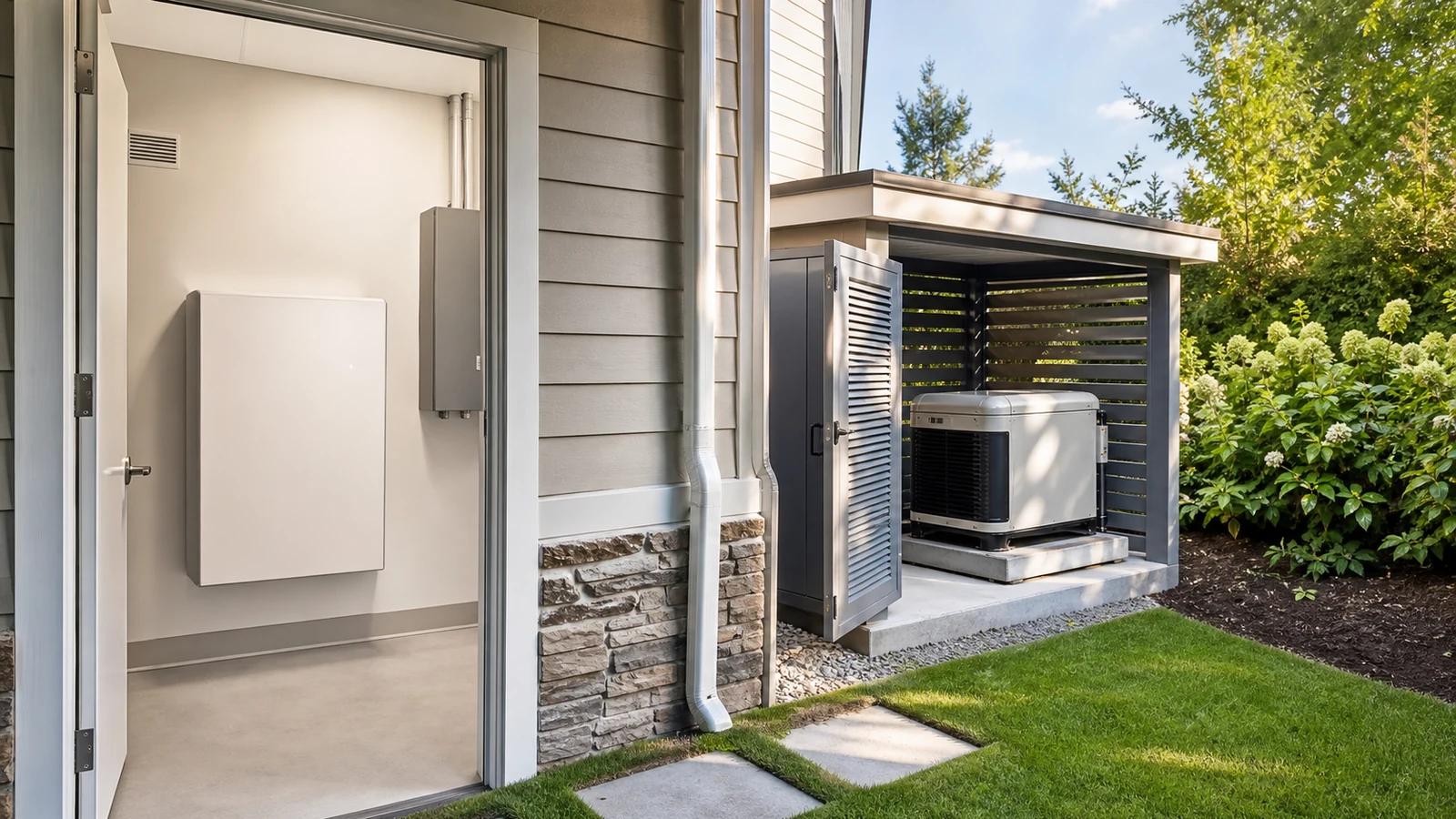
4. Comparison
| Factor | Battery | Generator |
|---|---|---|
| Noise | Very low | Engine noise |
| Onsite fuel | No | Yes |
| Energy | Limited by capacity | Depends on fuel and operation |
| Response | Fast, depending on system | Depends on start and transfer |
| Maintenance | Electrical system and battery | Engine, fuel and testing |
| Solar | Can integrate | Can complement |
| Long events | Needs substantial capacity or recharge | May fit when fuel is available |
This comparison is not a universal recommendation.
5. There does not have to be one winner
Some projects use a battery for transition and sensitive loads, then a generator for extended periods. Added cost and complexity are justified only when the scenario requires them.
6. Decide what cannot turn off
Separate essential, important and nonessential loads before requesting a quote.

From context to a decision.
A defined point backup need
Explore Store↗Estimate loads and runtime
Open the calculator↗Design the continuity architecture
Design my system↗Answers with the full context.
Which lasts longer, a battery or a generator?+
There is no answer without sizing. Battery runtime depends on capacity and load; generator runtime depends on fuel, power and operating conditions.
Can a battery back up an entire home?+
It can be designed for a broad scope, but capacity changes substantially when large loads are included. Prioritizing usually reduces the required size.
Does a generator need maintenance even if it is rarely used?+
Yes. Generators require maintenance and testing according to the manufacturer and operating environment.
Can batteries and generators work together?+
Yes, in certain architectures. Their transfer and coordination must be designed correctly.
SOURCES AND REFERENCES2
References consulted for this editorial review.
- Solar Integration: Solar Energy and Storage BasicsU.S. Department of Energy
- Solar and Resilience BasicsU.S. Department of Energy