
INTRODUCTION
The charger is only part of the project: electrical capacity, pathway and charging habits determine whether the experience will be simple.
The most powerful charger is not automatically the best choice. A useful home-charging design begins with the energy the vehicle needs each day and the hours available to deliver it safely.
Start with daily driving and the time parked at home
Daily distance, time at home and the vehicle's charging capability help define the need. The charger's maximum power is not always what the car accepts or the installation can deliver.
- Daily distance and energy use
- Vehicle onboard charging limit
- Hours normally parked at home
- Main service and panel capacity
- Dedicated circuit, grounding and protection
- Cable route, connector location and future vehicles
Charging power changes more than charging time
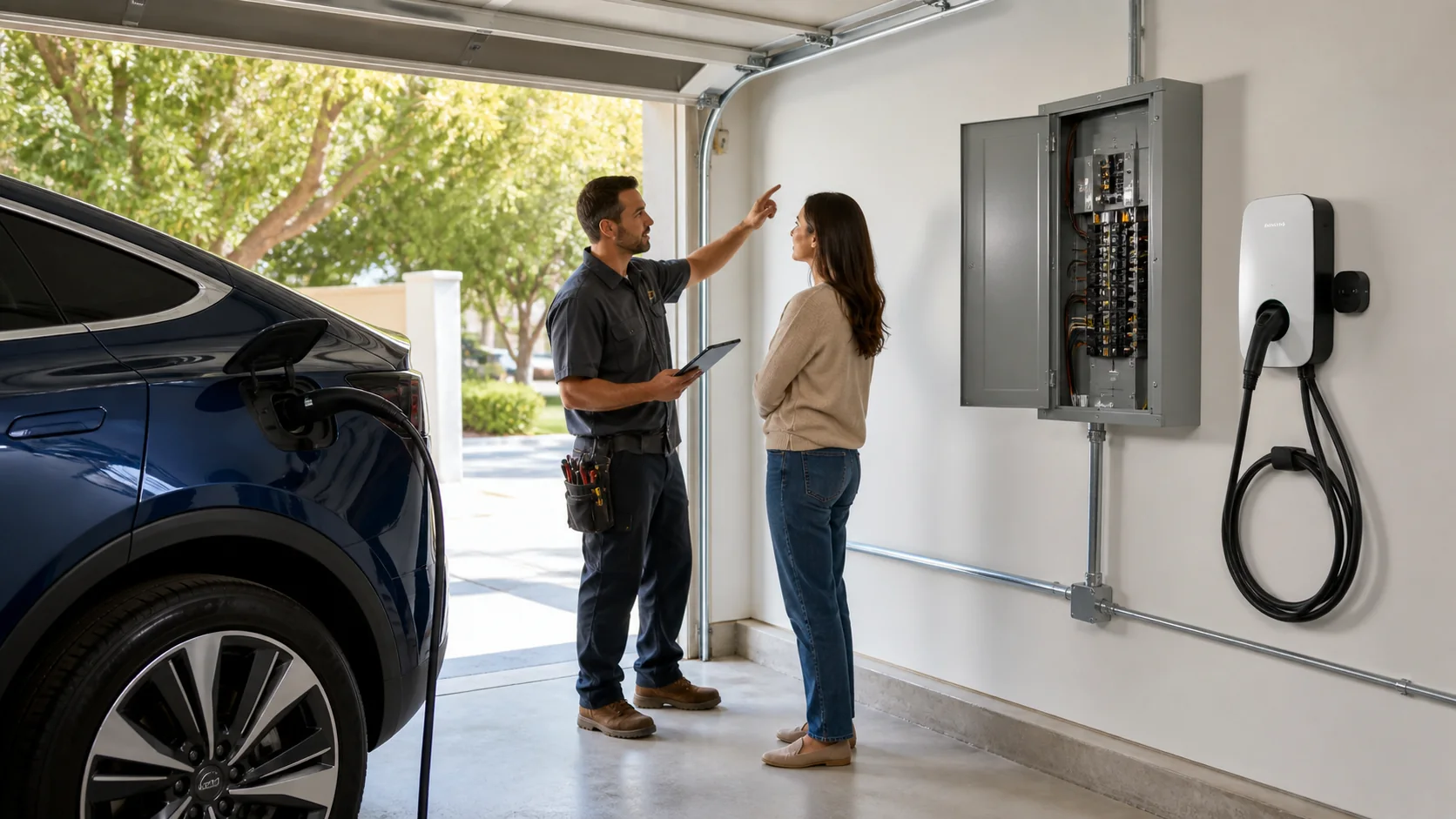
Panel, service capacity, dedicated circuit, protection, grounding, pathway and location require technical validation and local compliance. Improvised extension cords do not replace an installation designed for continuous charging.
| Question | Why it matters | What to verify |
|---|---|---|
| How far is the daily drive? | Defines energy to replace | Real usage, not battery size alone |
| What can the vehicle accept? | Caps actual charging power | Vehicle documentation and configuration |
| What can the site supply? | Limits safe continuous load | Service, panel and load assessment |
| Where will it connect? | Changes cable, protection and usability | Route, weather exposure and parking position |
| What comes next? | Avoids premature rework | Second EV, solar, battery or load management |
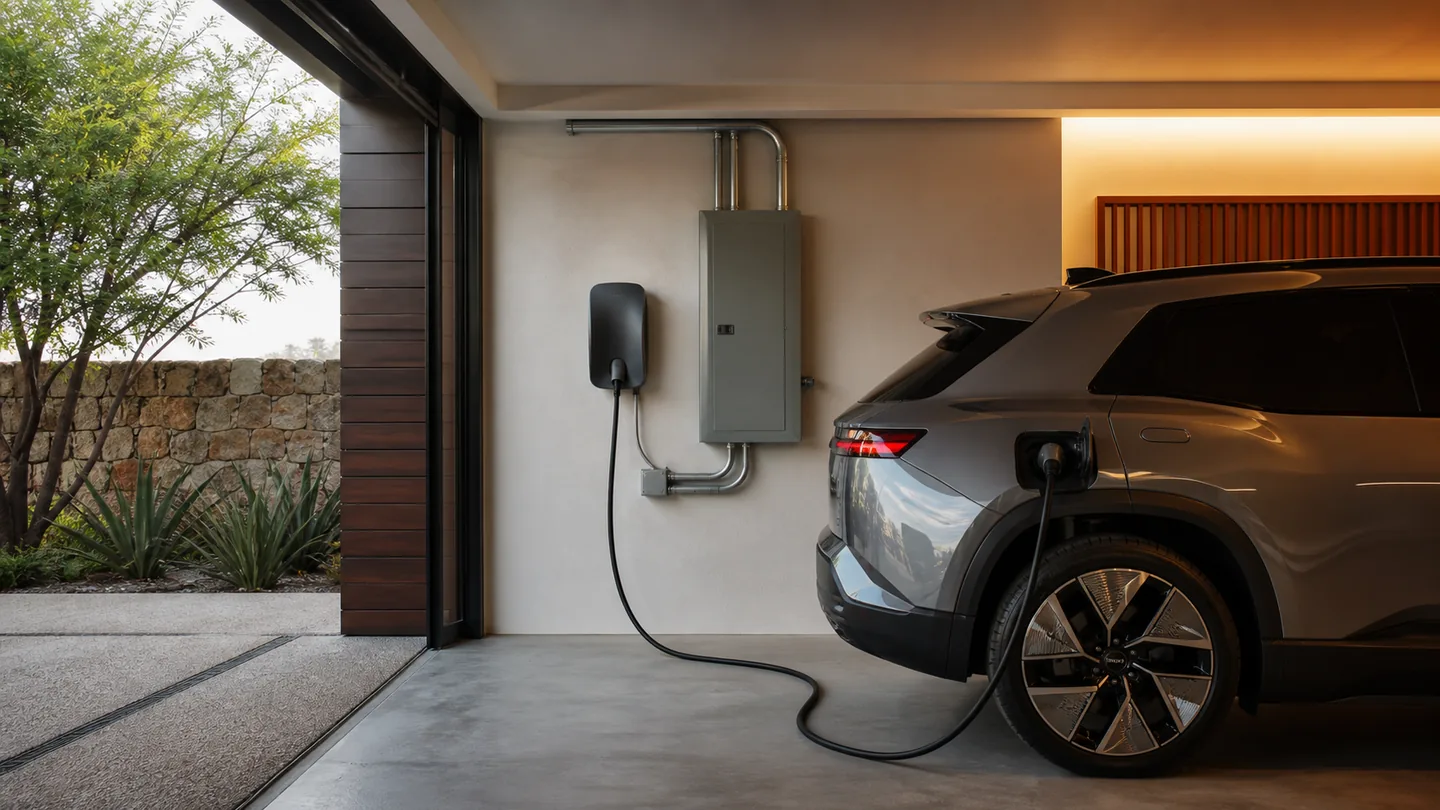
Vehicle limits and the electrical installation set the real power
Charging is a continuous electrical load. Circuit design, conductor size, protection, grounding and local requirements must be checked as a system; an extension cord or convenient outlet is not a substitute.
From daily driving to a charging circuit
A modest overnight circuit can outperform an oversized charger
A driver returns home with roughly the same daily energy deficit and parks for ten hours. A moderate charging rate may replace that energy comfortably before morning, while a larger wall unit would still be limited by the vehicle or require costly service work. Another driver with a short parking window, longer route and compatible vehicle may justify more power. Charging time only has meaning when energy need, available hours and both electrical limits are known.
Nameplate power is not permission to load the panel
Design the circuit around today's routine and tomorrow's loads
Scheduled charging can use convenient windows and reduce overlap with other loads. If a second vehicle, solar, battery or metering is expected, reserve capacity and pathways from the start.
The review should cover continuous-load sizing, dedicated protection, grounding, conductor route, connector position and local requirements. Future solar, battery storage, a second vehicle or load management may change what is worth reserving now. The goal is not maximum power at any cost; it is repeatable charging that the car and property can support safely.
- 01Confirm daily energy to replace
- 02Check vehicle charging limits
- 03Assess service and panel capacity
- 04Plan a dedicated protected circuit
- 05Reserve pathways for likely growth

From context to a decision.
Estimate daily charging demand
A first pass using your own driving pattern.
Open calculator↗Validate the installed solution
For panel capacity, protection, pathways or future integration.
Evaluate my project↗Answers with the full context.
Do I need the highest-power home charger?+
Usually not. Daily energy need, parking time, vehicle limits and site capacity determine useful power.
Can I charge from an existing outlet?+
That depends on the vehicle, equipment, circuit condition and local requirements. A qualified assessment should confirm whether the circuit is appropriate for continuous charging.
Does solar automatically charge the vehicle during the day?+
Only if generation, controls, schedule and the electrical architecture are coordinated. Having rooftop solar does not by itself guarantee direct solar charging.
What should be prepared for a second EV?+
Consider service capacity, panel space, load management, conduit routes and parking positions before the finishes make changes more difficult.
SOURCES AND REFERENCES2
References consulted for this editorial review.
- U.S. Department of Energy — Alternative Fuels Data Center: Charging Electric Vehicles at Home.
- AFDC — información técnica de infraestructura de carga y circuitos dedicados para EVSE, usada como referencia conceptual; la instalación final debe cumplir normativa local.