

INTRODUCTION
A door can open with a PIN, card, phone, biometrics or a combination. Every method feels simple while it works. Differences appear when an employee leaves, a guest needs three days of access, a phone dies, a card is lost, a PIN is shared, Internet fails or a visitor arrives after hours.
The credential is only one part of the access-control system.
1. PIN: easy to issue and easy to share
A PIN is useful when a simple method is needed without a physical credential. Its weakness is also clear: another person can receive it. Temporary use benefits from expiration, schedules, change, revocation and event logging.
2. Card: tangible and manageable
A card can be assigned to one person and revoked when lost. Operation is familiar, while enrollment, removal and replacement still require administration.
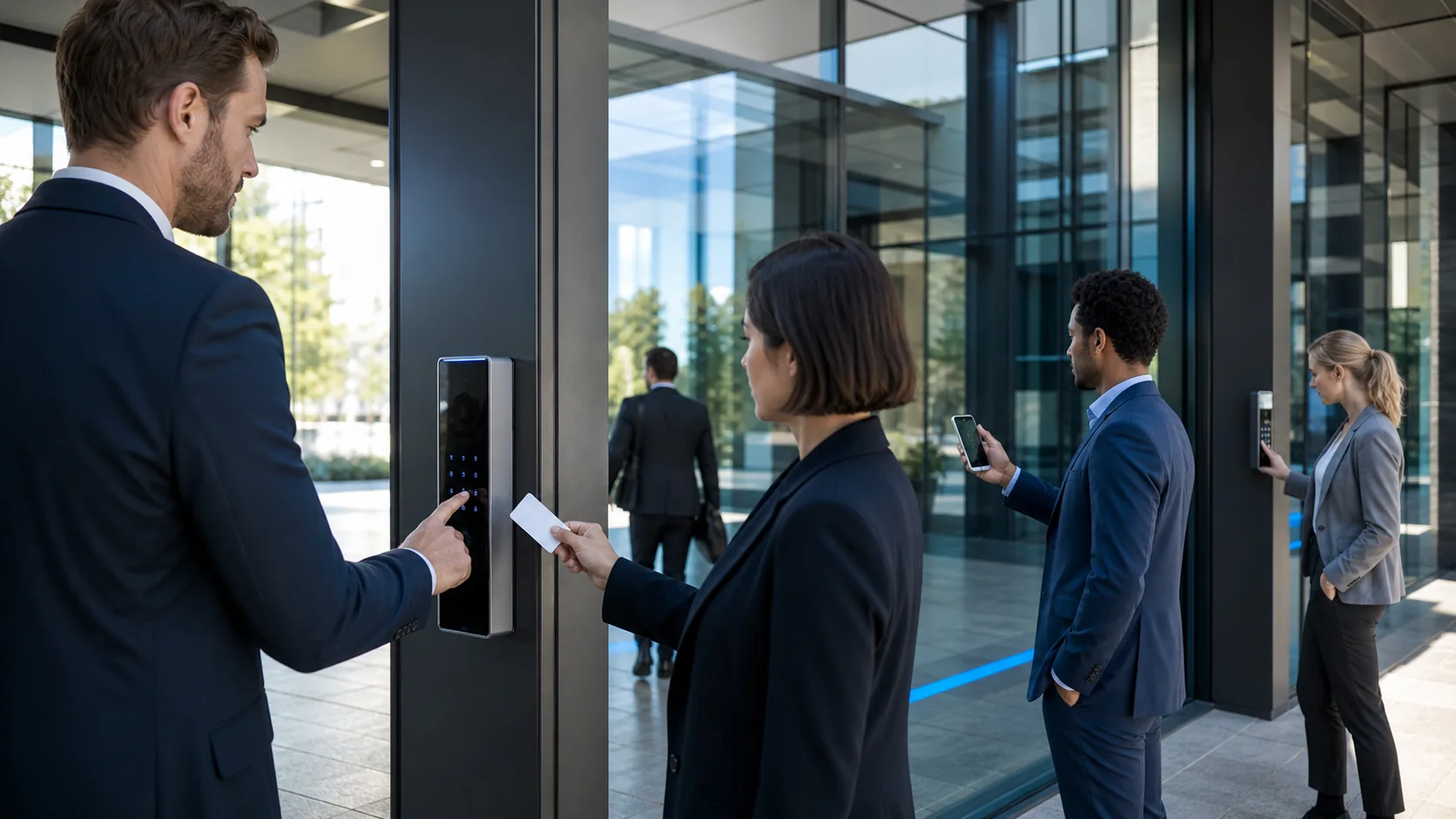
3. Mobile: convenient when the platform supports it well
Mobile credentials can simplify remote enrollment and reduce physical cards. Review what happens when the phone is lost, replaced or out of power, whether Internet is required and how revocation works.
4. Biometrics: convenience with greater responsibility
Biometrics can be convenient for frequent access, but they add privacy, data handling, contingency and applicable regulatory considerations. They should not be chosen only because they appear more secure.
The journey of a credential
Revocation / contingency / audit
5. Quick comparison
| Method | Advantage | Risk or consideration | Typical fit |
|---|---|---|---|
| PIN | Easy to distribute | Can be shared | Temporary or simple access |
| Card | Revocable and tangible | Loss and replacement | Employees |
| Mobile | Remote enrollment and convenience | Battery, device and platform | Frequent users |
| Biometrics | No credential to carry | Privacy and contingency | Controlled settings |
6. Access also needs a failure plan
- Safe egress
- Interior release
- Backup power
- Key or contingency path
- Lost credential
- Offline administration
- Audit


From context to a decision.
A specific reader or credential is required
View access control↗Several doors, schedules, logs and contingencies must be coordinated
Design my system↗Answers with the full context.
Which method is most secure?+
No method is universally best. Security depends on context, administration, permissions, contingency and the complete system configuration.
Which method is easiest to revoke?+
Cards and mobile credentials usually support clear individual revocation when the platform is properly administered. A shared PIN may require changing the code for several users.
Are biometrics always better?+
No. They can be convenient, but add privacy, data and recovery considerations.
What should happen if the Internet fails?+
The architecture must define which functions continue locally and how safe egress and contingency remain available.
SOURCES AND REFERENCES1
References consulted for this editorial review.