INTRODUCTION
Camera specifications can look like a race: more megapixels, more infrared range and more analytics. A camera becomes useful only when it answers a concrete question.
- know that someone entered a yard
- recognize who arrived at a door
- review an interaction at a counter
- observe a parking area
- follow a vehicle
- identify a detail at a known distance
The right purchase begins with the scene, not the box.
1. Define what you need to see
Context
Understand what is happening across a broad area.
Recognition
Distinguish people, vehicles or actions more clearly.
Detail
Review a specific scene where position, distance and lighting are critical.
Goal → scene → camera
2. A wider field of view spreads detail thinner
A wide lens sees more area, but distributes available detail across a larger scene. One camera that ‘covers everything’ can look impressive in a thumbnail and reveal little during an event.
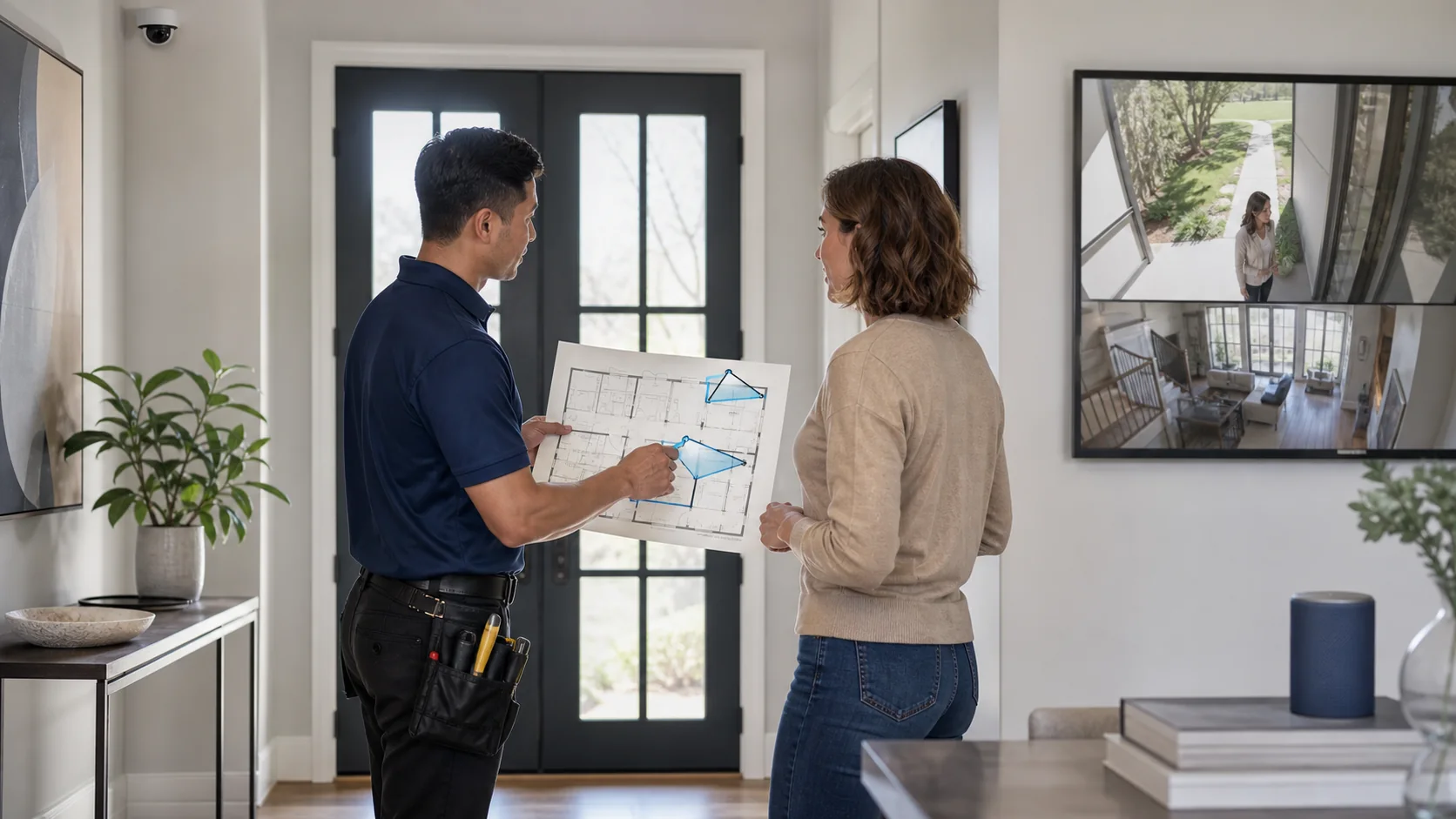
Example: the 4K camera that still cannot resolve the entrance
A high-resolution camera sits high and far from the door, with backlight during part of the day. The person occupies only a small fraction of the image. A still more expensive model may not solve the problem; moving the scene closer and controlling light can help far more.
3. Night changes the camera you need
Headlights, backlight, low illumination, infrared reflection from plants, glass, rain and humidity can transform a scene. Test the installation under the conditions in which evidence will actually be needed.
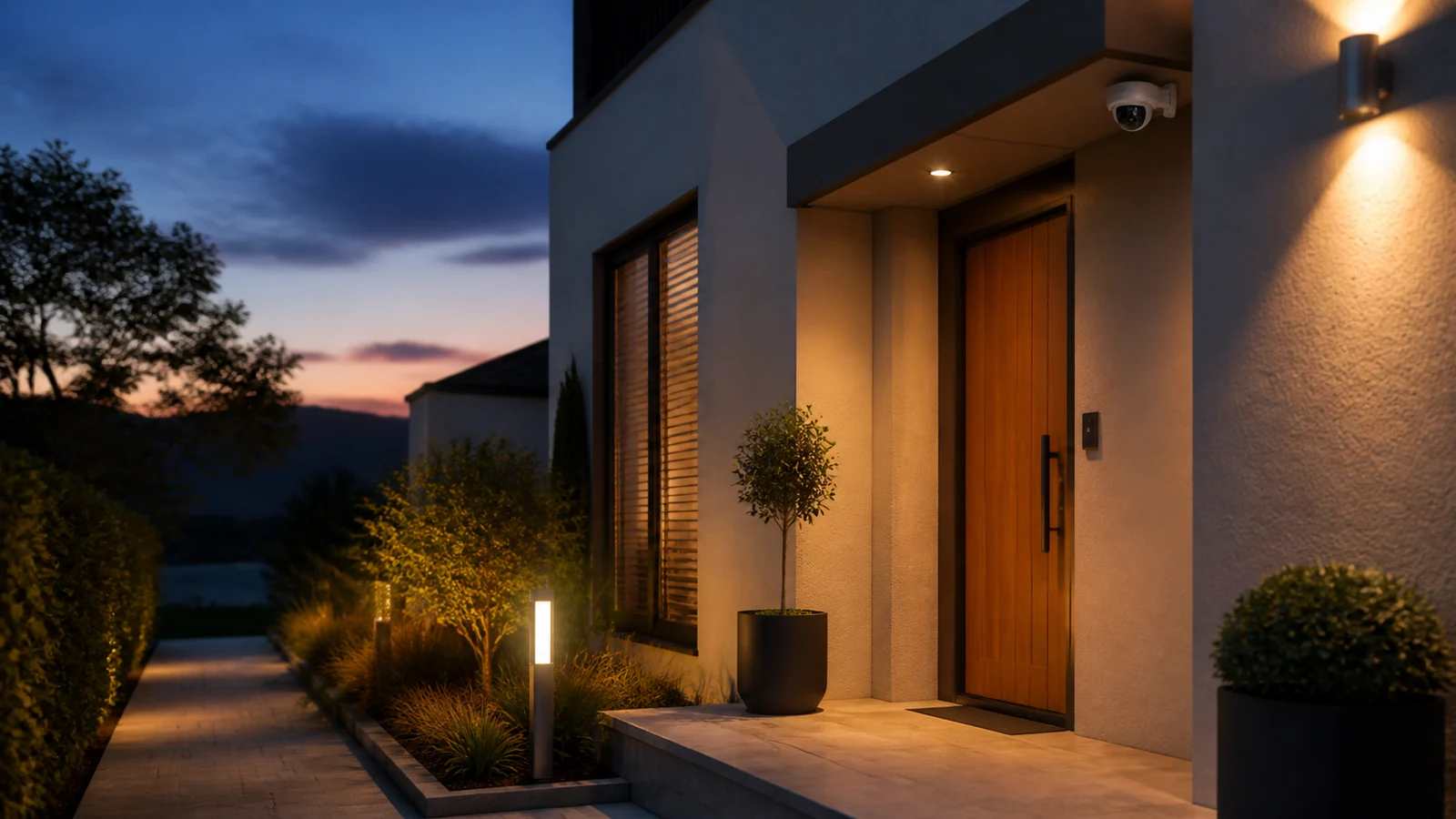
4. Indoor and outdoor are not only enclosure choices
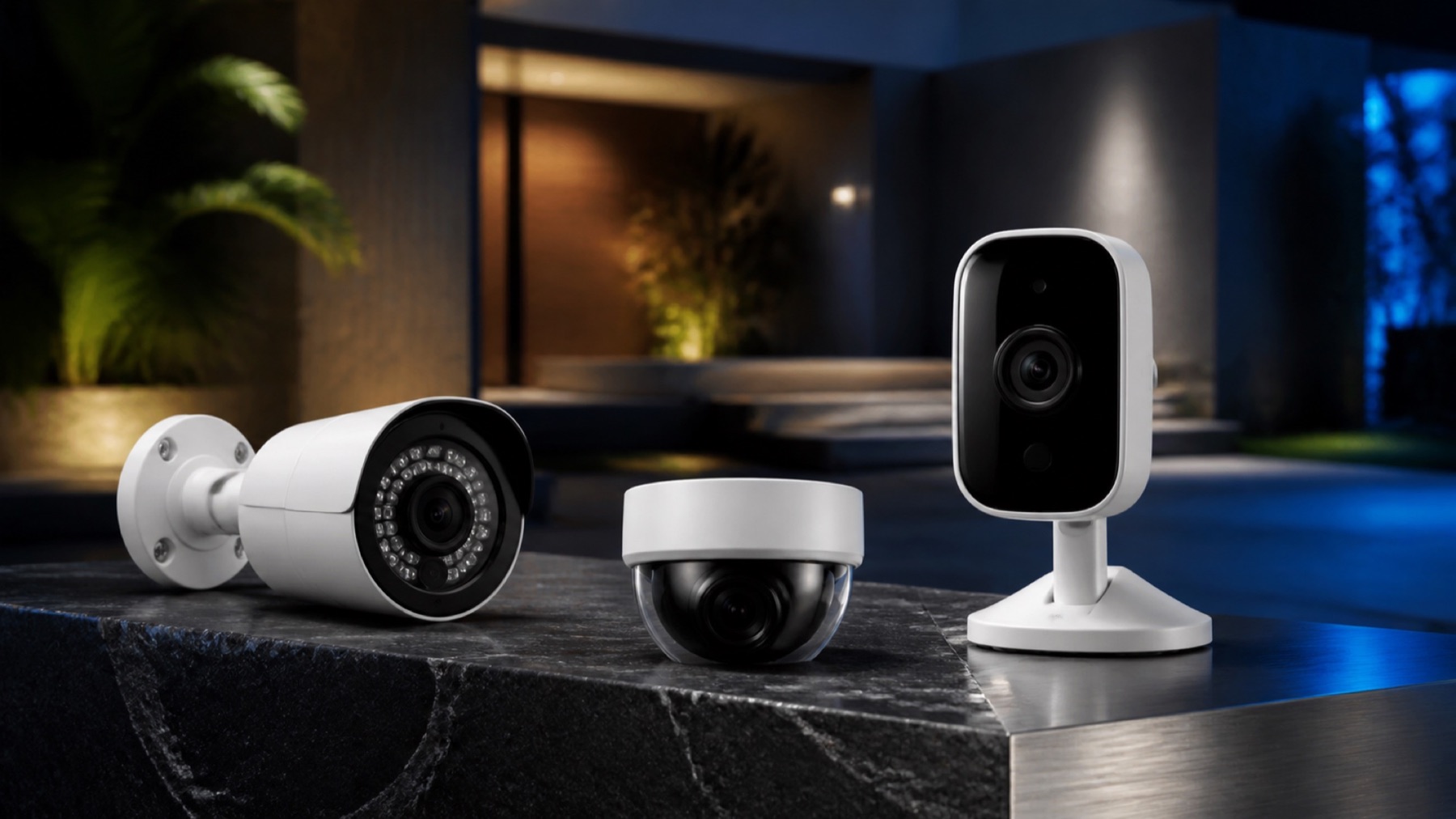
Outdoor locations add exposure, temperature, dust, reflections and possible vandalism. Indoors, aesthetics, size, viewing angle and artificial light may matter more. ‘Bullet or dome’ never replaces model-level review.
| Question | What it may change |
|---|---|
| What must I see? | Scene type |
| At what distance? | Lens and position |
| Day or night? | Sensor, lighting and WDR/IR as applicable |
| Indoor or outdoor? | Protection and mounting |
| Audio or analytics? | Model and compatibility |
| How will it record? | NVR, DVR, network and storage |
5. The camera does not live alone
- recorder compatibility
- power
- network or PoE
- storage
- audio
- events and analytics
- permissions
- firmware and administration

From context to a decision.
I know which camera or kit I need
Explore Store↗I still need to organize scenes and recording
Open the planner↗Several cameras, the network and evidence must work as one system
Design my security↗Answers with the full context.
Do more megapixels always mean a better image?+
No. Resolution is one variable. Lens, sensor, lighting, compression, position and distance determine the evidence you actually obtain.
What camera works for an entrance?+
It depends on distance, entrance width, lighting and required detail. An important entrance often benefits from a dedicated scene rather than a distant overview.
Dome or bullet?+
The format affects mounting, appearance and exposure, but it does not replace reviewing the actual model and the scene objective.
When do I need professional design?+
When several cameras must coordinate coverage, network, storage, permissions, analytics, alarms or growth.