
INTRODUCTION
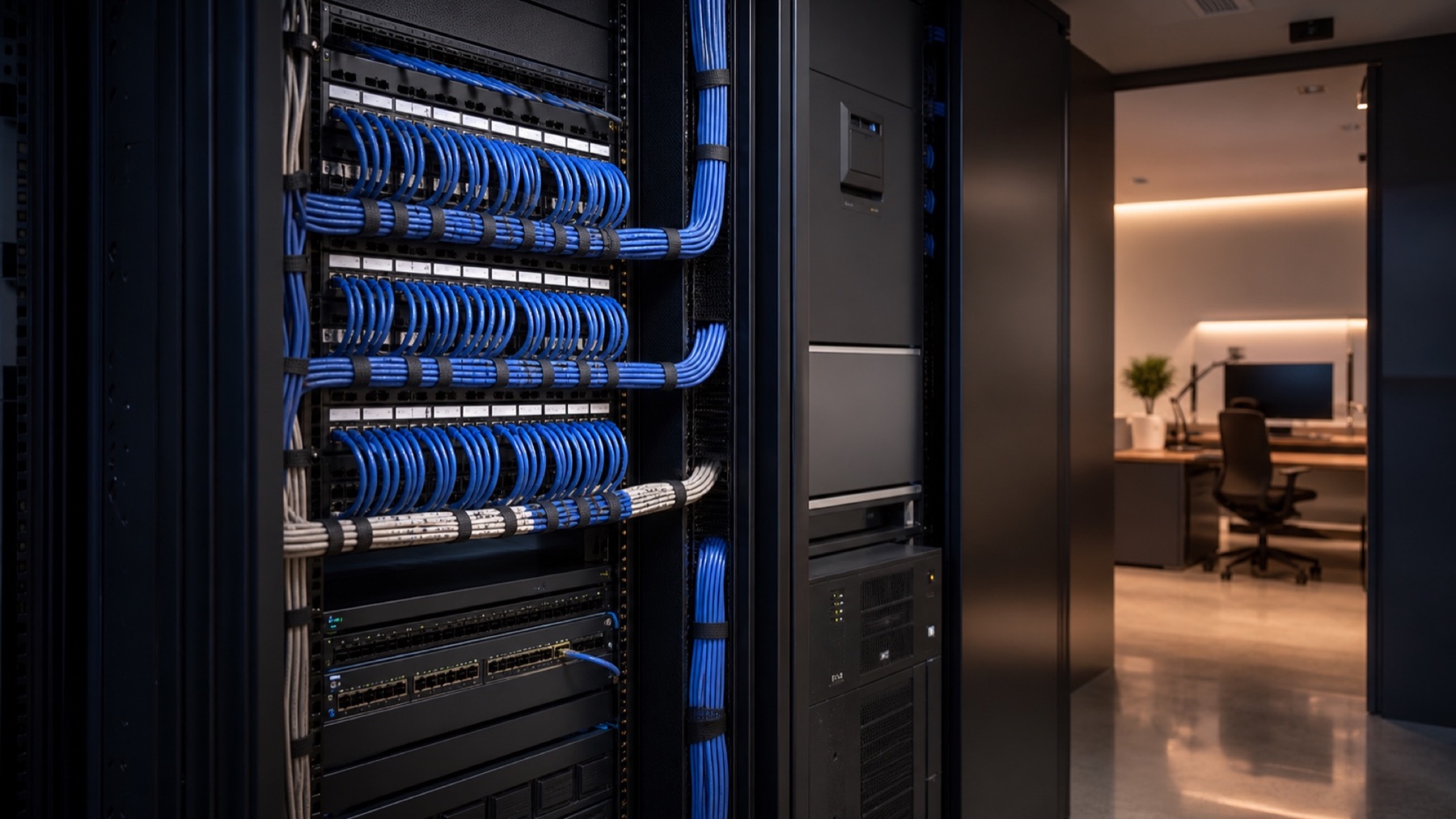
When WiFi fails, the router or access point gets blamed first because it is visible. Yet many problems begin earlier: a damaged cable can negotiate at a lower speed, an undersized PoE budget can destabilize devices, and an undocumented rack can turn every change into a search.
In a serious installation, WiFi is the last visible layer of infrastructure that began much earlier. That infrastructure can also be designed for growth, diagnosis and maintenance.
1. Physical pathways matter more than they appear
Before cable is installed, understand where it will run, where it will terminate and what it must cross. A drop through an accessible office ceiling is not the same as a finished home, a multi-level hotel or a property still under construction.
- office with an accessible ceiling
- finished residence
- multi-level hotel
- space shared with other building services
- property still under construction
From the Internet to the user
Every segment can become a bottleneck or a solid foundation for growth.
2. A tidy rack is not decoration
Its value is operational: authorized staff should be able to identify which port serves each zone, where PoE is available, what capacity remains and what changed during the last intervention.
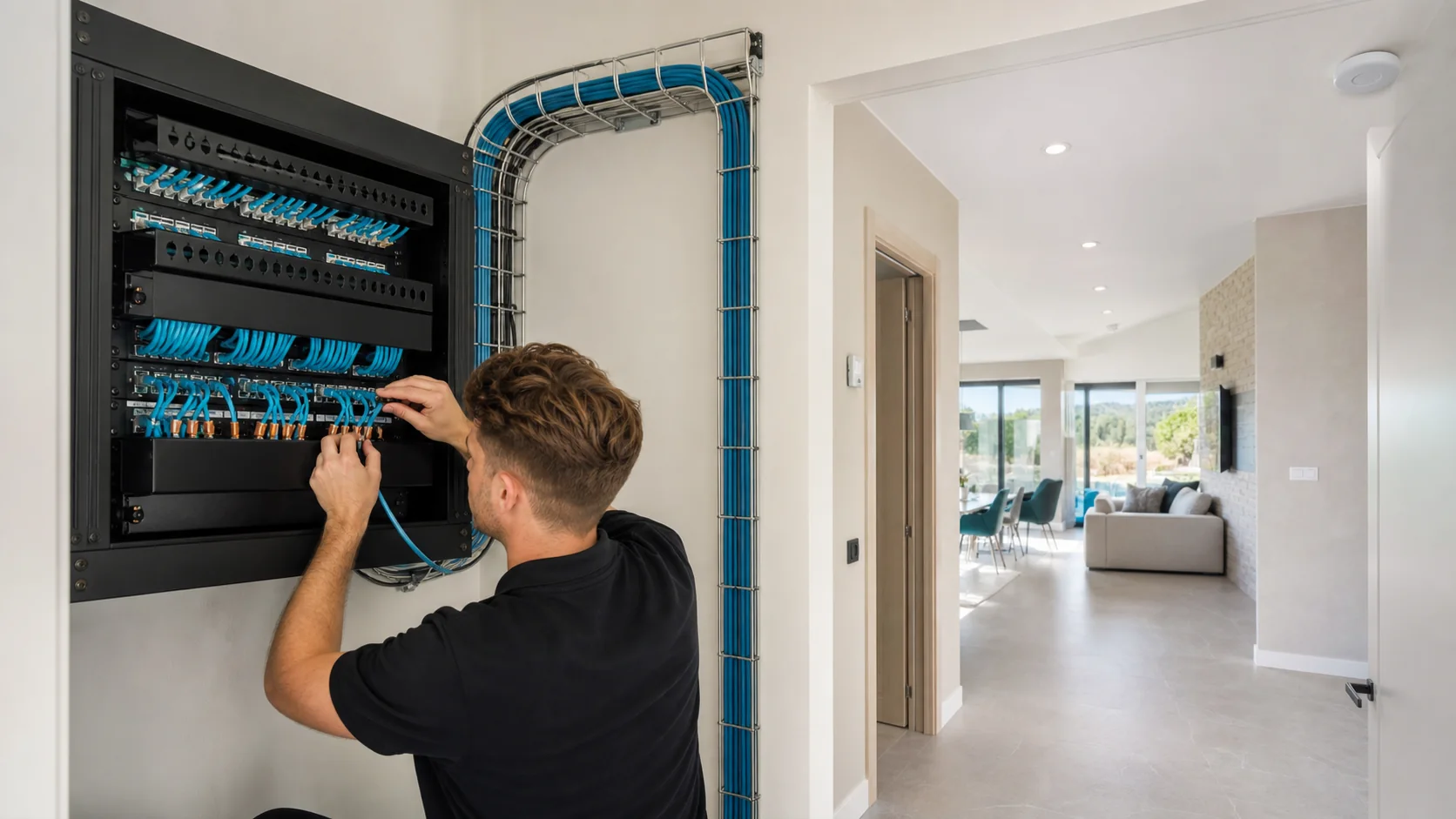
Example: ‘WiFi only fails sometimes’
A modern access point works for days and then disconnects intermittently. Inspection reveals a deteriorated connector and unstable PoE. Replacing the access point would have been expensive and would not have corrected the cause.
A documented network supports diagnosis before replacement.
3. PoE simplifies installation, but it needs a budget
Power over Ethernet can carry data and power over one compatible cable for access points, cameras and IP phones. But a PoE switch still has per-port limits and a total power budget.
| Element | Question to answer |
|---|---|
| Switch | Does it provide enough ports and capacity? |
| PoE | Does the total budget cover all devices? |
| Patch panel | Are ports labeled and documented? |
| Cabling | Are category and route appropriate? |
| Rack | Is there space, ventilation and service access? |
| Power | Which devices need backup? |
4. Cable today so you do not improvise tomorrow
Construction and remodeling create a valuable window to reserve conduit, pathways and points for access points, cameras, displays, controls, workstations and credible future expansion. The goal is not cable everywhere; it is avoiding costly rework in the places that matter.
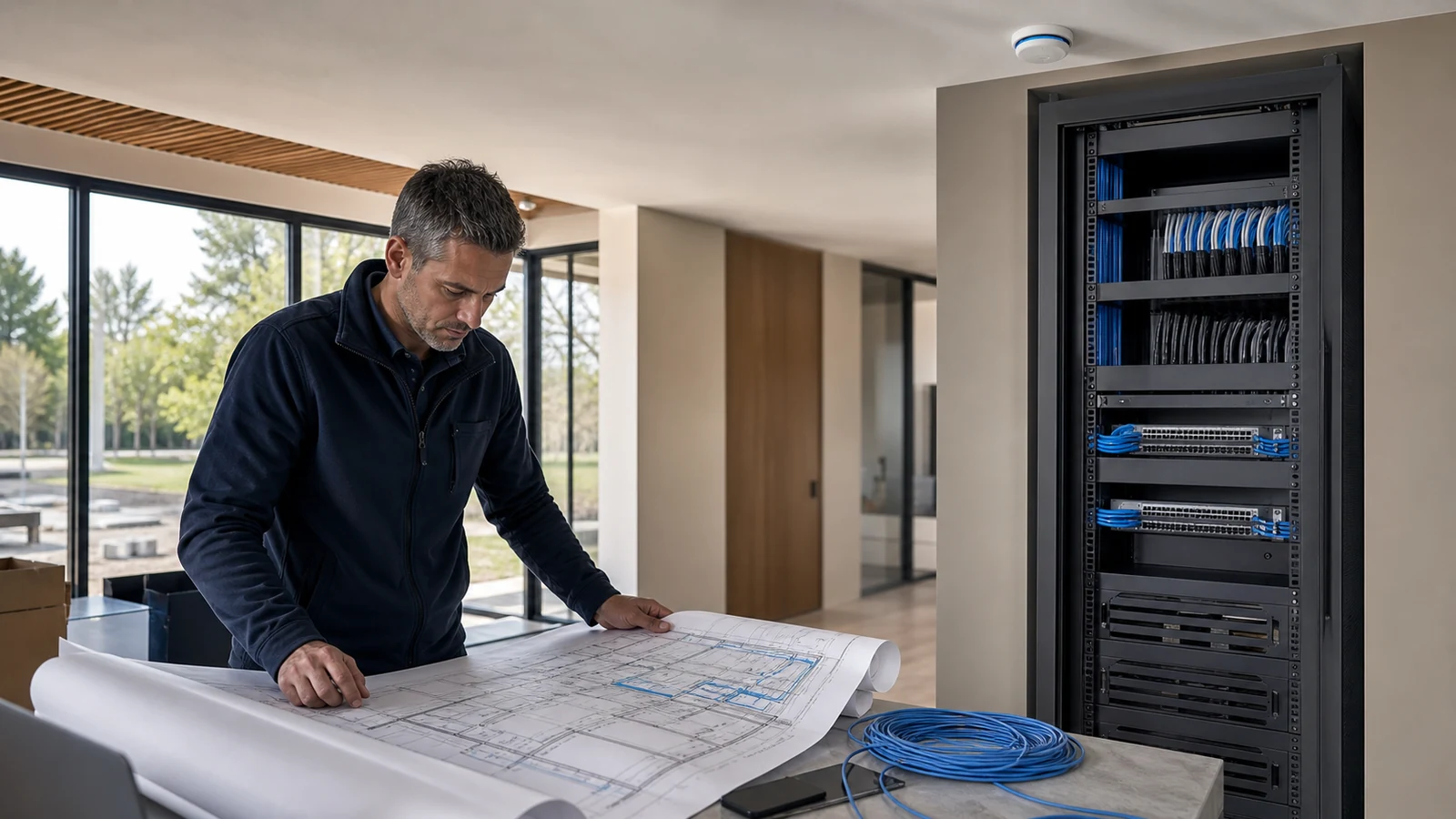
5. Documentation is part of the project
- point plan or sketch
- port numbering
- labels at both cable ends
- switch and patch-panel inventory
- addressing where relevant
- configuration backups
- change log
A network understood only by its installer is difficult to operate.
| Improvised | Maintainable |
|---|---|
| Unlabeled cables | Identified ports |
| Hidden switches | Accessible rack |
| Later extensions | Documented routes |
| Unknown pathways | Capacity for growth |
| Trial-and-error diagnosis | Evidence-led diagnosis |
6. When is equipment purchase enough?
Store can be sufficient for a compatible patch cord, switch or component when the infrastructure is already validated. If cabling, PoE, points, rack, power and growth must be resolved together, treat it as a project.

From context to a decision.
I need components for a defined infrastructure
Explore Store↗I need routes, points, PoE, rack and growth designed
Start a project↗Answers with the full context.
Why does cabling matter if almost everything I use is WiFi?+
Access points still need a network connection and often power. A poor wired link can limit wireless performance even when signal strength looks good.
What should be labeled?+
Ideally ports, patch panels, both cable ends, switches and relevant outlets, using a naming system that matches the plan or inventory.
Can PoE power cameras and access points?+
Yes, when the switch, cabling and devices use compatible standards and the total power budget is sufficient.
When should cabling be planned?+
Especially during construction or remodeling before finishes close, and whenever an existing network has unstable links or has become hard to maintain or expand.
SOURCES AND REFERENCES1
References consulted for this editorial review.
- TIA-568 Commercial Building Telecommunications Cabling StandardsTelecommunications Industry Association