
INTRODUCTION
Many companies can sell for years without CRM. A small team may know every customer and coordinate by message—until an opportunity changes owner, a call is forgotten, reports take hours, sheets disagree or customers repeat information.
CRM can help only if it represents a process the team is willing to maintain.
1. Sign one: history lives in people, not the business
When context is spread across personal WhatsApp, email, notes, memory and local sheets, one absence can leave an opportunity without a history.

Example: vacation and a stalled sale
Three salespeople manage accounts in their own chats and calendars. One goes on vacation and a customer asks about last week’s proposal. Nobody knows what was promised. The missing resource is shared memory.
2. Sign two: nobody knows who should act next
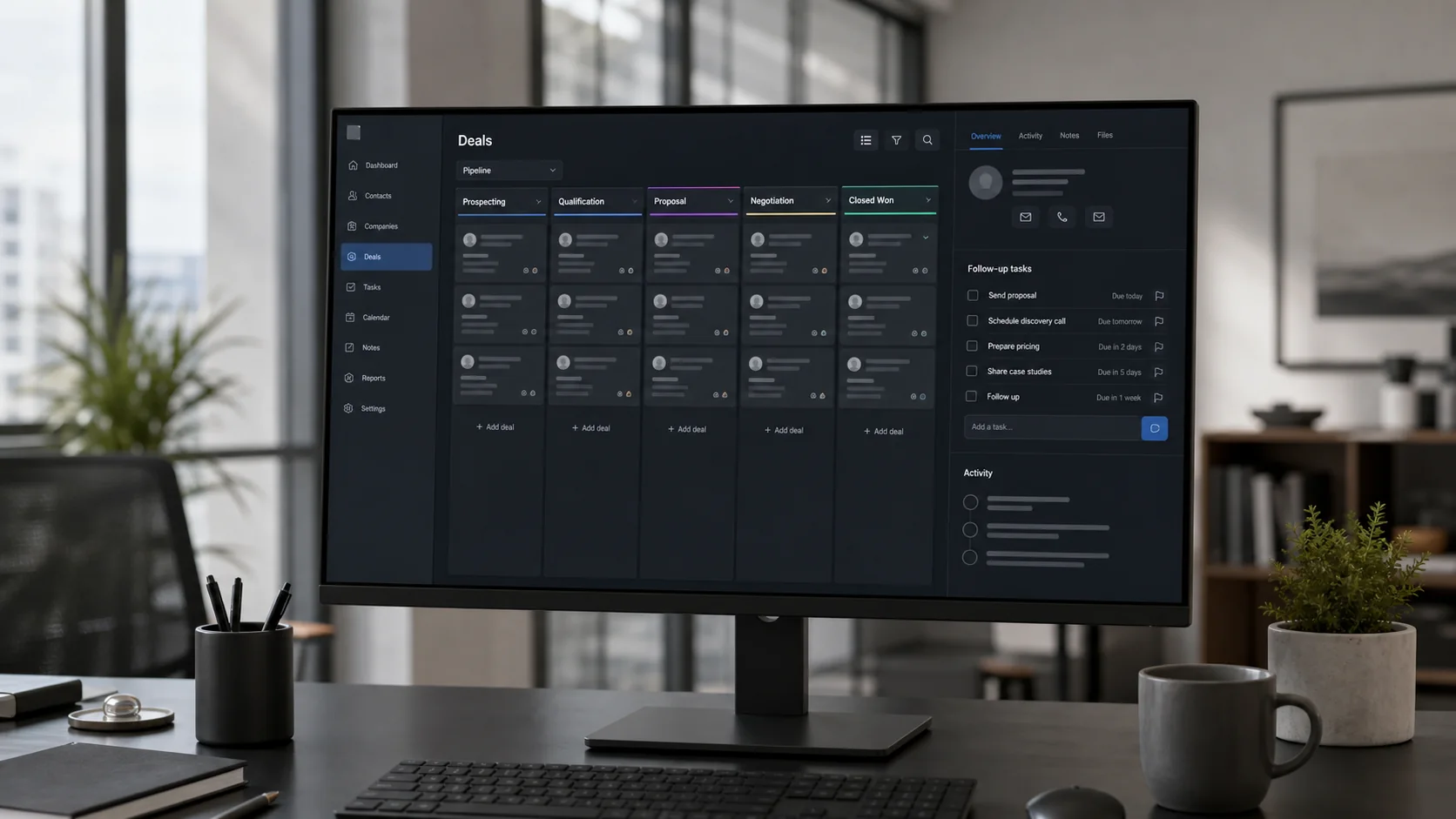
Every opportunity should expose owner, stage, next action, date and blocker.
3. Sign three: reporting means reconstructing the past
If weekly reporting manually rebuilds open opportunities, proposals, follow-ups, wins and loss reasons, the source of truth is still fragmented.
From lead to shared memory
owner + next action + date
4. Sign four: the team enters the same data repeatedly
Form to sheet to CRM to ERP to email is an integration opportunity, but first decide which system owns the data.
5. Sign five: process cannot be separated from individual behavior
CRM can reveal whether stages are consistent, but installation does not create discipline automatically.
| Without structured CRM | With a well-designed CRM process |
|---|---|
| Personal notes | Shared history |
| Tasks in memory | Visible next actions |
| Parallel sheets | Common stages |
| Manual reports | Structured data |
| Unclear ownership | Defined owner |
6. Sign six: the customer repeats information
When sales, support and operations ask the same questions because they do not share context, internal fragmentation becomes a customer experience problem.
7. Sign seven: growth requires more human memory
If every new salesperson multiplies coordination and follow-up, shared structure is overdue.
Design the minimum process before choosing a platform
- stages
- what advancement means
- minimum fields
- owner
- next action
- loss reason
- permissions
- what will be measured
Do not begin with eighty fields.

Standard CRM or a custom solution?
A standard platform may fit a common process. Deep coordination with operations, inventory, service or proprietary rules may require configuration, integration or custom software.

From context to a decision.
Define the process, CRM and integrations
Design my workflow↗Answers with the full context.
How many salespeople justify a CRM?+
There is no fixed number. Follow-up complexity and lost context are more useful signals than team size alone.
Does CRM automatically improve sales?+
No. It organizes information and follow-up; value proposition, sales process, adoption and discipline remain the company’s responsibility.
How many stages should a pipeline have?+
Use the minimum number required to represent real decisions. Too many stages add friction and unreliable data.
When do I need integration?+
When CRM must share information with forms, email, ERP, support, invoicing or other systems and duplication is already creating work.
SOURCES AND REFERENCES1
References consulted for this editorial review.